

Eyes on Earth
View Sequence overviewStudents will:
- use their own observations alongside others’ observations to learn about Earth.
- explore a range of visual resources to identify key characteristics of planet Earth.
Students will represent their understanding as they:
- record and share their observations about the features of planet Earth.
In this lesson, assessment is formative.
Feedback might focus on:
- the reasoning students use in identifying features of the Earth from aerial images.
- Can they pick out the features they may be more familiar with based on the context of their own local community (for example, students in rural areas being able to identify areas of flat green fields as potential farms)?
- Can they make inferences based on common depictions of Earth’s features (for example, seeing a large expanse of blue and identifying it as a body of water)?
- Can they use their daily experiences to make inferences about Earth’s features (for example, seeing a lot of cars parked next to a large building and identifying it as a shopping centre)?
Note that students’ responses, and thus teacher feedback, will depend largely on context.
Whole class
Class science journal (digital or hard-copy)
Demonstration copy of the Spiral eddies Resource sheet
An aerial photo/image of the local area
Optional: Demonstration copy of the Earth from above Resource sheet
Each group
Optional: Access to resources that enable students to look at satellite images of the Earth. This might include:
- access to Google Earth, Google Maps, or similar
- atlases
- globes
- street maps
- satellite images
- Earth from above Resource sheet
- This resource sheet was made with images from Google Earth, as it allows you to hide labels, place names, and streets, allowing students to infer what they are seeing without interference.
Optional: Butcher’s paper/A3 paper to brainstorm ideas
Each student
Individual science journal (digital or hard-copy)
Lesson
The Inquire phase allows students to cycle progressively and with increasing complexity through the key science ideas related to the core concepts. Each Inquire cycle is divided into three teaching and learning routines that allow students to systematically build their knowledge and skills in science and incorporate this into their current understanding of the world.
When designing a teaching sequence, it is important to consider the knowledge and skills that students will need in the final Act phase. Consider what the students already know and identify the steps that need to be taken to reach the level required. How could you facilitate students’ understanding at each step? What investigations could be designed to build the skills at each step?
Read more about using the LIA FrameworkRe-orient
Recall the previous lesson, focusing on the essential things students identified that humans need to survive, and how these needs are fulfilled.
You might also review any relevant questions students posed about planet Earth.
The Inquire phase allows students to cycle progressively and with increasing complexity through the key science ideas related to the core concepts. Each Inquire cycle is divided into three teaching and learning routines that allow students to systematically build their knowledge and skills in science and incorporate this into their current understanding of the world.
When designing a teaching sequence, it is important to consider the knowledge and skills that students will need in the final Act phase. Consider what the students already know and identify the steps that need to be taken to reach the level required. How could you facilitate students’ understanding at each step? What investigations could be designed to build the skills at each step?
Read more about using the LIA FrameworkIdentifying and constructing questions is the creative driver of the inquiry process. It allows students to explore what they know and how they know it. During the Inquire phase of the LIA Framework, the Question routine allows for past activities to be reviewed and to set the scene for the investigation that students will undertake. The use of effective questioning techniques can influence students’ view and interpretation of upcoming content, open them to exploration and link to their current interests and science capital.
When designing a teaching sequence, it is important to spend some time considering the mindset of students at the start of each Inquire phase. What do you want students to be thinking about, what do they already know and what is the best way for them to approach the task? What might tap into their curiosity?
Read more about using the LIA FrameworkWhat are Earth’s features?
Using the Spiral eddies Resource sheet, review and discuss the aerial photograph that Paul Sculley-Power took showing spiral eddies in the ocean.
- What can you see in the photo?
- What clues tell you it’s a photo of the ocean?
- Where was the photo taken from?
- Can you get a view of the ocean like that from Earth? How?
Explain to students that photos like this are taken from high above the Earth by things such as spacecraft, satellites and cameras aboard the International Space Station (ISS)—which Andy Thomas helped to construct. The images are used by scientists to help understand the Earth better.
Scientists like Katherine Bennell-Pegg use the data gathered by these objects in space in their work too, because that data can be used to show what is happening and changing on Earth.
Pose the question: How can we use satellite images/data to identify the important features of Earth that help humans live here (by providing the things we need to survive)?
Habitable Earth
How does Earth support life?
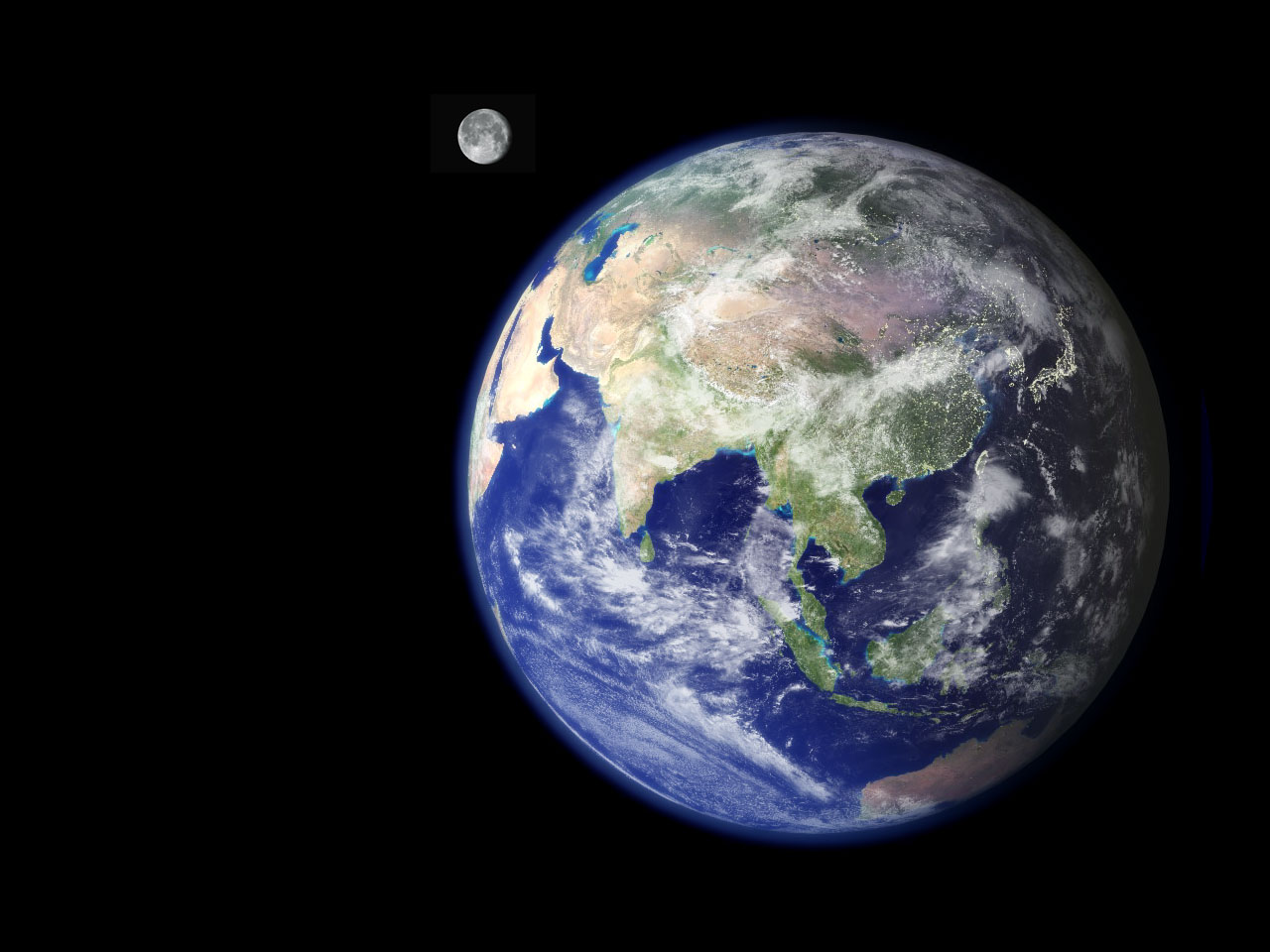
The Earth is, so far, the only habitable planet identified in our Solar System. Earth is a habitable planet because it has the right combination of conditions to support life.
First, it orbits the Sun at a distance that places it in the “Goldilocks zone,” where temperatures are not too hot or too cold. This allows liquid water to exist on its surface—an essential ingredient for life.
Second, Earth has a protective atmosphere made mostly of nitrogen and oxygen. This atmosphere provides the air that many living organisms need to breathe, helps regulate temperature through the greenhouse effect, and shields the planet from harmful radiation. Earth’s magnetic field also protects it from dangerous solar winds coming from the Sun.
Additionally, Earth has a stable climate, a solid surface, water, and a variety of chemical elements necessary for plant and animal life. These plants and animals form an interconnected food web that allows each to survive.
Together, these features make Earth uniquely suited to support diverse ecosystems and complex life forms.
The Earth is, so far, the only habitable planet identified in our Solar System. Earth is a habitable planet because it has the right combination of conditions to support life.
First, it orbits the Sun at a distance that places it in the “Goldilocks zone,” where temperatures are not too hot or too cold. This allows liquid water to exist on its surface—an essential ingredient for life.
Second, Earth has a protective atmosphere made mostly of nitrogen and oxygen. This atmosphere provides the air that many living organisms need to breathe, helps regulate temperature through the greenhouse effect, and shields the planet from harmful radiation. Earth’s magnetic field also protects it from dangerous solar winds coming from the Sun.
Additionally, Earth has a stable climate, a solid surface, water, and a variety of chemical elements necessary for plant and animal life. These plants and animals form an interconnected food web that allows each to survive.
Together, these features make Earth uniquely suited to support diverse ecosystems and complex life forms.
The Inquire phase allows students to cycle progressively and with increasing complexity through the key science ideas related to the core concepts. Each Inquire cycle is divided into three teaching and learning routines that allow students to systematically build their knowledge and skills in science and incorporate this into their current understanding of the world.
When designing a teaching sequence, it is important to consider the knowledge and skills that students will need in the final Act phase. Consider what the students already know and identify the steps that need to be taken to reach the level required. How could you facilitate students’ understanding at each step? What investigations could be designed to build the skills at each step?
Read more about using the LIA FrameworkThe Investigate routine provides students with an opportunity to explore the key ideas of science, to plan and conduct an investigation, and to gather and record data. The investigations are designed to systematically develop content knowledge and skills through increasingly complex processes of structured inquiry, guided inquiry and open inquiry approaches. Students are encouraged to process data to identify trends and patterns and link them to the real-world context of the teaching sequence.
When designing a teaching sequence, consider the diagnostic assessment (Launch phase) that identified the alternative conceptions that students held. Are there activities that challenge these ideas and provide openings for discussion? What content knowledge and skills do students need to be able to complete the final (Act phase) task? How could you systematically build these through the investigation routines? Are there opportunities to build students’ understanding and skills in the science inquiry processes through the successive investigations?
Read more about using the LIA FrameworkView from above
Explain that, to learn about our home planet, we can use our own observations and observations that other people have made.
Model how to identify aerial features from a photograph by thinking aloud as you examine an image of your local area that contains identifiable features. Use an aerial view of your local area or the examples on the Earth from above Resource sheet to support this.
Brainstorm a list of other things students might expect to see in aerial photographs, such as oceans, rivers, cities, forests/trees, roads, farms, deserts etc.
In teams or as a class (as appropriate for your students and context), students examine a range of resources (for example, websites such as Google Earth or Google Maps, world maps, atlases, globes, satellite photographs) to examine Earth from above and brainstorm a list of the features that they think they can identify. Sample satellite images have been provided on the Earth from above Resource sheet.
Provide time for teams to examine the resources provided and record their ideas.
Prompt students to look for natural and built features, and to consider which ones are necessary for life on Earth to survive and thrive.
- What observations can we make about planet Earth by looking at the images/videos of Earth from space?
- How much of the planet’s surface is land or water?
- Where is the water located?
- What is above the land and water?
- What is below the land and water?
- Where does the food we eat on Earth come from?
- How can you tell that some photos were taken at night and some were taken during the day?
- If you were on Earth, what would be in the sky during the day? At night? What do these things provide?
The Inquire phase allows students to cycle progressively and with increasing complexity through the key science ideas related to the core concepts. Each Inquire cycle is divided into three teaching and learning routines that allow students to systematically build their knowledge and skills in science and incorporate this into their current understanding of the world.
When designing a teaching sequence, it is important to consider the knowledge and skills that students will need in the final Act phase. Consider what the students already know and identify the steps that need to be taken to reach the level required. How could you facilitate students’ understanding at each step? What investigations could be designed to build the skills at each step?
Read more about using the LIA FrameworkFollowing an investigation, the Integrate routine provides time and space for data to be evaluated and insights to be synthesized. It reveals new insights, consolidates and refines representations, generalises context and broadens students’ perspectives. It allows student thinking to become visible and opens formative feedback opportunities. It may also lead to further questions being asked, allowing the Inquire phase to start again.
When designing a teaching sequence, consider the diagnostic assessment that was undertaken during the Launch phase. Consider if alternative conceptions could be used as a jumping off point to discussions. How could students represent their learning in a way that would support formative feedback opportunities? Could small summative assessment occur at different stages in the teaching sequence?
Read more about using the LIA FrameworkPlanet Earth provides
In this Integrate step, guide students to link their experiences in the investigation to the science concept being explored—in this instance, that the features of the Earth help provide the things that humans, and all life-forms, need to survive. Through questioning and discussion, students should come to a consensus that:
|
Students share the features they think they have identified using the aerial images of Earth. Collate this information in the class science journal as it is being shared.
There are a number of ways you might undertake this sharing and collation, such as the cumulative listing technique.
Using the phrase features you think you have identified is important as it allows students to be aware that they are using their existing knowledge to take a ‘guess’ at what they are looking at, but that it is okay if they identify a feature incorrectly. If students have identified a feature that is obviously incorrect (such as identifying a forest as a farm), use questioning techniques to explore why they think that, and to redirect so they can correctly identify the feature.
Once you have a list of features students have identified, discuss how each feature provides necessary functions for humans and other life to survive.
As a class, summarise some key observations that everyone agrees with using the following prompts. Support each with evidence from students’ observations to support any claims:
- What planet do we live on? How do we know?
- What shape is our planet? How do we know?
- What are the main features of our planet? How do we know?
- What makes our planet the best place for us to live?
Reflect on the lesson
You might:
- add words and images to the class word wall.
- re-examine the intended learning goals for the lesson and consider how they were achieved.
- discuss how students were thinking and working like scientists during the lesson. Focus on how students were ‘noticing’ features of the Earth and link this to the scientific skills of observation.
Aboriginal and Torres Strait Islander History and Cultures
How might I bring a First Nations perspective to this lesson?
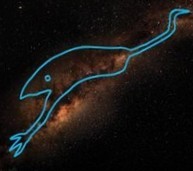
First Nations Australians: Our first astronomers
For more than 65,000 years, First Nations Australians have been observing the night sky and developing sophisticated astronomical knowledge. Without telescopes, rockets, or satellites, they became expert astronomers and scientists, creating some of the world's oldest continuous scientific traditions. Below are three examples of astronomical observations and concepts that First Nations Australians developed, laying important foundations for understanding the Earth’s place in space.
The planets are wanderers
First Nations Australians recognised that certain bright objects in the sky move differently from the fixed stars. These were the planets of our solar system, and they were called "wanderers" because they travel along specific paths across the sky. This careful observation demonstrated a deep understanding of celestial mechanics thousands of years before European astronomy documented the same phenomena.
Venus: the morning and evening star
Venus, the brightest planet visible from Earth, appears at different times—sometimes shining brilliantly before sunrise (the ‘morning star’) and sometimes glowing after sunset (the ‘evening star’). Ask students if Venus really is a star (despite these nicknames, it is a planet, not a star).
For the Yolngu peoples of Northern Australia, Venus is known as Barnumbirr, a significant creator spirit. The morning star ceremony is a sacred ritual in which a decorated pole connected by string represents the pathway of light that Barnumbirr creates between the sky and Earth, allowing communication with ancestral spirits. This ceremony continues to be practiced today, maintaining living connections between astronomical observation and spiritual knowledge.
Note: The morning star ceremony involves sacred knowledge. This description is based on information that has been shared publicly (see the suggested reading list below), but deeper ceremonial details are appropriately kept within Yolngu communities.
The sky as calendar and guide
First Nations Australians developed detailed knowledge systems connecting celestial observations with practical Earth-based knowledge. The movements of planets and stars were understood as part of interconnected stories that encoded essential information about the natural world. These patterns served as sophisticated calendars, indicating when to harvest certain foods, when seasonal rains would arrive, when animals would migrate, and when to move to different country. These stories represent complex scientific knowledge systems that enabled sustainable living for thousands of generations. See Australian Indigenous Astronomy for more information.
What to do with your students
- Consult First Nations education officers, community groups or Elders, and ask them to share appropriate information with your students.
- Educational material shared with students should ideally be reviewed by First Nations Australian knowledge holders to ensure cultural protocols are respected and information is shared appropriately.
- Read the book The First Scientists by Corey Tutt, particularly Part 1: The first astronomers.
Suggested reading list
First Nations Australians: Our first astronomers
For more than 65,000 years, First Nations Australians have been observing the night sky and developing sophisticated astronomical knowledge. Without telescopes, rockets, or satellites, they became expert astronomers and scientists, creating some of the world's oldest continuous scientific traditions. Below are three examples of astronomical observations and concepts that First Nations Australians developed, laying important foundations for understanding the Earth’s place in space.
The planets are wanderers
First Nations Australians recognised that certain bright objects in the sky move differently from the fixed stars. These were the planets of our solar system, and they were called "wanderers" because they travel along specific paths across the sky. This careful observation demonstrated a deep understanding of celestial mechanics thousands of years before European astronomy documented the same phenomena.
Venus: the morning and evening star
Venus, the brightest planet visible from Earth, appears at different times—sometimes shining brilliantly before sunrise (the ‘morning star’) and sometimes glowing after sunset (the ‘evening star’). Ask students if Venus really is a star (despite these nicknames, it is a planet, not a star).
For the Yolngu peoples of Northern Australia, Venus is known as Barnumbirr, a significant creator spirit. The morning star ceremony is a sacred ritual in which a decorated pole connected by string represents the pathway of light that Barnumbirr creates between the sky and Earth, allowing communication with ancestral spirits. This ceremony continues to be practiced today, maintaining living connections between astronomical observation and spiritual knowledge.
Note: The morning star ceremony involves sacred knowledge. This description is based on information that has been shared publicly (see the suggested reading list below), but deeper ceremonial details are appropriately kept within Yolngu communities.
The sky as calendar and guide
First Nations Australians developed detailed knowledge systems connecting celestial observations with practical Earth-based knowledge. The movements of planets and stars were understood as part of interconnected stories that encoded essential information about the natural world. These patterns served as sophisticated calendars, indicating when to harvest certain foods, when seasonal rains would arrive, when animals would migrate, and when to move to different country. These stories represent complex scientific knowledge systems that enabled sustainable living for thousands of generations. See Australian Indigenous Astronomy for more information.
What to do with your students
- Consult First Nations education officers, community groups or Elders, and ask them to share appropriate information with your students.
- Educational material shared with students should ideally be reviewed by First Nations Australian knowledge holders to ensure cultural protocols are respected and information is shared appropriately.
- Read the book The First Scientists by Corey Tutt, particularly Part 1: The first astronomers.