

Eyes on Earth
View Sequence overviewStudents will:
- identify the names of the four main Moon phases: new Moon, first quarter, full Moon, and last (third) quarter.
- recognise that the Moon’s phases follow a repeating pattern over approximately 28-29 days.
- observe and record Moon phase patterns using images/simulations.
Students will represent their understanding as they:
- record what they notice about how the appearance of the Moon changes.
- look for and describe the pattern they observe.
- test their pattern by predicting future phases.
In this lesson, assessment is formative.
Feedback might focus on:
- students’ ability to use their recorded observations to notice a pattern in the changing appearance of the Moon.
Whole class
Class science journal (digital or hard-copy)
Demonstration copy of the The same Moon? Resource sheet
Demonstration copy of the Phases of the Moon Resource sheet
Each group
Access to a device on which they can view NASA’s Daily Moon Guide
Each student
Individual science journal (digital or hard-copy)
Moon watch Resource sheet
2 x paper plates
Image strip from Moon images Resource sheet (each sheet includes 4 image strips)
1 x split pin
Pencils
Markers
Scissors
Glue
Lesson
The Inquire phase allows students to cycle progressively and with increasing complexity through the key science ideas related to the core concepts. Each Inquire cycle is divided into three teaching and learning routines that allow students to systematically build their knowledge and skills in science and incorporate this into their current understanding of the world.
When designing a teaching sequence, it is important to consider the knowledge and skills that students will need in the final Act phase. Consider what the students already know and identify the steps that need to be taken to reach the level required. How could you facilitate students’ understanding at each step? What investigations could be designed to build the skills at each step?
Read more about using the LIA FrameworkRe-orient
Recall the previous lesson, revising how students used evidence of the movement of shadows throughout the day to prove that the Sun does not stay in the same place in the sky.
The Inquire phase allows students to cycle progressively and with increasing complexity through the key science ideas related to the core concepts. Each Inquire cycle is divided into three teaching and learning routines that allow students to systematically build their knowledge and skills in science and incorporate this into their current understanding of the world.
When designing a teaching sequence, it is important to consider the knowledge and skills that students will need in the final Act phase. Consider what the students already know and identify the steps that need to be taken to reach the level required. How could you facilitate students’ understanding at each step? What investigations could be designed to build the skills at each step?
Read more about using the LIA FrameworkIdentifying and constructing questions is the creative driver of the inquiry process. It allows students to explore what they know and how they know it. During the Inquire phase of the LIA Framework, the Question routine allows for past activities to be reviewed and to set the scene for the investigation that students will undertake. The use of effective questioning techniques can influence students’ view and interpretation of upcoming content, open them to exploration and link to their current interests and science capital.
When designing a teaching sequence, it is important to spend some time considering the mindset of students at the start of each Inquire phase. What do you want students to be thinking about, what do they already know and what is the best way for them to approach the task? What might tap into their curiosity?
Read more about using the LIA FrameworkThe same Moon?
Explain to students that they are now going to investigate another object in the sky, the Moon, to determine if they can notice any patterns in how it moves or how its appearance changes.
Using the demonstration copy of the The same Moon? Resource sheet, ask students to identify what they can see in the first image (the Moon) and if the subsequent images are of the same thing. Discuss and record what students think they know about the Moon.
You might also refer to any relevant questions about the Moon that students posed in Lesson 1.
- What is this an image of?
- Are all the images of the same thing?
- What is the same and different about the images?
- What else do you know about the Moon?
- Have you noticed anything about the appearance of the Moon? Are there any patterns to its appearance?
Pose the question: How does the appearance of the Moon change over a month?
The Inquire phase allows students to cycle progressively and with increasing complexity through the key science ideas related to the core concepts. Each Inquire cycle is divided into three teaching and learning routines that allow students to systematically build their knowledge and skills in science and incorporate this into their current understanding of the world.
When designing a teaching sequence, it is important to consider the knowledge and skills that students will need in the final Act phase. Consider what the students already know and identify the steps that need to be taken to reach the level required. How could you facilitate students’ understanding at each step? What investigations could be designed to build the skills at each step?
Read more about using the LIA FrameworkThe Investigate routine provides students with an opportunity to explore the key ideas of science, to plan and conduct an investigation, and to gather and record data. The investigations are designed to systematically develop content knowledge and skills through increasingly complex processes of structured inquiry, guided inquiry and open inquiry approaches. Students are encouraged to process data to identify trends and patterns and link them to the real-world context of the teaching sequence.
When designing a teaching sequence, consider the diagnostic assessment (Launch phase) that identified the alternative conceptions that students held. Are there activities that challenge these ideas and provide openings for discussion? What content knowledge and skills do students need to be able to complete the final (Act phase) task? How could you systematically build these through the investigation routines? Are there opportunities to build students’ understanding and skills in the science inquiry processes through the successive investigations?
Read more about using the LIA FrameworkChanging shape
Investigation Part 1: Moon memories
Provide students with the following prompts to support discussion in pairs about their past observations of the Moon.
- Share your memories of the Moon.
- Describe a time you’ve seen the Moon. What did it look like?
- Is your partner’s description of the Moon the same as yours, or different? How?
- Why do you think the Moon might look different at different times?
- If you looked at the Moon tonight, then again next week, would it look the same?
- How could we find out if the Moon’s appearance really changes?
- Why do you think scientists might want to investigate the Moon?
- How might scientists investigate the Moon? What tools/equipment would they use?
- Do you think they are still studying the Moon and learning new things about it?
- What do you think we’ll discover if we watch the Moon every few days for a month?
- Why is it important to make repeated observations?
- What would happen if we only looked at the Moon once?
- Why is it important to look at the same time for each observation?
- How will we remember what we saw?
Investigation Part 2: Using a Moon simulator
Using NASA’s Daily Moon Guide, students will work in pairs to investigate how the appearance of the Moon changes over the course of a month and if there are any patterns that can be detected in these changes.
Show students how to switch the view to the Southern hemisphere using the menu on the right, and how to select a specific date using the "All dates" button at the bottom of the screen.
Select a specific date where a full Moon could be seen (for example, March 2 2026) for students to begin recording their observations. Using the Moon watch Resource sheet, students draw a picture to show the appearance of the Moon on the start date, and then every three days over a roughly two-month period.
Does the Moon ‘change shape’?
Why is it important to take care with the terminology used?
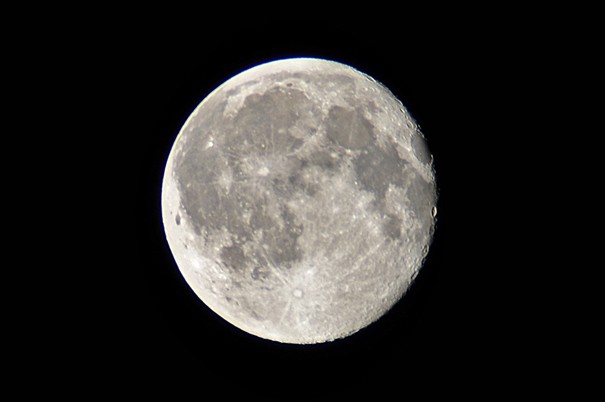
In this lesson care has been taken to specifically refer to the ‘changing appearance’ of the Moon, rather than its ‘changing shape’.
But why?
In everyday language use people often refer to the shape of the Moon ‘changing’ over the course of a lunar month.
However, the Moon does not actually change shape—it remains spherical. What does change is how much of the Moon's illuminated surface that we are actually able to see from Earth. The changing positions of the Earth and the Moon relative to the Sun are the cause of these changes.
Students may say "the moon changes shape". While it is not necessary or appropriate to correct them at this stage, it is important not to unintentionally reinforce this alternative conception by using this language.
In Year 6 students will learn more about why the Moon’s appearance changes over the course a lunar month. At this stage the focus is simply on noticing that the Moon’s appearance does change, and that this change has a cyclical pattern.
In this lesson care has been taken to specifically refer to the ‘changing appearance’ of the Moon, rather than its ‘changing shape’.
But why?
In everyday language use people often refer to the shape of the Moon ‘changing’ over the course of a lunar month.
However, the Moon does not actually change shape—it remains spherical. What does change is how much of the Moon's illuminated surface that we are actually able to see from Earth. The changing positions of the Earth and the Moon relative to the Sun are the cause of these changes.
Students may say "the moon changes shape". While it is not necessary or appropriate to correct them at this stage, it is important not to unintentionally reinforce this alternative conception by using this language.
In Year 6 students will learn more about why the Moon’s appearance changes over the course a lunar month. At this stage the focus is simply on noticing that the Moon’s appearance does change, and that this change has a cyclical pattern.
The Inquire phase allows students to cycle progressively and with increasing complexity through the key science ideas related to the core concepts. Each Inquire cycle is divided into three teaching and learning routines that allow students to systematically build their knowledge and skills in science and incorporate this into their current understanding of the world.
When designing a teaching sequence, it is important to consider the knowledge and skills that students will need in the final Act phase. Consider what the students already know and identify the steps that need to be taken to reach the level required. How could you facilitate students’ understanding at each step? What investigations could be designed to build the skills at each step?
Read more about using the LIA FrameworkFollowing an investigation, the Integrate routine provides time and space for data to be evaluated and insights to be synthesized. It reveals new insights, consolidates and refines representations, generalises context and broadens students’ perspectives. It allows student thinking to become visible and opens formative feedback opportunities. It may also lead to further questions being asked, allowing the Inquire phase to start again.
When designing a teaching sequence, consider the diagnostic assessment that was undertaken during the Launch phase. Consider if alternative conceptions could be used as a jumping off point to discussions. How could students represent their learning in a way that would support formative feedback opportunities? Could small summative assessment occur at different stages in the teaching sequence?
Read more about using the LIA FrameworkHow does the Moon change?
In this Integrate step, guide students to link their experiences in the investigation to the science concept being explored—in this instance, the changing appearance of the Moon and its cyclical nature. Through questioning and discussion, students should come to a consensus that:
|
Using the images on the Phases of the Moon Resource sheet, identify and name the four basic phases of the Moon:
- new Moon (complete shadow/not visible)
- first quarter (waxing)
- full Moon (completely lit)
- last quarter (waning)
Allow students time to look back at their recorded observations and identify and label where these appeared.
Guide students through the process of making a Moon wheel, either individually or in pairs. Students can then use these for the remainder of the sequence to track what they observed about the appearance of the Moon the night before.
- Base plate (bottom layer)
- Using a pencil or marker, divide the plate into 4 equal sections.
- Label each section with the name of a Moon phase.
- Draw or glue a Moon phase image into each section. These have been provided on the Moon images Resource sheet.
- Write approximate days underneath (e.g. ‘Day 1’, ‘Day 7’, ‘Day 14’, ‘Day 21’).
- Top plate (rotating layer)
- Cut out a quarter of the circle to create a wedge-shaped ‘window’. This window will reveal one phase at a time.
- Decorate the outer edge of the plate with stars, the Earth, etc.
- Assembly
- Place top plate over base plate.
- Push split pin through the centre of both plates.
- Secure at the back.
- Rotate the top plate to show the Moon moving through its phases.

Reflect on the lesson
You might:
- add words and images to the class word wall.
- re-examine the intended learning goals for the lesson and consider how they were achieved.
- discuss how students were thinking and working like scientists during the lesson. Focus on how students were using digital tools and information recorded by others to support their observations of the Moon. Discuss why these tools were used: observations about the changing appearance of the Moon take a long time to make, and students are not at school when the Moon is most easily visible.