

Eyes on Earth
View Sequence overviewStudents will:
- explore star patterns.
- identify the apparent movement of stars across the night sky.
Students will represent their understanding as they:
- contribute to discussions about ‘star patterns’.
- as a class, build a star map tracking the apparent movement of the stars over the course of a night.
- contribute to discussions about how First Nations peoples used stars to live on and care for Country.
In this lesson, assessment is formative.
Feedback might focus on:
- students’ recognition of the apparent movement of the stars across the sky.
- students’ description of the movement of stars. What directional language do they use? For example, describing the movement as circular, using directional language such as left or right, or using the compass points.
Whole class
Class science journal (digital or hard-copy)
Demonstration copy of the Star patterns Resource sheet
Stellarium Web Online Star Map
Materials to create a ‘star map’ that tracks the movement of the Southern Cross, following one of the below approaches:
- Project the Stellarium Web Star Map onto white paper and use markers to track the movement of the stars.
- Show the Stellarium Web Star Map on a screen covered in a clear material, such as transparency sheets or cling wrap. Mark the position and movement of the stars with dot stickers (or similar) and label the time with post it notes.
Demonstration copy of the Emu in the sky Resource Sheet
Each student
Individual science journal (digital or hard-copy)
Optional: Page 1 of the Star patterns Resource sheet
Lesson
Re-orient
Review the two key celestial objects that students have learned about so far—the Sun and the Moon. Discuss how the data students have collected has shown that the Sun changes position in the sky and that the appearance of the Moon changes, and that this typically occurs in a repeated pattern.
If students have not yet identified stars, ask them what else, besides the Moon, they can see in the night sky.
You might also review any relevant questions students posed about stars.
The Inquire phase allows students to cycle progressively and with increasing complexity through the key science ideas related to the core concepts. Each Inquire cycle is divided into three teaching and learning routines that allow students to systematically build their knowledge and skills in science and incorporate this into their current understanding of the world.
When designing a teaching sequence, it is important to consider the knowledge and skills that students will need in the final Act phase. Consider what the students already know and identify the steps that need to be taken to reach the level required. How could you facilitate students’ understanding at each step? What investigations could be designed to build the skills at each step?
Read more about using the LIA FrameworkIdentifying and constructing questions is the creative driver of the inquiry process. It allows students to explore what they know and how they know it. During the Inquire phase of the LIA Framework, the Question routine allows for past activities to be reviewed and to set the scene for the investigation that students will undertake. The use of effective questioning techniques can influence students’ view and interpretation of upcoming content, open them to exploration and link to their current interests and science capital.
When designing a teaching sequence, it is important to spend some time considering the mindset of students at the start of each Inquire phase. What do you want students to be thinking about, what do they already know and what is the best way for them to approach the task? What might tap into their curiosity?
Read more about using the LIA FrameworkJoining the dots
Show the image of the stars in the Scorpius and Orion constellations found on page 1 of the Star patterns Resource sheet.
Explain to students that people all through history have often looked at the stars and seen pictures in their patterns. These pictures of people, objects and animals have been used to guide travelers and tell what time of year it was for centuries.
Challenge students to connect the dots, which represent the position of stars in the night sky, with lines to make their own pictures. This can be done as a class, or you can provide students with individual images of the dot patterns.
Next, show students the images of the Scorpius and Orion constellations with the drawings overlaid on page 2 of the Star patterns Resource sheet. Tell the story from Greek mythology attached to these constellations, found on page 3 of the resource sheet.
Also share and discuss how the Yolngu people in Arnhem land saw the Orion constellation, and the story they told to explain it. This can be found on Australian Indigenous Astronomy and ABC Science’s The First Astronomers.
Pose the question: If the Sun and Moon appear to move in the sky, do the stars move also?
The Inquire phase allows students to cycle progressively and with increasing complexity through the key science ideas related to the core concepts. Each Inquire cycle is divided into three teaching and learning routines that allow students to systematically build their knowledge and skills in science and incorporate this into their current understanding of the world.
When designing a teaching sequence, it is important to consider the knowledge and skills that students will need in the final Act phase. Consider what the students already know and identify the steps that need to be taken to reach the level required. How could you facilitate students’ understanding at each step? What investigations could be designed to build the skills at each step?
Read more about using the LIA FrameworkThe Investigate routine provides students with an opportunity to explore the key ideas of science, to plan and conduct an investigation, and to gather and record data. The investigations are designed to systematically develop content knowledge and skills through increasingly complex processes of structured inquiry, guided inquiry and open inquiry approaches. Students are encouraged to process data to identify trends and patterns and link them to the real-world context of the teaching sequence.
When designing a teaching sequence, consider the diagnostic assessment (Launch phase) that identified the alternative conceptions that students held. Are there activities that challenge these ideas and provide openings for discussion? What content knowledge and skills do students need to be able to complete the final (Act phase) task? How could you systematically build these through the investigation routines? Are there opportunities to build students’ understanding and skills in the science inquiry processes through the successive investigations?
Read more about using the LIA FrameworkUnder the Southern Cross
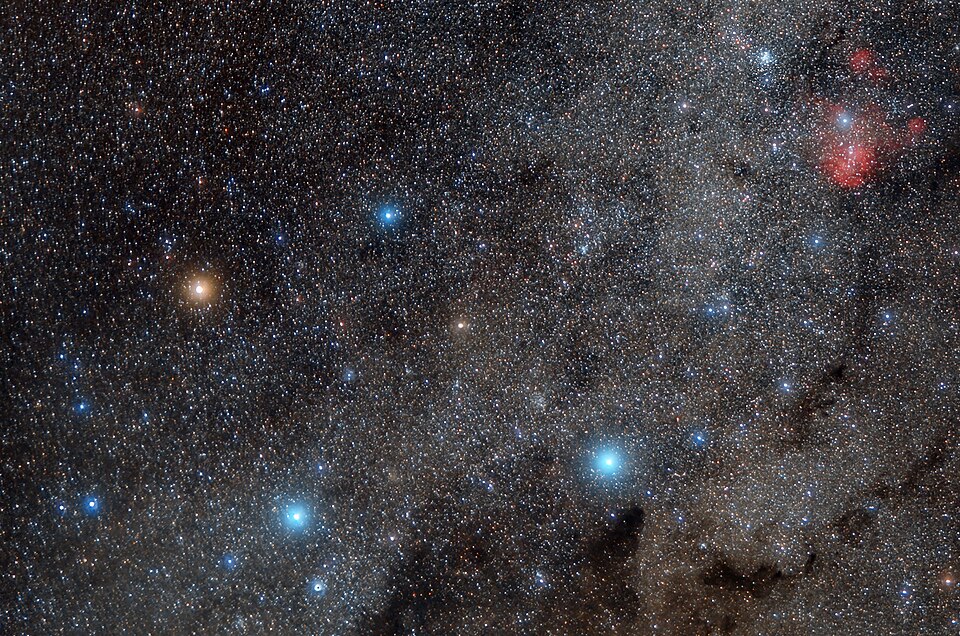
Show students the image of the Southern Cross on Page 4 of the Star patterns Resource sheet. Explain that the Southern Cross is a very important constellation, particularly in the countries in the Southern Hemisphere like Australia, New Zealand, and the Pacific Islands. This is because the Southern Cross can be seen all year round in those countries.
Note: The Southern Cross can be seen in the sky in the Northern Hemisphere, but its visibility depends on the location, time of year, and time of night, and is not year-round.
Discuss where else students may have seen a depiction of the Southern Cross (it appears on the Australian flag, as well as the flags of New Zealand, Samoa, Papua New Guinea, and Brazil) and the significance of its appearance on the Australian flag.
Introduce the Stellarium Web Online Star Map. Ensure the location is set to your location, using the autolocation function or by clicking on the location at the bottom right. Spend some time looking at the night sky in the Star Map.
Next, locate the Southern Cross from your location. See the embedded professional learning Using the Stellarium Web Online Star Map below for guidance on how to locate the Southern Cross.
Show students how the date and time can be changed on the Star Map by clicking on the date and time in the bottom right, and set the date and time to show how the Southern Cross would have appeared in the night sky the previous evening. Explain that together you are going to use this function to track the Southern Cross over the course of a night and the course of a month.
Select one of the stars in the Southern Cross so that it is highlighted on screen. Ask students to watch what happens to the stars over the course of the night, then move the clock forward by an hour at a time.
Discuss what students observed.
Note: You can track the position of your highlighted star during daylight hours as well, when the star is not visible in the sky. This can help students to understand that the stars are still there during the day but can’t be seen (because of the brightness of the Sun’s light). This concept may be confusing for students, so determine if it is appropriate for your class, or perhaps introduce it later in the lesson during the Integrate step.
- What happened to the Southern Cross over the course of the night? Did it stay in the same place, or did it appear to move?
- How much did it appear to move during the night?
- Can we see stars during the day? Why do you think that is?
- Do you think the stars are still there during the day?
Return the Star Map to today’s date and now track the position of the Southern Cross over a month by moving the date forward one day at a time. Record this position to create a ‘map’ showing how the stars appear to move across the sky, marking one star in the constellation, and the time/date it was in that position.
There are several suggestions for how you might create this map. See the Materials list at the top of the page for more information.
Using the Stellarium Web Online Star Map
How do I use the Star Map, and how can I find the Southern Cross?
Stellarium Web Online Star Map is an online planetarium that uses data drawn from multiple sources to render an image of what the sky looked like (or will look like) from a specific location at any particular point in time.
It can also be installed on digital devices through the relevant app store.
On a desktop web browser, locate south (S) on the horizon. One of the stars above the southern horizon is Alpha Centauri. It is one of two stars that always point to the Southern Cross constellation. Drawing a line from Alpha Centauri through Hadar will allow you to identify the five-star constellation that is the Southern Cross, a short distance away. The names of the stars in this constellation are Gacrux, Delta Crucis, Epsilon Crucis, Acrux, and Mimosa.
Selecting the date and time on the bottom right-hand corner will allow you to make changes and observe the movement of the Southern Cross constellation over time. The Southern Cross constellation will rotate around the South Celestial Pole.
Stellarium Web Online Star Map is an online planetarium that uses data drawn from multiple sources to render an image of what the sky looked like (or will look like) from a specific location at any particular point in time.
It can also be installed on digital devices through the relevant app store.
On a desktop web browser, locate south (S) on the horizon. One of the stars above the southern horizon is Alpha Centauri. It is one of two stars that always point to the Southern Cross constellation. Drawing a line from Alpha Centauri through Hadar will allow you to identify the five-star constellation that is the Southern Cross, a short distance away. The names of the stars in this constellation are Gacrux, Delta Crucis, Epsilon Crucis, Acrux, and Mimosa.
Selecting the date and time on the bottom right-hand corner will allow you to make changes and observe the movement of the Southern Cross constellation over time. The Southern Cross constellation will rotate around the South Celestial Pole.
The Inquire phase allows students to cycle progressively and with increasing complexity through the key science ideas related to the core concepts. Each Inquire cycle is divided into three teaching and learning routines that allow students to systematically build their knowledge and skills in science and incorporate this into their current understanding of the world.
When designing a teaching sequence, it is important to consider the knowledge and skills that students will need in the final Act phase. Consider what the students already know and identify the steps that need to be taken to reach the level required. How could you facilitate students’ understanding at each step? What investigations could be designed to build the skills at each step?
Read more about using the LIA FrameworkFollowing an investigation, the Integrate routine provides time and space for data to be evaluated and insights to be synthesized. It reveals new insights, consolidates and refines representations, generalises context and broadens students’ perspectives. It allows student thinking to become visible and opens formative feedback opportunities. It may also lead to further questions being asked, allowing the Inquire phase to start again.
When designing a teaching sequence, consider the diagnostic assessment that was undertaken during the Launch phase. Consider if alternative conceptions could be used as a jumping off point to discussions. How could students represent their learning in a way that would support formative feedback opportunities? Could small summative assessment occur at different stages in the teaching sequence?
Read more about using the LIA FrameworkWhat the stars tell us
In this Integrate step, guide students to link their experiences in the investigation to the science concept being explored—in this instance, that the stars appear to move across the sky at night. Through questioning and discussion, students should come to a consensus that:
|
Discuss the movement of the stars that students observed, both over the course of a single night and over the course of a month.
- Did the stars appear to move in a similar pattern across the course of a month as they did over the course of a night?
- All stars move around the South Celestial Pole. Students may notice that some bright spots (planets with reflected light) do not move in this way. This is because they are not stars and move around our Sun.
- What was the same and different about what you observed in the movement over a night compared to a month?
- The stars will take a similar path, but some will move faster than others.
- What do you think this tell us?
- The stars appear to move across the sky each night, but they don’t end up back in the same spot in the sky the next night—they are in a slightly different location. So if we track their movement across one night in February, and then again on a night in August, they will appear to be in different starting and finishing locations.
Using the Emu in the sky Resource sheet, read about and discuss how Australia's First Nations People used the patterns they observed in the sky to help them live on and care for Country.
Further information can also be found in the book The First Scientists by Corey Tutt (2021).
Reflect on the lesson
You might:
- add words and images to the class word wall.
- re-examine the intended learning goals for the lesson and consider how they were achieved.
- discuss how students were thinking and working like scientists during the lesson.
- Focus on how students were using digital tools and information recorded by others to support their observations of stars. Discuss why these tools were used (powerful equipment is required to photograph and map the stars).
- ask students to locate the visible stars of the Milky Way in the sky, and try to make out and track the changing shape of the Emu in the sky across the year.