

Forces are fun
View Sequence overviewStudents will:
- participate in activities that require the use of push and pull forces.
- make observations about how their actions moved objects when undertaking these activities.
- identify push and pull forces in everyday situations.
- use labelled diagrams with arrows to identify push and pull forces and represent the resulting motion of objects.
Students will represent their understanding as they:
- participate in a variety of activities.
- use their everyday vocabulary to describe push and pull forces.
- annotate a diagram or photograph showing how push and pull forces are used to complete tasks.
In the Launch phase, assessment is diagnostic.
Take note of:
- students’ understanding of push and pull forces through the vocabulary they use.
- Do they use the terms “push” and “pull”?
- Do they equate a push with moving an object further away and a pull with moving an object closer?
- Do they indicate an understanding that a stronger push will move things further faster, or be required to move heavier things the same way as lighter things?
- Do they indicate an understanding that a stronger pull will move things closer faster, or will be required to move heavier things the same way as lighter things?
- students’ ability to identify the need for, and use of, push and pull forces to complete tasks.
Whole class
Class science journal (digital or hard-copy)
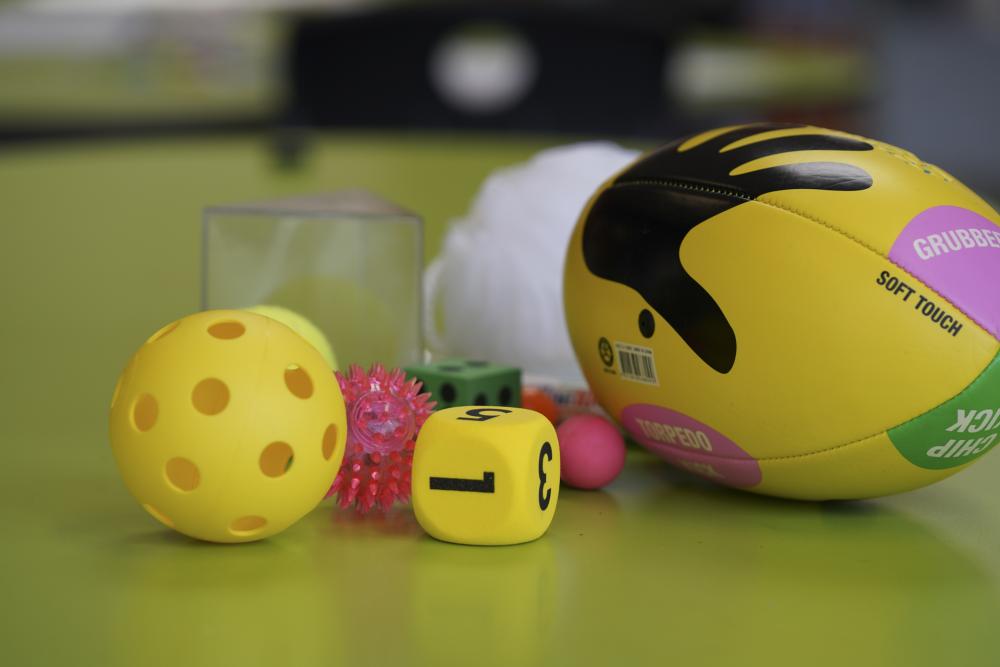
A variety of sports/other equipment that can be used to create a series of activities for students to participate in, for example:
- balls of different sizes and weights (tennis ball, foam ball etc.)
- bats of different sizes (cricket bat, tennis racket etc.)
- cones and markers
- hoops
- ropes
- buckets
- towels
- sponges
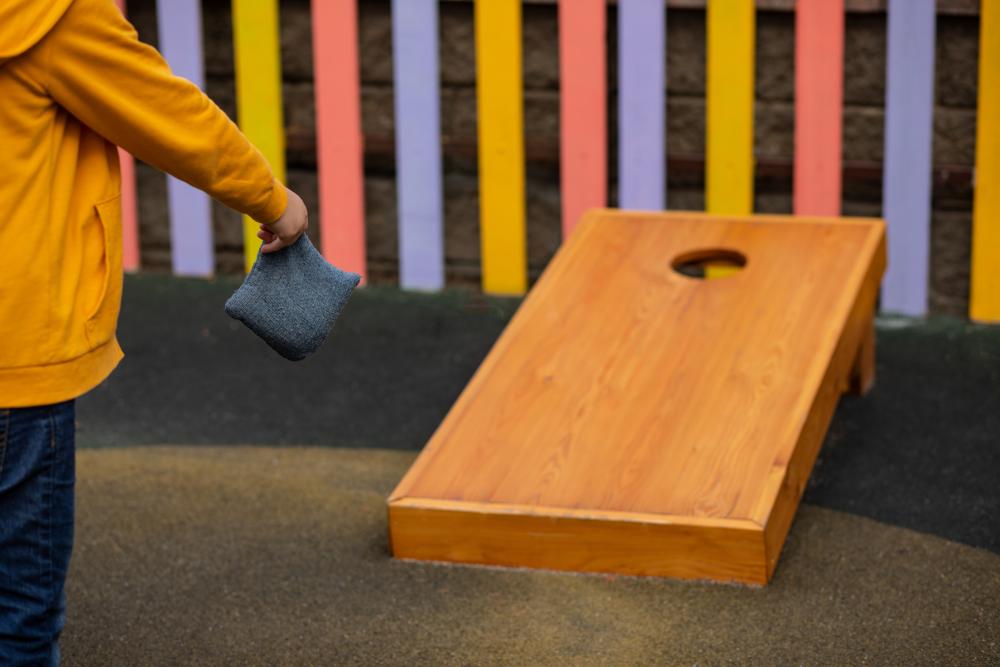
- bean bags
- targets
- water
- gym mats
- balance beams
- various other equipment, depending on the activities you design
Optional: Digital device for taking photos
Optional: A means of printing those photos
Each student
Individual science journal (digital or hard-copy)
Lesson
The Launch phase is designed to increase the science capital in a classroom by asking questions that elicit and explore students’ experiences. It uses local and global contexts and real-world phenomena that inspire students to recognise and explore the science behind objects, events and phenomena that occur in the material world. It encourages students to ask questions, investigate concepts, and engage with the Core Concepts that anchor each unit.
The Launch phase is divided into four routines that:
- ensure students experience the science for themselves and empathise with people who experience the problems science seeks to solve (Experience and empathise)
- anchor the teaching sequence with the key ideas and core science concepts (Anchor)
- elicit students’ prior understanding (Elicit)
- and connect with the students’ lives, languages and interests (Connect).
Students arrive in the classroom with a variety of scientific experiences. This routine provides an opportunity to plan for a common shared experience for all students. The Experience may involve games, role-play, local excursions or yarning with people in the local community. This routine can involve a chance to Empathise with the people who experience the problems science seeks to solve.
When designing a teaching sequence, consider what experiences will be relevant to your students. Is there a location for an excursion, or people to talk to as part of an incursion? Are there local people in the community who might be able to talk about what they are doing? How could you set up your classroom to broaden the students’ thinking about the core science ideas? How could you provide a common experience that will provide a talking point throughout the sequence?
Read more about using the LIA FrameworkIt’s game time
Set up a series of activities for students to complete where each activity requires students to use push and pull movements.
The activities you set up will be dictated by the space and equipment available in your school and your students’ needs. They should involve students using their bodies and/or equipment to enact push and pull movements.
See the embedded professional learning Designing activities for more information, or use the following suggestions:
- Place some different sized balls an appropriate distance from a starting line. Students use a bucket with a rope attached to retrieve all the balls.
- Students are using a pushing movement to throw the bucket, and a pulling motion to drag the bucket and balls back towards them.
- Students throw/push items of a similar size but different weights into a hoop an appropriate distance away.
- Students will need to use different strength pushes, as the heavier items will require more force to move.
- Take care not to use items that are too heavy or hard and could result in students injuring themselves.
- Students roll a ball/throw a bean bag that must rebound off a barrier before reaching a target.
- The barrier causes the object to change direction.
- Build a simple minigolf hole where students have to hit/kick a ball into a barrier in order to rebound it back into a bucket or hoop.
- Students use playdough/bean bag to stop a car/object from rolling down ramps at different inclines.
- Students will need to push and pull the playdough/bean bag into position.
Allow students in teams time to cycle through each activity, having a turn completing each one.
Optional (highly recommended, as they can be used throughout the sequence): Take photographs of students completing the activities for them to annotate in the next step of the lesson. Alternatively, students will draw a picture to annotate. See Preparing for this sequence for further details.
Core concepts and key ideas
Where does this sequence fit into the larger picture of science and the science curriculum?
When planning for teaching in your classroom, it can be useful to see where a sequence fits into the larger picture of science. This unit is anchored to the Science understanding core concepts for Physical Sciences.
- Forces affect the motion and behaviour of objects.
By Year 1 students will have already identified factors that influence the movement of objects. In this teaching sequence they describe how different pushes and pulls change the motion and shape of objects.
This core concept is linked to the key science ideas:
- The relationship between push and pull forces and the way motion changes can be identified (Systems).
- Relative language (bigger/smaller, faster/slower) can be used to describe change (Scale and measurement).
- Common characteristics of movement can be identified (Patterns, order and organisation).
- The motion of objects can be changed (Matter and energy).
- Motion can change slowly or rapidly, and some things appear to stay the same (Stability and change).
When your students next progress through this core concept, they work towards developing an understanding of the effect of frictional, gravitational and magnetic forces on the motion of objects.in Year 4.
When planning for teaching in your classroom, it can be useful to see where a sequence fits into the larger picture of science. This unit is anchored to the Science understanding core concepts for Physical Sciences.
- Forces affect the motion and behaviour of objects.
By Year 1 students will have already identified factors that influence the movement of objects. In this teaching sequence they describe how different pushes and pulls change the motion and shape of objects.
This core concept is linked to the key science ideas:
- The relationship between push and pull forces and the way motion changes can be identified (Systems).
- Relative language (bigger/smaller, faster/slower) can be used to describe change (Scale and measurement).
- Common characteristics of movement can be identified (Patterns, order and organisation).
- The motion of objects can be changed (Matter and energy).
- Motion can change slowly or rapidly, and some things appear to stay the same (Stability and change).
When your students next progress through this core concept, they work towards developing an understanding of the effect of frictional, gravitational and magnetic forces on the motion of objects.in Year 4.
Designing activities
How can activities be designed to give students a range of experiences?
When designing activities for students to undertake at the beginning of this sequence it is important to provide them with opportunities to experience a variety of push and pull movements of varying magnitudes and directions.
Consider the push and pull movements students are required to undertake, how different strength/magnitudes of pushes and pulls might be needed, and how you might make objects change direction.
Include activities that allow students to experience:
- push and pull forces that make objects move and/or change direction.
- push and pull forces that vary in strength (magnitude) and how this variation affects the motion of an object.
- push and pull forces that can change an object’s shape. In this instance try to use obvious examples. For example, when a ball is bounced it changes shape as it hits the ground. However, this change happens quickly and is unlikely to be perceived by students in real-time. When a ball of playdough is squeezed it will change shape, and then remain in that shape until it is pushed/pulled again in a different way. These changes in shape can more be easily observed by students.
In discussing the push and pull movements required by students when participating in the activities, try to avoid talking about the movement of their bodies as it is difficult to explain where these forces are coming from. Focus on the action of the force causing motion, rather than what part of the body is causing the motion. In the classroom this will heard as “The ball was pushed and it started moving” rather than “My hand made the ball start moving”.
When designing activities for students to undertake at the beginning of this sequence it is important to provide them with opportunities to experience a variety of push and pull movements of varying magnitudes and directions.
Consider the push and pull movements students are required to undertake, how different strength/magnitudes of pushes and pulls might be needed, and how you might make objects change direction.
Include activities that allow students to experience:
- push and pull forces that make objects move and/or change direction.
- push and pull forces that vary in strength (magnitude) and how this variation affects the motion of an object.
- push and pull forces that can change an object’s shape. In this instance try to use obvious examples. For example, when a ball is bounced it changes shape as it hits the ground. However, this change happens quickly and is unlikely to be perceived by students in real-time. When a ball of playdough is squeezed it will change shape, and then remain in that shape until it is pushed/pulled again in a different way. These changes in shape can more be easily observed by students.
In discussing the push and pull movements required by students when participating in the activities, try to avoid talking about the movement of their bodies as it is difficult to explain where these forces are coming from. Focus on the action of the force causing motion, rather than what part of the body is causing the motion. In the classroom this will heard as “The ball was pushed and it started moving” rather than “My hand made the ball start moving”.
The Launch phase is designed to increase the science capital in a classroom by asking questions that elicit and explore students’ experiences. It uses local and global contexts and real-world phenomena that inspire students to recognise and explore the science behind objects, events and phenomena that occur in the material world. It encourages students to ask questions, investigate concepts, and engage with the Core Concepts that anchor each unit.
The Launch phase is divided into four routines that:
- ensure students experience the science for themselves and empathise with people who experience the problems science seeks to solve (Experience and empathise)
- anchor the teaching sequence with the key ideas and core science concepts (Anchor)
- elicit students’ prior understanding (Elicit)
- and connect with the students’ lives, languages and interests (Connect).
The Elicit routine provides opportunities to identify students’ prior experiences, existing science capital and potential alternative conceptions related to the Core concepts. The diagnostic assessment allows teachers to support their students to build connections between what they already know and the teaching and learning that occurs during the Inquire cycle.
When designing a teaching sequence, consider when and where students may have been exposed to the core concepts and key ideas in the past. Imagine how a situation would have looked without any prior knowledge. What ideas and thoughts might students have used to explain the situation or phenomenon? What alternative conceptions might your students hold? How will you identify these?
The Deep connected learning in the ‘Pedagogical Toolbox: Deep connected learning’ provides a set of tools to identify common alternative conceptions to aid teachers during this routine.
Read more about using the LIA FrameworkHow did we move things?
Provide students with a photograph of their group participating in one of the activities, or ask them to draw a picture of themselves participating in one of the activities.
Ask students to draw and write on the image to show what is happening. Prompt them with questions such as:
- How did you move the equipment?
- Which direction did you move it?
- How did you make it move fast or slow?
- How did you make things move further, or bring them closer?
- What things made the activity difficult to complete?
Alternatively, students might record their descriptions as an audio/video file or have an adult/older student scribe for them.
Students add the annotated image to their individual science journals.
As a class, brainstorm and record a list of words to describe how students moved objects. These can later be classified into “pushes” or “pulls”.
At this stage it is important to allow students to use their existing vocabulary to express their understanding. This will allow you to make diagnostic assessment about what students already know about push and pull forces. Do not offer any vocabulary that students don’t use themselves.
Alternative conceptions
What alternative conceptions might students hold about push and pull forces? How does this sequence address them?

Students enter the classroom with prior experiences that shape how they understand the world. While some of their ideas align with scientific thinking, many hold alternative conceptions formed through preconceptions, intuition, misinformation, limited exposure, or everyday use of scientific language.
The first stage of addressing any alternative conceptions is identifying students’ existing ideas. Alternative conceptions can be identified by asking open-ended questions, and listening to students’ ideas during discussions, predictions, and diagnostic activities that encourage students to explain their reasoning. Creating a safe classroom environment where students feel comfortable sharing their thinking is essential, as it allows alternative conceptions to surface without fear of being wrong.
In terms of this sequence, many students may have non-scientific ideas about forces. They might associate forces with movement, and movement with living things, and therefore believe that only living things exert forces.
Many students think that forces are acting only when an object moves and that a force has to be continuously applied to an object to keep it moving. This is reinforced by their everyday experiences, because they will often have to keep applying force to an object to make movement continue. Understanding that movement will continue indefinitely until an opposing force (such as friction) slows an object down and makes movement stop is a complex idea that is developed over time.
In this Elicit routine students are asked to identify how they made objects move, kept them moving, and made them move faster or further. They are given the opportunity to show the direction and magnitude of forces when drawing on their photos or drawing a diagram. Look to see if they are naturally using arrows to do this.
This sequence has been designed to given them explicitly address any alternative conceptions about forces that students may hold. The Integrate routine is a fundamental part of this process as it provides the opportunity to directly link students’ recent experiences with the accepted scientific understanding.
- In Lesson 2 students develop and understanding that pushes move objects further away and pulls bring them closer. They begin to explore that forces occur between two objects.
- In Lesson 3 students focus on the need for pushes and pulls to start, stop and continue motion and to help objects speed up. They also touch on the idea that not all pushes and pulls result in motion.
- In Lesson 4 students explore how pushes and pulls can make an object change direction.
- In Lesson 5 students consider how pushes and pulls might change an object’s shape.
- In Lesson 6 students learn about force magnitude—put simply, a bigger push makes something go further than a smaller push, and bigger pushes are needed to move heavier objects.
- In Lesson 7 students further consider how mass can affect movement by exploring how easy or difficult it is to pull a single object as opposed to a large number of the same object.
Students enter the classroom with prior experiences that shape how they understand the world. While some of their ideas align with scientific thinking, many hold alternative conceptions formed through preconceptions, intuition, misinformation, limited exposure, or everyday use of scientific language.
The first stage of addressing any alternative conceptions is identifying students’ existing ideas. Alternative conceptions can be identified by asking open-ended questions, and listening to students’ ideas during discussions, predictions, and diagnostic activities that encourage students to explain their reasoning. Creating a safe classroom environment where students feel comfortable sharing their thinking is essential, as it allows alternative conceptions to surface without fear of being wrong.
In terms of this sequence, many students may have non-scientific ideas about forces. They might associate forces with movement, and movement with living things, and therefore believe that only living things exert forces.
Many students think that forces are acting only when an object moves and that a force has to be continuously applied to an object to keep it moving. This is reinforced by their everyday experiences, because they will often have to keep applying force to an object to make movement continue. Understanding that movement will continue indefinitely until an opposing force (such as friction) slows an object down and makes movement stop is a complex idea that is developed over time.
In this Elicit routine students are asked to identify how they made objects move, kept them moving, and made them move faster or further. They are given the opportunity to show the direction and magnitude of forces when drawing on their photos or drawing a diagram. Look to see if they are naturally using arrows to do this.
This sequence has been designed to given them explicitly address any alternative conceptions about forces that students may hold. The Integrate routine is a fundamental part of this process as it provides the opportunity to directly link students’ recent experiences with the accepted scientific understanding.
- In Lesson 2 students develop and understanding that pushes move objects further away and pulls bring them closer. They begin to explore that forces occur between two objects.
- In Lesson 3 students focus on the need for pushes and pulls to start, stop and continue motion and to help objects speed up. They also touch on the idea that not all pushes and pulls result in motion.
- In Lesson 4 students explore how pushes and pulls can make an object change direction.
- In Lesson 5 students consider how pushes and pulls might change an object’s shape.
- In Lesson 6 students learn about force magnitude—put simply, a bigger push makes something go further than a smaller push, and bigger pushes are needed to move heavier objects.
- In Lesson 7 students further consider how mass can affect movement by exploring how easy or difficult it is to pull a single object as opposed to a large number of the same object.
The Launch phase is designed to increase the science capital in a classroom by asking questions that elicit and explore students’ experiences. It uses local and global contexts and real-world phenomena that inspire students to recognise and explore the science behind objects, events and phenomena that occur in the material world. It encourages students to ask questions, investigate concepts, and engage with the Core Concepts that anchor each unit.
The Launch phase is divided into four routines that:
- ensure students experience the science for themselves and empathise with people who experience the problems science seeks to solve (Experience and empathise)
- anchor the teaching sequence with the key ideas and core science concepts (Anchor)
- elicit students’ prior understanding (Elicit)
- and connect with the students’ lives, languages and interests (Connect).
Science education consists of a series of key ideas and core concepts that can explain objects, events and phenomena, and link them to the experiences encountered by students in their lives. The purpose of the Anchor routine is to identify the key ideas and concepts in a way that builds and deepens students’ understanding. During the Launch phase, the Anchor routine provides a lens through which to view the classroom context, and a way to frame the key knowledge and skills students will be learning.
When designing a teaching sequence, consider the core concepts and key ideas that are relevant. Break these into small bite-sized pieces that are relevant to the age and stage of your students. Consider possible alternative concepts that students might hold. How could you provide activities or ask questions that will allow students to consider what they know?
Each student comes to the classroom with experiences made up from science-related knowledge, attitudes, experiences and resources in their life. The Connect routine is designed to tap into these experiences and that of their wider community. It is also an opportunity to yarn with community leaders (where appropriate) to gain an understanding of the student’s lives, languages and interests. In the Launch phase, this routine identifies and uses the science capital of students as the foundation of the teaching sequence so students can appreciate the relevance of their learning and its potential impact on future decisions. In short, this routine moves beyond scientific literacy and increases the science capital in the classroom and science identity of the students.
When planning a teaching sequence, take an interest in the lives of your students. What are their hobbies, how do they travel to and from school? What might have happened in the lives of your students (i.e. blackouts) that might be relevant to your next teaching sequence? What context might be of interest to your students?
Read more about using the LIA FrameworkA moving challenge
Introduce and link the context of the unit—that students will be:
- learning about the ways people and objects move and how they can influence that movement.
- designing an activity where they will use parts of their body or equipment to change the movement of objects.
Ask students if they have any questions and create an “Our questions” record in the class science journal.
Reflect on the lesson
You might:
- begin a class word wall or glossary of relevant terms and images that students will likely use through the sequence. This might include labelled images of the activities students completed, with annotations showing the movements and equipment involved.
- discuss which activities students enjoyed and any they found particularly challenging and why.