

Forces are fun
View Sequence overviewStudents will:
- contribute to planning a fair test by identifying the variable being changed, the variable being measured, and the variables that must be kept the same.
- observe and describe how the mass of an object affects the size of the pulling force needed to move it.
Students will represent their understanding as they:
- use oral, written and visual language to record and analyse investigation results.
- discuss findings to reach consensus about the impact of mass on pulling forces.
In this lesson, assessment is formative.
Feedback might focus on:
- students’ identification of a pulling force, and their understanding of how mass affects the amount of force required to pull an object.
Whole class
Class science journal (digital or hard-copy)
2 x objects (or images of objects) that are the same object but obviously different in size and mass/weight (such as a large and small rock or a thick and thin book)
2 x identical bottles/containers (sealable), one empty and one filled with water
Demonstration copy of the Pulling light and heavy objects investigation planner Resource sheet
Each group
At least 3 x identical bottles/containers (sealable) filled with water
1 x tub or box to place the water bottles in
Each student
Individual science journal (digital or hard-copy)
Optional: Pulling light and heavy objects investigation planner Resource sheet
Lesson
Re-orient
Review the definition for the word “pull”, and identify objects in the classroom that need to be pulled to fulfil their function. Use examples objects where pulling is a key requirement of their use, such as:
- A tub inside a shelf/pigeon hole needs to be pulled out to be accessed.
- The cover of a book needs to be pulled upwards to open.
- A door needs to be pulled to open.
The Inquire phase allows students to cycle progressively and with increasing complexity through the key science ideas related to the core concepts. Each Inquire cycle is divided into three teaching and learning routines that allow students to systematically build their knowledge and skills in science and incorporate this into their current understanding of the world.
When designing a teaching sequence, it is important to consider the knowledge and skills that students will need in the final Act phase. Consider what the students already know and identify the steps that need to be taken to reach the level required. How could you facilitate students’ understanding at each step? What investigations could be designed to build the skills at each step?
Read more about using the LIA FrameworkIdentifying and constructing questions is the creative driver of the inquiry process. It allows students to explore what they know and how they know it. During the Inquire phase of the LIA Framework, the Question routine allows for past activities to be reviewed and to set the scene for the investigation that students will undertake. The use of effective questioning techniques can influence students’ view and interpretation of upcoming content, open them to exploration and link to their current interests and science capital.
When designing a teaching sequence, it is important to spend some time considering the mindset of students at the start of each Inquire phase. What do you want students to be thinking about, what do they already know and what is the best way for them to approach the task? What might tap into their curiosity?
Read more about using the LIA FrameworkEasier to pull?
Display two objects (or images of objects) that students will easily recognise as having a different mass, for example a large rock versus a smaller one.
Ask students which object they would rather pull along behind them/have in their pocket during a running race and why they think that. Record students’ ideas in the class science journal.
Teacher note: It is likely that students will refer to the weight of the objects when describing why they would rather pull one than the other. This is acceptable at this stage, as it is not required for students to understand the differences between weight and mass. See the embedded professional learning Weight versus mass for more details.
Next, show students two plastic bottles/container of the same size, one that is empty and one that has been filled with water.
Discuss the differences and similarities between them.
- What do you notice about these two bottles?
- How are they the same?
- How are they different?
- Do they look the same size?
- Can you see what is inside each one?
- What do you notice when you pick them up?
- Which one feels heavier?
- Does the heavier one look bigger?
- Why do you think it feels heavier?
Pose the question: Does the amount of “stuff” inside an object make it harder or easier to pull?
Weight versus mass
How are weight and mass different?
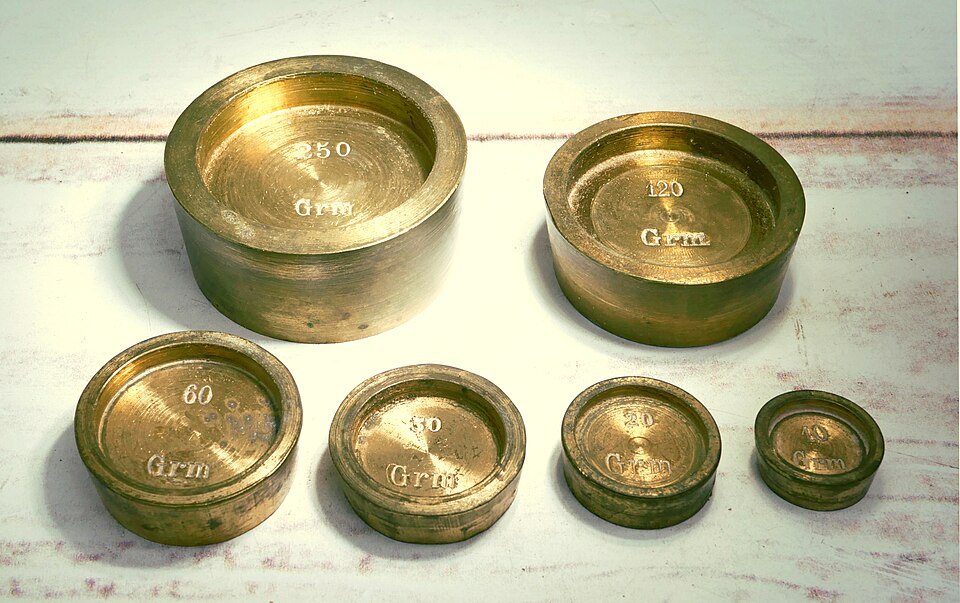
The terms “weight” and “mass” are often used interchangeably, and even incorrectly, in everyday language. Scientifically they describe different ideas.
It is a common misconception that scales measure weight. This is reinforced in everyday language, as it is common to give/receive an answer in grams (g) or kilograms (kg) when asked what something weighs.
However, it is mass, not weight, that is measured in grams or kilograms.
Mass is the amount of matter in an object, and it is measured using balances or digital scales. Objects with more mass are harder to push and get moving.
Importantly, mass does not change depending on where the object is. A 1 kg object remains 1 kg whether it is on Earth, on the Moon, or on Mars.
Weight, by contrast, is actually a force. It is the pull of gravity acting on an object’s mass. Weight is measured in Newtons (N) using a spring scale or Newton meter. Because weight depends on gravity (or the gravitational field strength) it can change depending on location. An object would weigh less on the Moon than on Earth because the acceleration due to gravity on the surface of the Moon’s is weaker than on Earth’s surface. The same object would weigh more on a planet with stronger gravity.
At this level, students can understand mass as how much “stuff” is inside an object, but they might refer to the full water bottle as “weighing more” than a less full one. Whilst students may use this terminology, take care not to use these terms when asking questions or in discussions in order to avoid reinforcing misconceptions. Phrases such as How much stuff/water is inside the bottle? or Which one feels heavier/lighter? are more appropriate.
The terms “weight” and “mass” are often used interchangeably, and even incorrectly, in everyday language. Scientifically they describe different ideas.
It is a common misconception that scales measure weight. This is reinforced in everyday language, as it is common to give/receive an answer in grams (g) or kilograms (kg) when asked what something weighs.
However, it is mass, not weight, that is measured in grams or kilograms.
Mass is the amount of matter in an object, and it is measured using balances or digital scales. Objects with more mass are harder to push and get moving.
Importantly, mass does not change depending on where the object is. A 1 kg object remains 1 kg whether it is on Earth, on the Moon, or on Mars.
Weight, by contrast, is actually a force. It is the pull of gravity acting on an object’s mass. Weight is measured in Newtons (N) using a spring scale or Newton meter. Because weight depends on gravity (or the gravitational field strength) it can change depending on location. An object would weigh less on the Moon than on Earth because the acceleration due to gravity on the surface of the Moon’s is weaker than on Earth’s surface. The same object would weigh more on a planet with stronger gravity.
At this level, students can understand mass as how much “stuff” is inside an object, but they might refer to the full water bottle as “weighing more” than a less full one. Whilst students may use this terminology, take care not to use these terms when asking questions or in discussions in order to avoid reinforcing misconceptions. Phrases such as How much stuff/water is inside the bottle? or Which one feels heavier/lighter? are more appropriate.
The Inquire phase allows students to cycle progressively and with increasing complexity through the key science ideas related to the core concepts. Each Inquire cycle is divided into three teaching and learning routines that allow students to systematically build their knowledge and skills in science and incorporate this into their current understanding of the world.
When designing a teaching sequence, it is important to consider the knowledge and skills that students will need in the final Act phase. Consider what the students already know and identify the steps that need to be taken to reach the level required. How could you facilitate students’ understanding at each step? What investigations could be designed to build the skills at each step?
Read more about using the LIA FrameworkThe Investigate routine provides students with an opportunity to explore the key ideas of science, to plan and conduct an investigation, and to gather and record data. The investigations are designed to systematically develop content knowledge and skills through increasingly complex processes of structured inquiry, guided inquiry and open inquiry approaches. Students are encouraged to process data to identify trends and patterns and link them to the real-world context of the teaching sequence.
When designing a teaching sequence, consider the diagnostic assessment (Launch phase) that identified the alternative conceptions that students held. Are there activities that challenge these ideas and provide openings for discussion? What content knowledge and skills do students need to be able to complete the final (Act phase) task? How could you systematically build these through the investigation routines? Are there opportunities to build students’ understanding and skills in the science inquiry processes through the successive investigations?
Read more about using the LIA FrameworkInvestigating pulling forces
Students place large bottles filled with water in a tub/box and investigate to see how easy or difficult it is to pull them along a surface. To make it a fair test:
- the same student will pull the box/tub with the same pull force each time.
- the same surface will be pulled across for each trial.
- Pulling tubs along a smooth, shiny surface, such a desk or tiled or linoleum floor, is best for this investigation.
- Using a rough surface such as carpet, grass or asphalt introduces friction into the investigation, which students are not conceptually ready for.
- the same size bottles will be added to the box/tub each time.
- the same amount of water will be added to each bottle.
Plan the investigation as a class using the Pulling light and heavy objects investigation planner Resource sheet.
Identify what you will:
- keep the same: the box/tub being pulled, the size of the bottles/containers, the amount of water in them, the surface the tub/box is pulled along.
- observe: whether it is heavier or lighter to pull the tub/box with more or less water bottles.
- change: how many large water bottles are in the tub.
Allow teams time to investigate. Teams/students can represent their findings in their individual science journals, or their thoughts can be recorded as a whole class during the Integrate routine.
Optional: Take photographs of students pulling the tubs to use during the Integrate routine.
The Inquire phase allows students to cycle progressively and with increasing complexity through the key science ideas related to the core concepts. Each Inquire cycle is divided into three teaching and learning routines that allow students to systematically build their knowledge and skills in science and incorporate this into their current understanding of the world.
When designing a teaching sequence, it is important to consider the knowledge and skills that students will need in the final Act phase. Consider what the students already know and identify the steps that need to be taken to reach the level required. How could you facilitate students’ understanding at each step? What investigations could be designed to build the skills at each step?
Read more about using the LIA FrameworkFollowing an investigation, the Integrate routine provides time and space for data to be evaluated and insights to be synthesized. It reveals new insights, consolidates and refines representations, generalises context and broadens students’ perspectives. It allows student thinking to become visible and opens formative feedback opportunities. It may also lead to further questions being asked, allowing the Inquire phase to start again.
When designing a teaching sequence, consider the diagnostic assessment that was undertaken during the Launch phase. Consider if alternative conceptions could be used as a jumping off point to discussions. How could students represent their learning in a way that would support formative feedback opportunities? Could small summative assessment occur at different stages in the teaching sequence?
Read more about using the LIA FrameworkMore force
In the following Integrate routine, students are guided to link their experiences in pulling objects with the science explored, that is, that pulling objects of a greater mass requires more force to be applied to an object. Through questioning and discussion, students should come to a consensus that:
|
Summarise what students found on the demonstration copy of the Pulling light and heavy objects investigation planner Resource sheet.
- What did you notice when you pulled the tub?
- Was it easy or hard to pull at first?
- What happened when we added more bottles?
- Did you have to pull gently or strongly?
- Which tub was harder to pull—the one with lots of bottles or not many bottles? Why do you think that was?
- If something has more “stuff” inside it (more mass), what happens when we try to pull it?
- Which way was the tub moving?
- How can we show that direction in our picture?
- Where should we draw the arrow?
- Should the arrow point the way we pulled, or the way the tub moved?
- The arrow should point in the direction of the pull force.
- So what have we learned about pulling heavy things?
Draw a representation of the tub/box being pulled or annotate a photograph of students undertaking the activity. Include an arrow to show the direction the tub was pulled in. Ask students if they think there is a way that they could represent the amount of effort required to pull more bottles. Guide students to consider the length of the arrow to represent the amount of pull force they are using.
Optional: Students draw a representation of themselves using pulling forces in their everyday activities, annotating it with the required arrows and any helpful labels.
Reflect on the lesson
You might:
- review the class word wall and add any terms used related to push and pull forces.
- revise how push and pull forces are used in many parts of everyday life.
- revise what students have learned using the class science journal.