

Access all areas
View Sequence overviewStudents will:
- identify and describe their current thinking about forces and motion.
- observe the effects that different surfaces and terrains have on the movement of an object.
Students will represent their understanding as they:
- contribute to class discussions.
- record their observations in a table.
In the Launch phase, assessment is diagnostic.
Take note of:
- the vocabulary students use to describe how things move.
- students’ understanding of how pushes and pulls affect an object’s motion and shape, including any ideas about the strength and direction of these forces.
- students’ life experiences as they relate to forces, movement and accessibility.
Class science journal (digital or hard-copy)
Optional: Materials to make a word wall or glossary
Materials to make a TWLH chart
Demonstration copy of the Moving around Resource sheet
1 x box. Each group may have a different sized/shaped box, made of a range of materials.
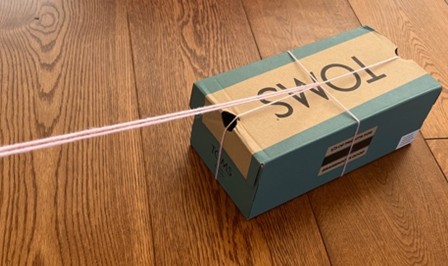
String or rope to connect to the box, to enable it to be pulled
Item/s to place inside the box. Have a variety of items available to select from, such as items that are large/heavy/delicate.
Optional: Digital device to take photograph or record video
Each student
Individual science journal (digital or hard-copy)
Lesson
The Launch phase is designed to increase the science capital in a classroom by asking questions that elicit and explore students’ experiences. It uses local and global contexts and real-world phenomena that inspire students to recognise and explore the science behind objects, events and phenomena that occur in the material world. It encourages students to ask questions, investigate concepts, and engage with the Core Concepts that anchor each unit.
The Launch phase is divided into four routines that:
- ensure students experience the science for themselves and empathise with people who experience the problems science seeks to solve (Experience and empathise)
- anchor the teaching sequence with the key ideas and core science concepts (Anchor)
- elicit students’ prior understanding (Elicit)
- and connect with the students’ lives, languages and interests (Connect).
Students arrive in the classroom with a variety of scientific experiences. This routine provides an opportunity to plan for a common shared experience for all students. The Experience may involve games, role-play, local excursions or yarning with people in the local community. This routine can involve a chance to Empathise with the people who experience the problems science seeks to solve.
When designing a teaching sequence, consider what experiences will be relevant to your students. Is there a location for an excursion, or people to talk to as part of an incursion? Are there local people in the community who might be able to talk about what they are doing? How could you set up your classroom to broaden the students’ thinking about the core science ideas? How could you provide a common experience that will provide a talking point throughout the sequence?
Read more about using the LIA FrameworkThe Elicit routine provides opportunities to identify students’ prior experiences, existing science capital and potential alternative conceptions related to the Core concepts. The diagnostic assessment allows teachers to support their students to build connections between what they already know and the teaching and learning that occurs during the Inquire cycle.
When designing a teaching sequence, consider when and where students may have been exposed to the core concepts and key ideas in the past. Imagine how a situation would have looked without any prior knowledge. What ideas and thoughts might students have used to explain the situation or phenomenon? What alternative conceptions might your students hold? How will you identify these?
The Deep connected learning in the ‘Pedagogical Toolbox: Deep connected learning’ provides a set of tools to identify common alternative conceptions to aid teachers during this routine.
Read more about using the LIA FrameworkHow does it slide?
In teams, students will undertake a walk around the school, moving a package across different terrains.
Before the walk
Explain to students that they are going to be responsible for taking a package for a ‘walk’ around the school without lifting it—the package must always remain in contact with the ground.
Look at the assortment of boxes that teams will be using as their package and brainstorm/describe the types of items that could go into it. For example, books might be heavy, something glass (such as a vase) might be fragile, or a pot plant might need to stay upright to avoid spilling the soil.
Next ask students for suggestions about how they might be able to move the package while keeping contact with the ground. If necessary, show students the rope/string they will connect to the package in order to facilitate its movement. Ask students to identify the type of movement they will need to move the packages—either pulling the package using the attached string/rope or pushing it with their hands, prompting them to distinguish between and define a push and pull movement as required.
Discuss what students might have to take into account when moving the package, depending on the type of box and the contents they select. For example, if the contents are fragile, what might happen if they move the package across a very bumpy surface? Or, if it is heavy, what might happen if they attempt to pull it up a steep hill?
In teams, provide time for students to select a box, its contents, and attach a string or rope to it in a manner they deem secure. Monitor this to ensure that students do not put anything too heavy in their boxes, and that the string is strong enough not to break.
Map out a route through the school grounds so that the package travels across as many different terrains as possible, such as up and down slopes, ramps and stairs, across grass, sand, dirt, rocks or uneven areas, carpet, floorboards, or around corners, bends, high traffic areas etc.
During the walk
Teams undertake their walk, stopping periodically to observe and record the movement of the object on different surfaces and terrains. They might make these observations as notes and diagrams in the science journals, or by taking photos and videos.
Provide the level of supervision on this walk that is required by your students and school environment.
Remind students that they are taking their boxes for a walk around the school, and that moving in another way, like running, will affect the validity of their scientific observations and ability to fairly and accurately compare their experiences to others.
If you have students in your class who use mobility aids, they can make observations about how different surfaces/terrains affect the use of these aids.
After the walk
Upon completing the walk, allow students the opportunity to assess their box and its contents for any damage and record their observations.
Teams share their experiences and reasoning with the class.
- Was there a connection between the box you selected and the contents you selected? If so, what was it?
- Was there a connection between the package and the way you attached the string/rope? If so, what was it?
- What experiences did you have as you pulled your package across the different terrains? Were some terrains easier/harder than others? Why do you think that was?
- What condition was your package in when the walk was finished? Was there any damage?
- When is it important for an object to move or not move easily?
Core concepts and key ideas
Where does this sequence fit into the larger picture of science and the science curriculum?
When planning for teaching in your classroom, it can be useful to see where a sequence fits into the larger picture of science. This unit is anchored to the Science understanding core concepts for Physical sciences.
- Forces affect the motion and behaviour of objects.
Year 4 students have encountered this core concept already in both Foundation, where they explored how objects move and how this can be affected by their size, shape and material, and in Year 1, where they described pushes and pulls and made predictions about the effects of these forces on motion and shape.
In Year 4, students work towards developing an understanding of the effect of frictional, gravitational and magnetic forces on the motion of objects.
This core concept is linked to the key science ideas:
- The components of forces and their interactions can be described. (Systems)
- The effect of missing forces in a system may be predicted. (Systems)
- The observable form of objects can change over time as a result of forces. (Form and function)
- Forces and motion can be described and compared using relative language and standard units of measurement. (Scale and measurement)
- Similarities and differences can be used to sort forces and their effects. (Patterns, order and organisation)
When your students next progress through this core concept, they will investigate and represent balanced and unbalanced forces, including gravitational force, acting on objects, and relate changes in an object’s motion to its mass and the magnitude and direction of forces acting on it (Year 7).
When planning for teaching in your classroom, it can be useful to see where a sequence fits into the larger picture of science. This unit is anchored to the Science understanding core concepts for Physical sciences.
- Forces affect the motion and behaviour of objects.
Year 4 students have encountered this core concept already in both Foundation, where they explored how objects move and how this can be affected by their size, shape and material, and in Year 1, where they described pushes and pulls and made predictions about the effects of these forces on motion and shape.
In Year 4, students work towards developing an understanding of the effect of frictional, gravitational and magnetic forces on the motion of objects.
This core concept is linked to the key science ideas:
- The components of forces and their interactions can be described. (Systems)
- The effect of missing forces in a system may be predicted. (Systems)
- The observable form of objects can change over time as a result of forces. (Form and function)
- Forces and motion can be described and compared using relative language and standard units of measurement. (Scale and measurement)
- Similarities and differences can be used to sort forces and their effects. (Patterns, order and organisation)
When your students next progress through this core concept, they will investigate and represent balanced and unbalanced forces, including gravitational force, acting on objects, and relate changes in an object’s motion to its mass and the magnitude and direction of forces acting on it (Year 7).
Alternative conceptions
What alternative conceptions might students hold and how does this sequence address them?
Taking account of students’ existing ideas is important in planning effective teaching approaches that help students learn science. Students develop their own ideas during their experiences in everyday life and might hold more than one idea about an event or phenomenon. As students will have many and varied experiences with forces and motion, it is common for them to hold strong ideas and alternative conceptions. Thus, it is an important area to teach well.
Students often associate forces and motion with living things, particularly humans and animals. Forces act on all objects regardless of whether they are living or non-living, sometimes resulting in motion and/or change of shape or direction.
Students might have the view that force is a property of an object, that the object has force, or is within the object. Expressions such as ‘may the force be with you’ or other meanings for force, such as ‘police force’, can often reinforce this conception. However, a force is an external factor between two objects, not something that is an internal property of an object
Students might believe that for something to keep moving at the same speed, a constant force is needed, that the amount of motion is determined by force, that to move fast requires more force than to move slowly, and/or that stationary objects are not subjected to any forces. However, objects do not need to be continuously pushed or pulled to continue moving. Think about throwing a ball. Once it leaves your hand, there is no longer any throwing force being applied, yet it continues to move. It will slow down because of air resistance (a type of friction) and the pull of Earth’s gravity.
For many students, the idea of force might be limited to those forces involving physical contact. Though we experience many forces that have direct contact, some forces act at a distance, such as gravity, magnetism, and electrical forces.
General alternative conceptions about force will be addressed as the sequence progresses and students represent their learning by creating jointly constructed and independent force-arrow diagrams. These representations will support students to develop an understanding that forces are acting upon all things, both living and non-living, all the time.
This sequence explores the forces of friction (Lesson 2), gravity (Lesson 3), magnetism (Lesson 4), and buoyancy (Lesson 5). Information about how specific alternative conceptions related to each type of force, and how these are addressed, appears in the relevant lesson.
Taking account of students’ existing ideas is important in planning effective teaching approaches that help students learn science. Students develop their own ideas during their experiences in everyday life and might hold more than one idea about an event or phenomenon. As students will have many and varied experiences with forces and motion, it is common for them to hold strong ideas and alternative conceptions. Thus, it is an important area to teach well.
Students often associate forces and motion with living things, particularly humans and animals. Forces act on all objects regardless of whether they are living or non-living, sometimes resulting in motion and/or change of shape or direction.
Students might have the view that force is a property of an object, that the object has force, or is within the object. Expressions such as ‘may the force be with you’ or other meanings for force, such as ‘police force’, can often reinforce this conception. However, a force is an external factor between two objects, not something that is an internal property of an object
Students might believe that for something to keep moving at the same speed, a constant force is needed, that the amount of motion is determined by force, that to move fast requires more force than to move slowly, and/or that stationary objects are not subjected to any forces. However, objects do not need to be continuously pushed or pulled to continue moving. Think about throwing a ball. Once it leaves your hand, there is no longer any throwing force being applied, yet it continues to move. It will slow down because of air resistance (a type of friction) and the pull of Earth’s gravity.
For many students, the idea of force might be limited to those forces involving physical contact. Though we experience many forces that have direct contact, some forces act at a distance, such as gravity, magnetism, and electrical forces.
General alternative conceptions about force will be addressed as the sequence progresses and students represent their learning by creating jointly constructed and independent force-arrow diagrams. These representations will support students to develop an understanding that forces are acting upon all things, both living and non-living, all the time.
This sequence explores the forces of friction (Lesson 2), gravity (Lesson 3), magnetism (Lesson 4), and buoyancy (Lesson 5). Information about how specific alternative conceptions related to each type of force, and how these are addressed, appears in the relevant lesson.
The Launch phase is designed to increase the science capital in a classroom by asking questions that elicit and explore students’ experiences. It uses local and global contexts and real-world phenomena that inspire students to recognise and explore the science behind objects, events and phenomena that occur in the material world. It encourages students to ask questions, investigate concepts, and engage with the Core Concepts that anchor each unit.
The Launch phase is divided into four routines that:
- ensure students experience the science for themselves and empathise with people who experience the problems science seeks to solve (Experience and empathise)
- anchor the teaching sequence with the key ideas and core science concepts (Anchor)
- elicit students’ prior understanding (Elicit)
- and connect with the students’ lives, languages and interests (Connect).
Science education consists of a series of key ideas and core concepts that can explain objects, events and phenomena, and link them to the experiences encountered by students in their lives. The purpose of the Anchor routine is to identify the key ideas and concepts in a way that builds and deepens students’ understanding. During the Launch phase, the Anchor routine provides a lens through which to view the classroom context, and a way to frame the key knowledge and skills students will be learning.
When designing a teaching sequence, consider the core concepts and key ideas that are relevant. Break these into small bite-sized pieces that are relevant to the age and stage of your students. Consider possible alternative concepts that students might hold. How could you provide activities or ask questions that will allow students to consider what they know?
The Elicit routine provides opportunities to identify students’ prior experiences, existing science capital and potential alternative conceptions related to the Core concepts. The diagnostic assessment allows teachers to support their students to build connections between what they already know and the teaching and learning that occurs during the Inquire cycle.
When designing a teaching sequence, consider when and where students may have been exposed to the core concepts and key ideas in the past. Imagine how a situation would have looked without any prior knowledge. What ideas and thoughts might students have used to explain the situation or phenomenon? What alternative conceptions might your students hold? How will you identify these?
The Deep connected learning in the ‘Pedagogical Toolbox: Deep connected learning’ provides a set of tools to identify common alternative conceptions to aid teachers during this routine.
Read more about using the LIA FrameworkHow do things move?
Construct and record a shared definition of the terms ‘push’ and ‘pull’ in the class science journal. Refer to the following definitions as required:
- A push: applying a force away from you or in a direction that moves something away.
- A pull: applying a force toward you or in a direction that draws something closer.
Introduce the term ‘force’ if required: a push or a pull between objects that changes their speed, direction, or shape.
Optional: Record these words for the class word wall or glossary.
Demonstrate, or have students enact, some simple push or pull interactions between objects, predicting what they think will happen, and then describing what happens and comparing it to predictions.
- What will happen when a rolling ball hits an obstacle such as wall?
- If I’m pulling an object towards me, how do I stop it moving? What about an object moving away from me, how does it stop?
- Is it easier to push or pull objects across certain surfaces? What evidence can you draw from our package-moving task to support your ideas?
- If I try to slide, in socks, across a wood floor or carpet, on which surface will I travel further and why?
Support students to expand their push and pull definitions to state explicitly that for an object to move, speed up, slow down, change direction or change shape, a stronger/larger push or pull force from another object must be involved.
Ask the students if they can identify any of the forces acting on their packages as they moved them around the school. You might do this through discussion, drawing a shared diagram of a package in the class science journal, and labelling it, or students might draw individual labelled diagrams in their science journals.
Note: At this point, students may begin to talk about gravity “keeping the object on the ground”, or the force of friction making the box more difficult to pull/slowing it down on certain surfaces. This is not essential knowledge at this point, as it has not appeared yet in the curriculum, but it is worth taking note if students mention these ideas. These terms should not be introduced if students do not offer them.
Explain that over the course of this sequence, we are going to attempt to answer questions about how things move through a series of investigations and observations.
Record what students Think they know and what they Want to know about forces etc. in the T and W sections of a class TWLH chart.
The Launch phase is designed to increase the science capital in a classroom by asking questions that elicit and explore students’ experiences. It uses local and global contexts and real-world phenomena that inspire students to recognise and explore the science behind objects, events and phenomena that occur in the material world. It encourages students to ask questions, investigate concepts, and engage with the Core Concepts that anchor each unit.
The Launch phase is divided into four routines that:
- ensure students experience the science for themselves and empathise with people who experience the problems science seeks to solve (Experience and empathise)
- anchor the teaching sequence with the key ideas and core science concepts (Anchor)
- elicit students’ prior understanding (Elicit)
- and connect with the students’ lives, languages and interests (Connect).
Each student comes to the classroom with experiences made up from science-related knowledge, attitudes, experiences and resources in their life. The Connect routine is designed to tap into these experiences and that of their wider community. It is also an opportunity to yarn with community leaders (where appropriate) to gain an understanding of the student’s lives, languages and interests. In the Launch phase, this routine identifies and uses the science capital of students as the foundation of the teaching sequence so students can appreciate the relevance of their learning and its potential impact on future decisions. In short, this routine moves beyond scientific literacy and increases the science capital in the classroom and science identity of the students.
When planning a teaching sequence, take an interest in the lives of your students. What are their hobbies, how do they travel to and from school? What might have happened in the lives of your students (i.e. blackouts) that might be relevant to your next teaching sequence? What context might be of interest to your students?
Read more about using the LIA FrameworkLocal accessibility
As part of your preparation for this sequence, you may have selected a specific local area for students to focus on during the Act phase, where they will design an accessibility solution that provides easy access for people and/or objects across a specific terrain. See the Preparing for this sequence tab in the sequence overview for more details.
Introduce this context now through the following discussion.
Use the Moving around Resource sheet to facilitate a discussion with students about their experiences with forces, to introduce and elicit their thinking about new contexts that link to the Act phase. This resource sheet can be modified to suit your students and context. See the embedded professional learning Adapting to your context for further details on the changes you might make.
As you look at each image, make observations about what students notice and the differences between the two images, where needed:
- An empty shopping trolley and a full one, with the prompt Which would you rather push in a trolley race and why?
- A beach, where dry soft sand, wet sand and breaking waves can all be seen, with the prompt Which would be the easiest part of this beach to walk/run on and why?
- A dry field and a muddy field, with the prompt Which ground surface would it be easier to play soccer on and why?
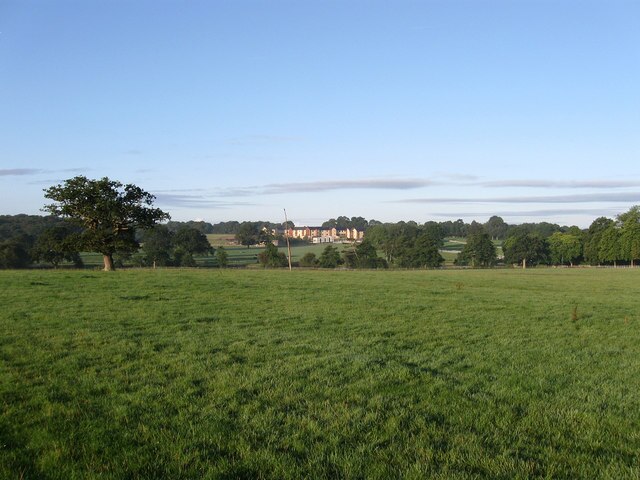
- A concrete path surrounded by grass, with the prompt On which surface would it be easier to roll a scooter or wheelchair, or push a pram? Why?
Identify for/with students (as is appropriate for your context) what accessibility challenges exist for people in the world. For example:
- some people use wheelchairs or scooters permanently or semi-permanently.
- people with prams can find it challenging to get around.
- people with injuries might use crutches or knee scooters to keep weight off an injured leg.
- older people sometimes can’t move as quickly and easily as other people, or use walking frames for support.
Pose the questions:
- Why is it more challenging for some people to access beautiful landscapes of Australia (and the world more broadly) than others?
- How can weather make accessibility more challenging?
Ask students to identify features in the school that might make it easier for people with accessibility challenges to move around the school.
Next, discuss the broader local community and its accessibility features. Ask students to think about a friend or family member who might find outdoor areas less accessible.
If relevant, introduce the place/s in the school or local area that you have selected for students to focus their accessibility solution designs for, and identify the potential problems with accessing that place, particularly in different weather conditions.
If you are allowing students to select their own location, identify locations that people might have difficulty accessing, and explore why they might have those difficulties.
Explain to students that during the sequence, they will be learning about forces so that they might design an accessibility solution that would make it easier for people—perhaps their family member or friend—to access that place.
Describe how students will need to draw on their scientific knowledge in other areas, considering such things as the materials objects are made from, any animal or plant habitats present in the area, and what the terrain itself is like.
Record any of the students’ initial ideas of people who might like to access the identified location, and what their accessibility issue might be. For example:
- a person in a wheelchair accessing the shoreline at the beach.
- a mother with a pram who has to travel through a park after it has been raining heavily.
- an older person who wants to access their grandchildren's tree-house for an afternoon tea party.
Reflect on the lesson
You might:
- begin a class word wall or glossary related to forces and motion.
- add further questions to the TWLH chart.
- make note of any questions students have about the design challenge.
Adapting to your context
How can I tailor this resource sheet and discussion to suit my context?
The Moving around Resource sheet has been designed to tap into students’ own life experiences with forces, and link their experiences to the context they will be designing an accessibility solution for in the Act phase.
The first two images are of an empty and a full shopping trolley, prompting students to think about which one they would prefer to push if they were in a race. The purpose of this prompt is to encourage students to think about the difficulty of pushing a heavy object rather than pushing a light object. These images can be replaced with other objects as required. For example, an empty bag versus a full bag, an empty bucket versus a full bucket, etc.
The following image prompts—a beach, a dry field versus a muddy field, and a grass path versus a concrete path—are included to encourage students to think about their experiences with friction (although they are unlikely to identify these experiences as such). A variety of examples have been included because there are a number of factors that influence the level of friction.
At the beach, the dry sand is softer and more difficult to walk on than the wet, harder sand. The opposite effect is more likely in a field, where the dry ground is likely easier to walk on than wet, muddy ground. A concrete path will be less affected by water, as it does not change its hardness, but it may reduce the friction on the surface. By presenting these different scenarios, you can elicit whether students are able to recognise/have experience with them. These images can be swapped with others that represent similar scenarios, but are more appropriate for your context.
The Moving around Resource sheet has been designed to tap into students’ own life experiences with forces, and link their experiences to the context they will be designing an accessibility solution for in the Act phase.
The first two images are of an empty and a full shopping trolley, prompting students to think about which one they would prefer to push if they were in a race. The purpose of this prompt is to encourage students to think about the difficulty of pushing a heavy object rather than pushing a light object. These images can be replaced with other objects as required. For example, an empty bag versus a full bag, an empty bucket versus a full bucket, etc.
The following image prompts—a beach, a dry field versus a muddy field, and a grass path versus a concrete path—are included to encourage students to think about their experiences with friction (although they are unlikely to identify these experiences as such). A variety of examples have been included because there are a number of factors that influence the level of friction.
At the beach, the dry sand is softer and more difficult to walk on than the wet, harder sand. The opposite effect is more likely in a field, where the dry ground is likely easier to walk on than wet, muddy ground. A concrete path will be less affected by water, as it does not change its hardness, but it may reduce the friction on the surface. By presenting these different scenarios, you can elicit whether students are able to recognise/have experience with them. These images can be swapped with others that represent similar scenarios, but are more appropriate for your context.