

Adapt to survive
View Sequence overviewStudents will:
- design and create a model of a real or imaginary plant or animal, showing the structural features and behaviours that enable survival and how those features are a response to the plant/animal’s habitat.
- explain the structural features and behavioural adaptations displayed on their model.
Students will represent their understanding as they:
- create a model.
- create an explanatory diagram to accompany their model.
- communicate their understanding of structural and behavioural adaptations with a selected audience.
In the Act phase, assessment is summative.
Students working at the achievement standard should have:
- demonstrated an understanding of how the form and behaviour of living things enables survival. Evidence might include:
- answers to probing questions about how features and behaviours enable survival.
- model features.
- labels and descriptions that accompany the model.
- sharing and explaining the structural and behavioural adaptations of the model with an audience.
Refer to the Australian Curriculum content links on the Our design decisions tab for further information.
Whole class
Class science journal (digital or hard-copy)
Each student
Individual science journals (digital or hard-copy)
Materials to construct a model such as craft supplies, natural items such as twigs, leaves and stones, or iPads/laptops for digital representations (see embedded professional learning Using and Adapting Scientific Models in the Design step of this lesson).
Lesson
The Act phase empowers students to use the Core concepts and key ideas of science they have learned during the Inquire phase. It encourages students to develop a sense of responsibility as members of society—to act rather than be acted upon. It provides students with the opportunity to positively influence their own life and that of the world around them. For this to occur, students need to build foundational skills in an interactive mutually supportive environment with their community.
When designing the Act phase, consider ways that students could use their scientific knowledge and skills. Consider their interests and lifestyles that may intersect with the core concepts and key ideas. What context or problem would provide students with a way to use science to synthesise a design? How (and to whom) will students communicate their understanding?
Read more about using the LIA FrameworkScience education consists of a series of key ideas and core concepts that can explain objects, events and phenomena and link them to the experiences encountered by students in their lives. The purpose of the Anchor routine is to identify and link students’ learning to these ideas and concepts in a way that builds and deepens their understanding.
When designing the Act phase of a teaching sequence, consider the core concepts and key ideas that are relevant. The Anchor routine provides an opportunity to collate and revise the key knowledge and skills students have learned, in a way that emphasises the importance of science as a human endeavour.
What have we learned
Review the learning that has occurred over the course of the sequence using the class science journal.
Anchor to the core science concept by reminding students that all our investigations in this unit have been about the structural and behavioural adaptations of plant and animal species that have enabled them to survive in their habitat.
Optional: Show the video How living things adapt (5:34). Note for students that when the video uses the term “animal” it is referring to all animals of that species, not an individual of that species.
The Act phase empowers students to use the Core concepts and key ideas of science they have learned during the Inquire phase. It encourages students to develop a sense of responsibility as members of society—to act rather than be acted upon. It provides students with the opportunity to positively influence their own life and that of the world around them. For this to occur, students need to build foundational skills in an interactive mutually supportive environment with their community.
When designing the Act phase, consider ways that students could use their scientific knowledge and skills. Consider their interests and lifestyles that may intersect with the core concepts and key ideas. What context or problem would provide students with a way to use science to synthesise a design? How (and to whom) will students communicate their understanding?
Read more about using the LIA FrameworkEach student comes to the classroom with experiences made up from science-related knowledge, attitudes, experiences and resources in their life. The Connect routine is designed to tap into these experiences, and that of their wider community. It is also an opportunity to yarn with community leaders (where appropriate) to gain an understanding of the student’s lives, languages and interests. In the Act phase, this routine reconnects with the science capital of students so students can appreciate the relevance of their learning and the agency to make decisions and take action.
When designing a teaching sequence, consider the everyday occurrences, phenomena and experiences that might relate to the science that they have learned. How could students show agency in these areas?
Read more about using the LIA FrameworkModels in science
Review the methods used to learn about plants and animals throughout the sequence, such as surveys, observing living plants and animals, experiments/testing, modelling carnivorous plant trapping features, researching, and watching videos.
Discuss the benefits of using models in science.
- How do models help us to understand how plants and animals survive?
- Models are immobile and therefore easier to observe in detail; making the model requires us to think about every feature and how it helps survival; models are ethically more responsible than displaying live animals for long periods of time.
- How do models help scientists to understand living things?
- Sharing knowledge between scientists, promotes close observation and critical thinking etc.
- What limitations do models have?
- It can be difficult to show every feature when using a model; their construction is limited by available materials, some which might be difficult to work with; it can be difficult to represent the complexity of the real world which is constantly changing.
The Act phase empowers students to use the Core concepts and key ideas of science they have learned during the Inquire phase. It encourages students to develop a sense of responsibility as members of society—to act rather than be acted upon. It provides students with the opportunity to positively influence their own life and that of the world around them. For this to occur, students need to build foundational skills in an interactive mutually supportive environment with their community.
When designing the Act phase, consider ways that students could use their scientific knowledge and skills. Consider their interests and lifestyles that may intersect with the core concepts and key ideas. What context or problem would provide students with a way to use science to synthesise a design? How (and to whom) will students communicate their understanding?
Read more about using the LIA FrameworkWhen students use their knowledge and skills in new ways, they also have an opportunity to develop and use their creative and critical thinking skills. With scaffolded support, they can become more confident to work in a team and develop a stronger sense of autonomy. This results in stronger student outcomes, attitudes and sense of empowerment.
When designing a teaching sequence, consider what activity would allow students to showcase their knowledge and skills. Consider the current abilities of your students. What are they capable of explaining? What props could they design or build that would support their explanations? How much information would they need in their design brief to support their thinking? How does this connect with their lives and interests?
Designing and making a model
In this section, students will design a model of either a real or imaginary plant or animal, which explains the features and behaviours that enable survival in a specific habitat.
Consider whether students will model:
- a real plant or animal, perhaps one they have surveyed in the school grounds, thrives locally or is of particular interest to them.
- an imaginary plant or animal that they have designed for a specific habitat.
They will then create an accompanying text, labelled diagram, presentation (or any combination of these) to explain:
- the structural and behavioural adaptations the plant or animal has, and how these adaptations have been shown.
- what habitat features these adaptations are in response to.
- You might consider posing a challenge such as asking students to show how their animal might respond to change in their habitat such as increasing temperature or decreasing food supplies.
Consider if you will require students to design their model in teams, and if so, how you will determine these teams. Alternatively, students can work independently, however this can require more time and classroom resources and places greater demands on the teacher.
Consider who the audience will be when students communicate information about their model, and the appropriate methods of communication for this audience. The audience may include other students, parents at an evening school fair, or the broader community at a local event.
Define
Define the challenge, such as:
How can we use the available materials to make a model that shows the features and behaviours of a (real or imaginary) plant/animal that help it to survive in its habitat?
Ideate
Brainstorm ideas related to the plant/animal model.
At this stage, to support creative thinking, every idea offered by students should be recorded in the class science journal. No idea is discounted, as the practicality/possibility of each idea will be considered later.
As students offer ideas, ask probing questions (How does that feature/behaviour enable survival? or What habitat is the feature/behaviour best suited to? How will the animal fight off predators?) to draw out how students are applying their understanding.
Prototype
Allow teams/students time to design and construct their plant/animal model using available materials.
All models should require at least an explanatory labelled diagram, identifying:
- the main features the enable survival in the selected habitat.
- behaviours that help the organism to survive.
- the type of habitat the organism thrives in and how the adaptations are well suited to the habitat.
Students may be provided with research time to support them to consider details for their model, such as beak shapes, eye placement, fur patterns.
Optional: Students/teams are provided opportunities to share their ideas and receive peer feedback (download AITSL's guide for more on peer feedback).
Using and adapting scientific models
What types of models might students create?
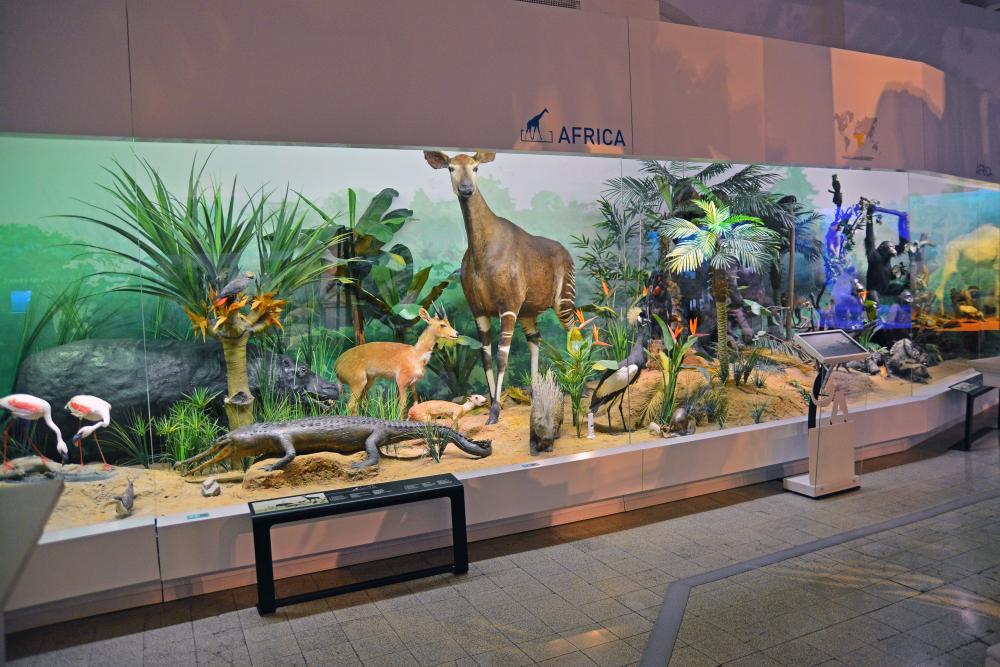
Scientists use models to represent and visualise complex ideas. Models can help bring these ideas into focus, leading to more questions and better explanations. Models are also used to communicate ideas to others. They can be evaluated and refined over time.
In this sequence, students are tasked with making a model to show how the form and behaviour of a real or imaginary plant or animal, enables survival. The model can be adapted to suit your students, context and available materials. Some examples include:
- three-dimensional models using recycled and craft materials or collected natural items such as twigs, pinecones, banksia pods and leaves.
- two-dimensional models drawn by hand.
- digitally created, still or animated representations.
It is important to understand that models also have limitations, and we must think critically about these. Models are approximations and are often simplified to make them easier to understand. They can be missing important details. The adequacy of a model (i.e. what it shows, what it doesn’t show, what affordances it provides) should be examined and discussed to determine whether it is “good enough” for its current purpose.
Scientists use models to represent and visualise complex ideas. Models can help bring these ideas into focus, leading to more questions and better explanations. Models are also used to communicate ideas to others. They can be evaluated and refined over time.
In this sequence, students are tasked with making a model to show how the form and behaviour of a real or imaginary plant or animal, enables survival. The model can be adapted to suit your students, context and available materials. Some examples include:
- three-dimensional models using recycled and craft materials or collected natural items such as twigs, pinecones, banksia pods and leaves.
- two-dimensional models drawn by hand.
- digitally created, still or animated representations.
It is important to understand that models also have limitations, and we must think critically about these. Models are approximations and are often simplified to make them easier to understand. They can be missing important details. The adequacy of a model (i.e. what it shows, what it doesn’t show, what affordances it provides) should be examined and discussed to determine whether it is “good enough” for its current purpose.
The Act phase empowers students to use the Core concepts and key ideas of science they have learned during the Inquire phase. It encourages students to develop a sense of responsibility as members of society—to act rather than be acted upon. It provides students with the opportunity to positively influence their own life and that of the world around them. For this to occur, students need to build foundational skills in an interactive mutually supportive environment with their community.
When designing the Act phase, consider ways that students could use their scientific knowledge and skills. Consider their interests and lifestyles that may intersect with the core concepts and key ideas. What context or problem would provide students with a way to use science to synthesise a design? How (and to whom) will students communicate their understanding?
Read more about using the LIA FrameworkA key part of Science Inquiry, the Communicate routine provides students with an opportunity to communicate their ideas effectively to others. It allows students a chance to show their learning to members of their community and provides a sense of belonging. It also encourages students to have a sense of responsibility to share their understanding of science and to use this to provide a positive influence in the community.
When designing a teaching sequence, consider who might be connected to the students that have an interest in science. Who in their lives could share their learning? What forum could be used to build an enthusiasm for science. Are there members of the community (parents, teachers, peers or wider community) who would provide a link to future science careers?
Read more about using the LIA FrameworkSharing models
Communicate
Students share their models with their chosen audience using appropriate methods of communication. You might consider using the CROWN tool to support students in this.
Students should be prepared for any possible questions the audience may ask them about how they created the model, the science concepts on display, or how they felt about it.
Optional: Students display their plant/animal models with a suitable habitat, using an image (digital or printed), a diorama or a nature table filled with selected items such as plants, rocks, sticks, sand or shells.
Optional: Students compose a cli-fi narrative in which their species, or an individual within their species, responds to a change in their habitat and/or surrounding environment. See the embedded professional learning Climate fiction (cli-fi) for more information.
Reflect on the sequence
You might:
- refer to the list of student questions asked in Lesson 1. Determine which questions have been answered over the course of the learning sequence, what the “answers” to the questions are, and the evidence that supports these claims. Address questions that have not been answered during the learning sequence, discuss why they might not have been addresses and potential investigations that might support students to answer them.
- review students’ responses elicited about pants and animals in Lesson 1, comparing students’ initial ideas to what they think now and considering how their thinking has changed.
- consider what students have learnt about the features and behaviours of living things that enable survival in particular habitats.
- ask students to represent this learning in words, symbols and pictures.
- discuss why it’s important to have a good understanding about features and behaviours of living things: What kinds of jobs would require you to understand this? What about in your everyday life? Why is it important for humans to protect the habitats of these plants and animals?
Climate fiction (cli-fi)
What is cli-fi?
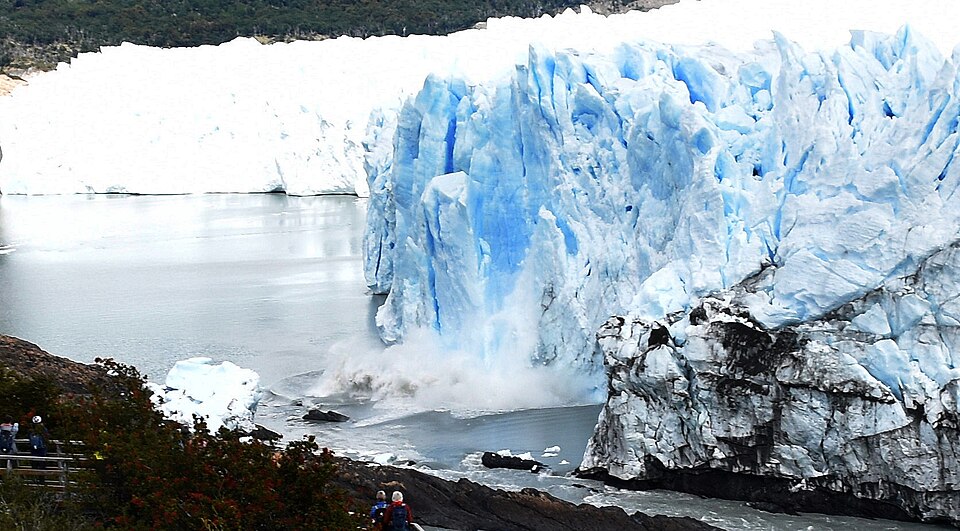
Climate fiction, often called “cli-fi”, is a genre of storytelling that explores the impacts of climate change on people, societies, and the natural world. These stories can be set in the near future, distant future, or even alternative versions of the present, and they often imagine how rising temperatures, extreme weather, or environmental collapse shape human life and decision-making.
Writing cli-fi can be especially beneficial for students because it encourages them to engage with real-world scientific issues in a creative way. By turning abstract concepts like climate systems or sustainability into characters, conflicts, and narratives, students deepen their understanding and make the topic more personally meaningful. It also builds critical thinking, as students must consider cause and effect, ethical dilemmas, and possible solutions. At the same time, cli-fi supports literacy skills—such as descriptive writing, perspective-taking, and argument development—while giving students a space to express concerns, hopes, and ideas about the future.
Climate fiction, often called “cli-fi”, is a genre of storytelling that explores the impacts of climate change on people, societies, and the natural world. These stories can be set in the near future, distant future, or even alternative versions of the present, and they often imagine how rising temperatures, extreme weather, or environmental collapse shape human life and decision-making.
Writing cli-fi can be especially beneficial for students because it encourages them to engage with real-world scientific issues in a creative way. By turning abstract concepts like climate systems or sustainability into characters, conflicts, and narratives, students deepen their understanding and make the topic more personally meaningful. It also builds critical thinking, as students must consider cause and effect, ethical dilemmas, and possible solutions. At the same time, cli-fi supports literacy skills—such as descriptive writing, perspective-taking, and argument development—while giving students a space to express concerns, hopes, and ideas about the future.