

Adapt to survive
View Sequence overviewStudents will:
- recognise that carnivorous plants survive in nutrient poor soils by using structural/functional adaptations to obtain nutrients.
- identify the different trapping structures of Australian pitcher plants and sundews.
- use models to investigate how different structural adaptations help carnivorous plants capture prey and compare their effectiveness.
Students will represent their understanding as they:
- create models to represent trapping adaptations.
- contribute feedback during the gallery walk to improve models.
- create labelled diagrams to identify carnivorous structural features.
- refine models and testing methods to best represent carnivorous adaptations.
In this lesson, assessment is formative.
Feedback might focus on:
- students’ carnivorous feature models. Can students use feedback from the gallery walk to refine their representations?
- labelled diagrams. Have students clearly labelled their model diagrams to show the carnivorous features they represent?
- the feedback students contribute during the gallery walk to improve models.
Whole class
Class science journal (digital or hard-copy)
Demonstration copy of the Sundew and pitcher plant Resource sheet
Optional: Real life carnivorous plant
Videos:
- Australia is a hotspot for carnivorous plants (7:33)
- Drosera erythrorhiza sticky droplets (0:15)
- Drosera salina (salt lake sundew) in the wild (1:00)
- Australian pitcher plant traps slater (0:21)
- Wild carnivorous plants—Albany pitcher plant (5:16)
Magnifying glasses (optional)
Each group
Tub/container partially filled with sand
Small paper insects or beads
Sticky tape/masking tape strips
Small cups/jars with a little water
Optional: Food colouring for water
Construction materials such as cardboard, scissors, textas
Sticky notes
Each student
Individual science journal (digital or hard-copy)
Carnivorous plant modelling Resource sheet
Lesson
The Inquire phase allows students to cycle progressively and with increasing complexity through the key science ideas related to the core concepts. Each Inquire cycle is divided into three teaching and learning routines that allow students to systematically build their knowledge and skills in science and incorporate this into their current understanding of the world.
When designing a teaching sequence, it is important to consider the knowledge and skills that students will need in the final Act phase. Consider what the students already know and identify the steps that need to be taken to reach the level required. How could you facilitate students’ understanding at each step? What investigations could be designed to build the skills at each step?
Read more about using the LIA FrameworkRe-orient
If required, allow time to review and make observations about the leaves placed in the bag in the previous lesson.
Review and discuss the data collected last lesson about leaf surface area and evaporation rates.
- What difference does surface area make to the evaporation of water from cloth?
- Do you think the type of cloth matters?
- Could changing other conditions change the data?
- How does this model relate to plants?
The Inquire phase allows students to cycle progressively and with increasing complexity through the key science ideas related to the core concepts. Each Inquire cycle is divided into three teaching and learning routines that allow students to systematically build their knowledge and skills in science and incorporate this into their current understanding of the world.
When designing a teaching sequence, it is important to consider the knowledge and skills that students will need in the final Act phase. Consider what the students already know and identify the steps that need to be taken to reach the level required. How could you facilitate students’ understanding at each step? What investigations could be designed to build the skills at each step?
Read more about using the LIA FrameworkIdentifying and constructing questions is the creative driver of the inquiry process. It allows students to explore what they know and how they know it. During the Inquire phase of the LIA Framework, the Question routine allows for past activities to be reviewed and to set the scene for the investigation that students will undertake. The use of effective questioning techniques can influence students’ view and interpretation of upcoming content, open them to exploration and link to their current interests and science capital.
When designing a teaching sequence, it is important to spend some time considering the mindset of students at the start of each Inquire phase. What do you want students to be thinking about, what do they already know and what is the best way for them to approach the task? What might tap into their curiosity?
Read more about using the LIA FrameworkWhat plants need
Discuss and brainstorm what students think they know about the things plants need to survive.
- What do plants need to survive?
- Light, water, nutrients, shelter.
- What are nutrients, and what sort of nutrients do you think plants need?
- Plants need small amounts of key minerals from the soil to survive. All their energy needs are produced through photosynthesis.
- Can plants survive without these things?
- Where do you think plants draw their nutrients from?
Pose the question: How do you think plants survive in soils with very few nutrients?
The Inquire phase allows students to cycle progressively and with increasing complexity through the key science ideas related to the core concepts. Each Inquire cycle is divided into three teaching and learning routines that allow students to systematically build their knowledge and skills in science and incorporate this into their current understanding of the world.
When designing a teaching sequence, it is important to consider the knowledge and skills that students will need in the final Act phase. Consider what the students already know and identify the steps that need to be taken to reach the level required. How could you facilitate students’ understanding at each step? What investigations could be designed to build the skills at each step?
Read more about using the LIA FrameworkThe Investigate routine provides students with an opportunity to explore the key ideas of science, to plan and conduct an investigation, and to gather and record data. The investigations are designed to systematically develop content knowledge and skills through increasingly complex processes of structured inquiry, guided inquiry and open inquiry approaches. Students are encouraged to process data to identify trends and patterns and link them to the real-world context of the teaching sequence.
When designing a teaching sequence, consider the diagnostic assessment (Launch phase) that identified the alternative conceptions that students held. Are there activities that challenge these ideas and provide openings for discussion? What content knowledge and skills do students need to be able to complete the final (Act phase) task? How could you systematically build these through the investigation routines? Are there opportunities to build students’ understanding and skills in the science inquiry processes through the successive investigations?
Read more about using the LIA FrameworkComparing carnivorous plant traps
In this investigation, students learn about two specific Australian carnivorous plants, then use models to support them to better understand the plants’ trapping structures.
Ask students what they think the word “carnivorous” means: something that relies primarily or exclusively on the flesh of other animals to get their nutrients. Ask if they think plants can be carnivorous. If students think carnivorous plants exist, record what they think they know about carnivorous plants and the reason for this adaptation in the class science journal.
Confirm that carnivorous plants do exist, and that in fact Australia has one of the world's most diverse carnivorous plant floras, with around 250 recognised species.
Show the video Australia is a hotspot for carnivorous plants (7:33) to demonstrate the diversity of Australian carnivorous plants due to our low-nutrient soils.
Students share something they found interesting or something new they learnt about carnivorous plants from the video. Record their ideas and any questions they have in the class science journal.
Ask if they have observed carnivorous plants in their local environments. Discuss where they now think carnivorous plants might exist.
Using the demonstration copy of the Sundew and pitcher plant Resource sheet discuss the different structural features of each plant. Allow students time to share their ideas first, before explaining/confirming that:
- Drosera (sundew) has fine hairs that produce a sticky dew-like substance to attract and trap prey. The dew contains digestive chemicals/enzymes to break down prey so the nutrients can be absorbed by the leaf.
- Cephalotus follicularis (Albany pitcher plant) has a pitfall trap filled with digestive liquid. The prey falls in and cannot escape. You may need to discuss the meaning of the term “pitcher”—a large container for liquids.
- These structural features allow the plants to absorb nutrients from prey that they cannot get from the soil. Carnivorous plants are a good example of a plant adaptation. They adapted other nutrient-gathering strategies to enable them to live in nutrient-poor soils.
Show some videos of sundews and pitcher plants in their natural habitats with a focus on their carnivorous adaptations, for example:
- Drosera erythrorhiza sticky droplets (0:15)
- Drosera salina (salt lake sundew) in the wild (1:00)
- Australian pitcher plant traps slater (0:21)
- Wild carnivorous plants—Albany pitcher plant (5:16)
Students work in collaborative teams to create a model that simulates the trapping structures of a sundew or a pitcher plant. Ensure that there is a spread of groups modelling each plant.
Referring to the demonstration copy of the Carnivorous plant modelling Resource sheet, discuss the criteria for the model design, for example, “it resembles the trapping structure of the plant” and “the trapping structure works in the same/a similar enough way”.
Looking at the resources available (cups, bowls, water, sticky/masking tape, cardboards, blu-tac, glue, pieces of confetti paper, small beads etc.) determine which would be most appropriate to be used for each model, for example:
- cups or bowls + water resemble the pitfall trap with the digestive juices of a pitcher plant.
- sticky/masking tape resembles the sticky dew on the fine hairs of sundew leaves.
- confetti paper represents insects falling into/landing on the trap.
Discuss ways to create and test a prototype model, including:
- For each plant, what should your model highlight?
- How can you recreate the trapping structure of each plant?
- What resource might not be useful? Why?
- For example, blu-tac may seem like a useful resource to recreate a sundew, but it is not sticky enough to “capture” items falling past it.
- How might we test the trapping structure? What could we use?
- To test the trapping feature, how should we drop the fake bugs? Directly from above? Thrown from a distance?
- How do these fake bugs differ to real insects?
- How do the models differ to actual carnivorous plants?
Referring again to the Carnivorous plant modelling Resource sheet, discuss why students think the prototyping process has been structured in the following way:
- Design, build and test first protypes.
- Personal and peer feedback.
- Refine design, build and test second prototypes.
- Consider opportunities for further improvement.
Students should design the models themselves, but if required, provide students with the following examples.
| Sundews | Pitcher plants |
| Place strips of sticky tape or masking tape onto cardboard or other flat surface. | Place cups/jars upright in the sand and add a small amount of water. |
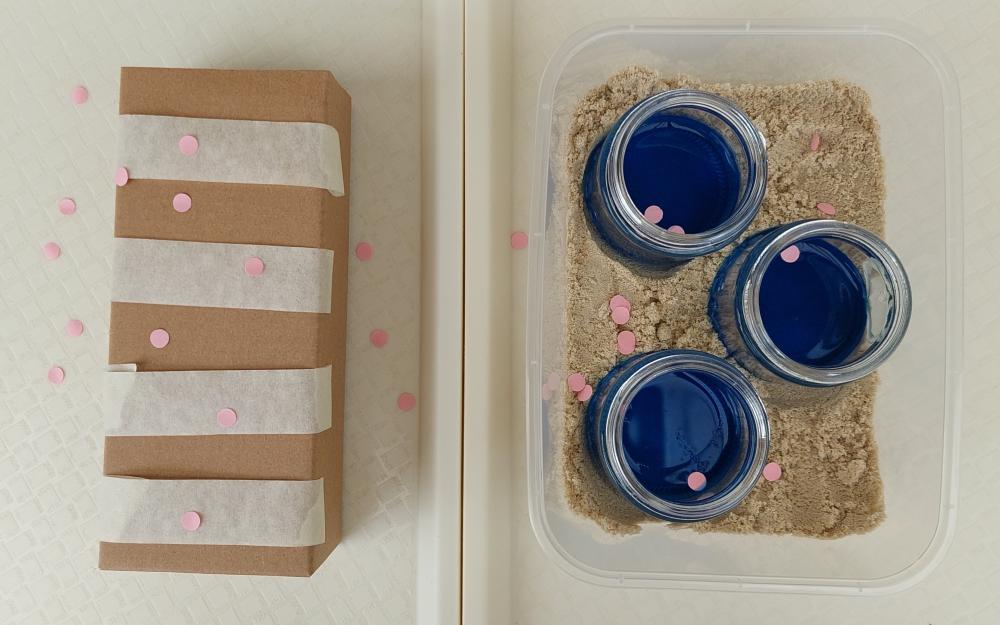
Allow time for teams to plan, build, test, and evaluate a prototype model of one of the carnivorous plants.
Carnivorous plants
How have carnivorous plants evolved?
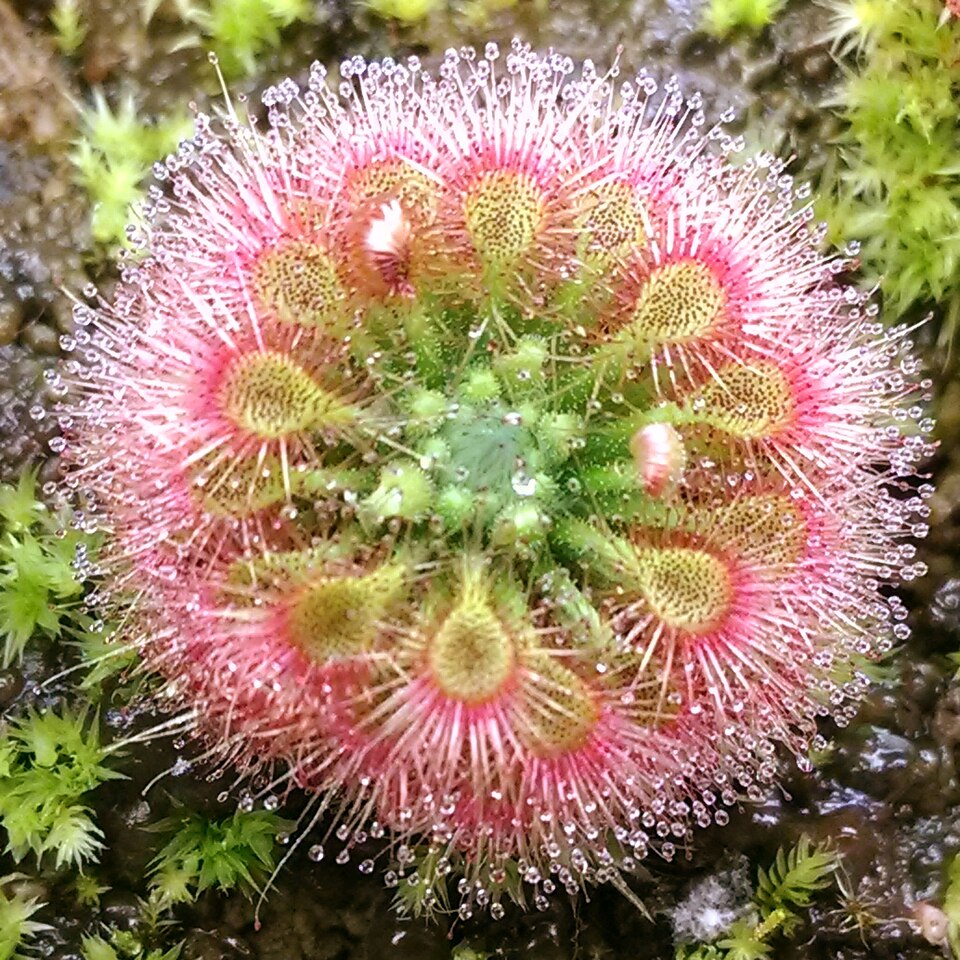
While carnivorous plants photosynthesise to produce sugars for energy (like all plants), they have also evolved specialised adaptations that let them obtain nutrients such as nitrogen and phosphorus from captured animals, usually insects. Growing in nutrient poor, sandy or swampy soils, they rely on modified leaves that lure, trap, and digest prey using features such as bright colours, sticky surfaces, trap structures, rapid movement, and digestive enzymes.
Australia has one of the world's richest carnivorous plant floras, with around 250 recognised species. Two of these Australian examples use different trapping strategies to great effect.
Drosera (sundews) use sticky, glistening dew droplets to attract and trap insects. Enzymes in the dew digest the insects, the nutrients are then absorbed through the leaf.
Cephalotus follicularis (the Albany pitcher plant) uses small, colourful pitchers that lure insects with nectar; once insects are inside, slippery walls and downward hairs prevent escape while digestive fluids break down the prey. Both rely on specialised leaf adaptations to survive in nutrient-poor Australian soils.
While carnivorous plants photosynthesise to produce sugars for energy (like all plants), they have also evolved specialised adaptations that let them obtain nutrients such as nitrogen and phosphorus from captured animals, usually insects. Growing in nutrient poor, sandy or swampy soils, they rely on modified leaves that lure, trap, and digest prey using features such as bright colours, sticky surfaces, trap structures, rapid movement, and digestive enzymes.
Australia has one of the world's richest carnivorous plant floras, with around 250 recognised species. Two of these Australian examples use different trapping strategies to great effect.
Drosera (sundews) use sticky, glistening dew droplets to attract and trap insects. Enzymes in the dew digest the insects, the nutrients are then absorbed through the leaf.
Cephalotus follicularis (the Albany pitcher plant) uses small, colourful pitchers that lure insects with nectar; once insects are inside, slippery walls and downward hairs prevent escape while digestive fluids break down the prey. Both rely on specialised leaf adaptations to survive in nutrient-poor Australian soils.
The Inquire phase allows students to cycle progressively and with increasing complexity through the key science ideas related to the core concepts. Each Inquire cycle is divided into three teaching and learning routines that allow students to systematically build their knowledge and skills in science and incorporate this into their current understanding of the world.
When designing a teaching sequence, it is important to consider the knowledge and skills that students will need in the final Act phase. Consider what the students already know and identify the steps that need to be taken to reach the level required. How could you facilitate students’ understanding at each step? What investigations could be designed to build the skills at each step?
Read more about using the LIA FrameworkFollowing an investigation, the Integrate routine provides time and space for data to be evaluated and insights to be synthesized. It reveals new insights, consolidates and refines representations, generalises context and broadens students’ perspectives. It allows student thinking to become visible and opens formative feedback opportunities. It may also lead to further questions being asked, allowing the Inquire phase to start again.
When designing a teaching sequence, consider the diagnostic assessment that was undertaken during the Launch phase. Consider if alternative conceptions could be used as a jumping off point to discussions. How could students represent their learning in a way that would support formative feedback opportunities? Could small summative assessment occur at different stages in the teaching sequence?
Read more about using the LIA FrameworkRefining models
In the following Integrate routine, students are guided to link their experiences building a model of a carnivorous plant to the scientific practice of peer review, where their first prototype will be scrutinised by peers, and to the concept of adaptation–considering why some plants have adapted to consume insects. Through modelling, questioning and discussion, students should come to a consensus that:
|
Introduce the scientific process and purpose of peer review.
- In science, peer review is the process whereby a scientist’s ideas, methods, and conclusions are scrutinised by fellow scientists before publication. Peer review ensures that only reliable, accurate, and scientifically sound research is published.
- Scientists who don't allow their work to be peer reviewed lose credibility in the scientific community—that is, people no longer trust their claims.
Conduct a gallery walk for students to offer feedback on other groups’ models using the section provided on page 3 of the Carnivorous plant modelling Resource sheet or sticky notes. Each group’s model should be reviewed by at least one other group, but more than one review is preferable if time permits.
Students use the gallery walk feedback to make improvements to their models, testing methods, and data representation as required, recording any changes on their Carnivorous plant modelling Resource sheet.
They make the changes, re-test and re-record the data, and evaluate the effectiveness of these changes.
Using photos and the video watched earlier in the lesson to prompt student thinking, discuss with students why some plants have structural adaptations that allow them to eat insects/be carnivorous as a means of survival.
- How do most plants get their nutrients?
- What happens to a plant if they can't get enough nutrients from the soil?
- What is different about carnivorous plants?
- Is this a structural or behavioural adaptation? Why do you think that?
- In what type of habitats/soils do carnivorous plants grow?
- What nutrients might a carnivorous plant get from the insects it consumes?
- What might some of the advantages be for a carnivorous plant? What about the disadvantages?
Optional: Introduce a real-life carnivorous plant and discuss how its structural features for trapping are similar or different to sundews and pitcher plants. Magnifying glasses can assist observation of tiny features such as the small trigger hairs inside Venus flytrap leaves. The plant can be kept as a class pet (see Preparing for this sequence for more information).
Reflect on the lesson
You might:
- add vocabulary related to carnivorous plants to the class word wall or glossary.
- add to the W and H sections of the TWLH chart.
- revisit the initial brainstorm and add to it in a different coloured pen to represent what has been learned.
- discuss how the learning from this lesson will be relevant for building a model of a plant or animal’s adaptations, including:
- modelling carnivorous adaptive features such as sticky dew or pitfall traps.
- modelling may require multiple prototypes to make changes and improvements to the design.