

'Adapt to survive' IS A NEW V9 SEQUENCE BASED ON OUR V8 SEQUENCE 'Desert survivors'
- On the 'Sequence overview' tab you'll find all the lessons in this sequence and curriculum alignment.
- The 'Our design decisions' tab shows how key scientific ideas develop over the sequence, and shows how the sequence addresses curriculum achievement standards.
- The 'Preparing for this sequence' tab guides you through important information and considerations for this sequence.
- Have you taught this sequence? Use the Feedback button to let us know how it went!
Launch
Lesson 1 • Models in biology
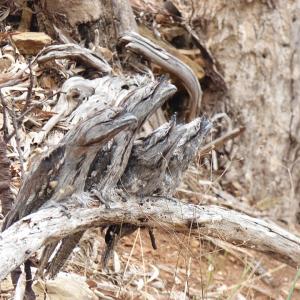
This lesson introduces the structural and behavioural adaptations of plants and animals that allow them to survive in a habitat and how models are used to explore and communicate scientific ideas and research.

Inquire
Lesson 2 • Habitat survey
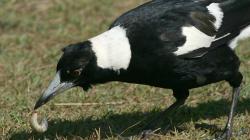
Students explore local habitats in the school grounds, conduct a survey, and graph results. They examine adaptations in different ant species.
Lesson 3 • Surviving the dry
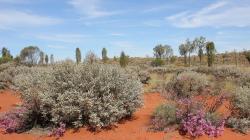
Students use cloth or paper towels as a model to investigate the evaporation rates of leaves with different surface areas.
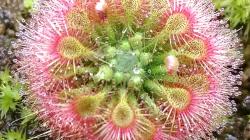
Lesson 4 • Carnivorous plants
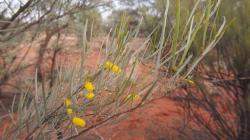
Students explore Australian carnivorous plants then create models to simulate two different trapping adaptations.
Lesson 5 • Animal adaptations
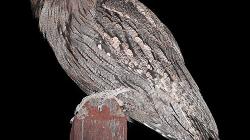
Students explore structural adaptations of animal species, including camouflage and mimicry, and learn about how peppered moth populations have changed over time.
Lesson 6 • Surviving the cold
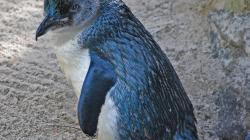
Students investigate little penguins and cold climate adaptations by comparing the insulation effect of feathers, fur and blubber using waterproof mittens.
Lesson 7 • Seasonal survival strategies
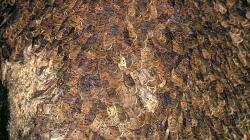
Students investigate the relationship between the bogong moth and mountain pygmy possum and their behavioural adaptations of migration, hibernation and aestivation.
Act
Lesson 8 • Designing a model
Students create and share a model of the adaptive features and behaviours of a real or imaginary plant or animal. They explain how the adaptive features are a response to the plant or animal's habitats.
The Australian Academy of Science supports and encourages broad use of its material. Unless indicated below, copyright material available on this website is licensed under a Creative Commons Attribution-NonCommercial-ShareAlike 4.0 International (CC BY-NC-SA 4.0) licence.
Curriculum and syllabus alignment
Year 5
By the end of Year 5 students explain how the form and behaviour of living things enables survival. Students plan safe investigations to identify patterns and relationships and make reasoned predictions. They identify risks associated with investigations and key intercultural considerations when planning field work. They identify variables to be changed and measured. They use equipment to generate data with appropriate precision. They construct representations to organise data and information and describe patterns, trends and relationships. They compare their methods and findings to those of others, identify possible sources of error in their investigation, pose questions for further investigation and draw reasoned conclusions. They use language features that reflect their purpose and audience when communicating their ideas and findings.
Science as a human endeavour
Science understanding
Examine how particular structural features and behaviours of living things enable their survival in specific habitats
Science inquiry
Pose investigable questions to identify patterns and test relationships and make reasoned predictions
Plan and conduct repeatable investigations to answer questions, including, as appropriate, deciding the variables to be changed, measured and controlled in fair tests; describing potential risks; planning for the safe use of equipment and materials; and identifying required permissions to conduct investigations on Country/Place
Use equipment to observe, measure and record data with reasonable precision, using digital tools as appropriate
Construct and use appropriate representations, including tables, graphs and visual or physical models, to organise and process data and information and describe patterns, trends and relationships
Compare methods and findings with those of others, recognise possible sources of error, pose questions for further investigation and select evidence to draw reasoned conclusions
Write and create texts to communicate ideas and findings for specific purposes and audiences, including selection of language features, using digital tools as appropriate
Australian curriculum content links
| Science understanding core concept: Structural features and behaviours of living things enable their survival in a specific habitat. |
| Sub-strand | Content descriptor | AC code | Achievement Standard | Elaboration/application |
| SHE: Nature and development of science | Examine why advances in science are often the result of collaboration or build on the work of others. | AC9S5H01 | Identify examples where scientific knowledge informs the actions of individuals and communities. | Participate in gallery walks to provide feedback and build scientific knowledge. (Lesson 4) Optional: Participate in Bogong Moth tracker citizen science projects.(Lesson 7) Consider what humans can do to assist Bogong moths with their seasonal migration. (Lesson 7) |
| SHE: Use and influence of science | Investigate how scientific knowledge is used by individuals and communities to identify problems, consider responses and make decisions.
| AC9S5H02 | Describe examples of collaboration leading to advances in science, and scientific knowledge that has changed over time. | Explore how scientists use models to make and test predictions and communicate ideas. (Lesson 4) Consider the adaptive behaviours of the Bogong moth and how human behaviour impacts the species. (Lesson 7) Create and share a model of the adaptive features and behaviours of a real or imaginary plant or animal. (Lesson 8) |
| SU: Biological Sciences | Examine how particular structural features and behaviours of living things enable their survival in specific habitats. | AC9S5U01 | Explain how the form and behaviour of living things enables survival. | Investigate and describe how the adaptive features and behaviours of plants and animals enable survival in specific habitats. (Lessons 1-8) |
| SI: Questioning and predicting | Pose investigable questions to identify patterns and test relationships and make reasoned predictions. | AC9S5I01 | Plan safe investigations to identify patterns and relationships and make reasoned predictions. | Pose investigable questions relating to leaf surface area. (Lesson 3) |
| SI: Planning and conducting | Plan and conduct repeatable investigations to answer questions, including, as appropriate, deciding the variables to be changed, measured and controlled in fair tests; describing potential risks; planning for the safe use of equipment and materials; and identifying required permissions to conduct investigations on Country/Place. | AC9S5I02 | Identify risks associated with investigations and key intercultural considerations when planning field work. Identify variables to be changed and measured.
| Identify safety considerations, hygiene requirements and a code of caring prior to conducting a habitat survey. (Lesson 2) Plan and conduct a fair test investigation to determine variables that can affect the evaporation from leaves. (Lesson 3) |
| SI: Planning and Conducting | Use equipment to observe, measure and record data with reasonable precision, using digital tools as appropriate. | AC9S5I03 | Use equipment to generate data with appropriate precision. | Use data sheets and methodical observation to collect species data during the habitat survey. (Lesson 2) Use digital devices such as laptops, cameras or tablets to photograph plants, animals, and investigations. (Lesson 2, optional in Lessons 4 & 6) Use appropriate measurement tools to measure mass of wet cloths/paper towels. (Lesson 3) |
| SI: Processing, modelling and analysing | Construct and use appropriate representations, including tables, graphs and visual or physical models, to organise and process data and information and describe patterns, trends and relationships. | AC9S5I04 | Construct representations to organise data and information and describe patterns, trends and relationships. | Use a variety of tools and materials to create and improve models.(Lessons 4, 8) Construct data tables. (Lessons 1-4, 6) Use data to create a graph of Species Count (Lesson 2) and cloth/paper towel mass. (Lesson 3) Create a story board to show the change in structural features of the peppered moth over time. (Lesson 5) Participate in a migration simulation. (Lesson 7) |
| SI: Evaluating | Compare methods and findings with those of others, recognise possible sources of error, pose questions for further investigation and select evidence to draw reasoned conclusions | AC9S5I05 | Compare their methods and findings to those of others, identify possible sources of error in their investigation, pose questions for further investigation and draw reasoned conclusions. | Share and discuss findings as a class to form conclusions and common understandings. (Lessons 2-7) Use gallery walks to compare methods, identify sources of error and consider improvements (Lesson 4) Students make a claim that responds to the prediction(s) they made with supporting evidence and reasoning. (Lesson 3) |
| SI: Communicating | Write and create texts to communicate ideas and findings for specific purposes and audiences, including selection of language features, using digital tools as appropriate.
| AC9S5I06 | Use language features that reflect their purpose and audience when communicating their ideas and findings. | Optional: Draw and label a diagram to communicate prior knowledge of leaf features. (Lesson 1) Create diagrams or written notes to describe the survival features/behaviours of an animal. (Lesson 2) Create an explanatory labelled diagram, identifying features/behaviours that enable survival and the habitat that the organism thrives in. (Lesson 8) |
Science journals
Create a class science journal, either in hard-copy or digitally. You might:
- use/create a large scrap book or flip chart.
- use poster/butchers’ paper so learning can be displayed in sequence on the wall.
- create a digital journal using your platform/technology of choice.
- any combination of the above.
Plan for students’ creation of an individual science journal, either in hard-copy or digitally. They might:
- use an exercise book, scrap book or flip chart to record their thinking and gather resource sheets together.
- use a folder to store and collate resource sheets, diagrams, photographs etc.
- use a digital folder to store work samples, images and videos.
- any combination of the above.
See Using a science journal throughout inquiry for more detailed information on the importance of science journals.
General preparation
- Read through the teaching sequence.
- Note any adaptations you would like to make to suit your school and students’ context.
- Prepare demonstration copies of Resource sheets as required.
- Collect the resources required for the sequence.
Determining a design challenge for the Act phase
In this sequence students learn about the adaptations that enable plant and animal species to live successfully in a specific environment. They consider the factors that lead to these adaptations and what might affect them in the future.
To suit all students and the different needs, capabilities and interests we have suggested three options for how they might demonstrate their knowledge and understanding at the end of the sequence.
Students might:
- model the adaptive features and behaviours of an existing plant or animal.
- model the adaptive features and behaviours of an imaginary plant or animal.
- (optionally) write a “cli-fi” (climate fiction) narrative to accompany their models. See Lesson 8 for more details.
Determine which approach is best for your students.
Preparing for Lesson 4
In Lesson 4 students learn about carnivorous plants, focusing on two with different trapping mechanisms:
- Drosera (sundew) has fine hairs that produce a sticky dew-like substance to attract and trap prey. The dew contains digestive chemicals/enzymes to break down prey so the nutrients can be absorbed by the leaf.
- Cephalotus follicularis (Albany pitcher plant) has a pitfall trap filled with digestive liquid. The prey falls in and cannot escape. You may need to discuss the meaning of the term “pitcher”—a large container for liquids.
You may wish to source and show students a real carnivorous plant. Venus fly traps and pitcher plants can be sourced at local nurseries or ordered online.
Read Flower Power's guide to growing carnivorous plants if you decide to get one for your classroom.

'Adapt to survive' IS A NEW V9 SEQUENCE BASED ON OUR V8 SEQUENCE 'Desert survivors'
- On the 'Sequence overview' tab you'll find all the lessons in this sequence and curriculum alignment.
- The 'Our design decisions' tab shows how key scientific ideas develop over the sequence, and shows how the sequence addresses curriculum achievement standards.
- The 'Preparing for this sequence' tab guides you through important information and considerations for this sequence.
- Have you taught this sequence? Use the Feedback button to let us know how it went!