

Chemistry in the kitchen
View Sequence overviewStudents will:
- explore how heat changes food.
- create a scale to determine the level of Maillard reaction that has occurred when making toast.
Students will represent their understanding as they:
- predict with reasoning how bread will change as it is toasted, and contribute to discussions about the changes that occurred.
In this lesson, assessment is formative.
Feedback might focus on:
- the scale students create to rate the ‘toasted-ness’ of their bread. Do they recognise that time impacts the severity of the chemical change when it comes to cooking?
Whole class
Class science journal (digital or hard-copy)
Demonstration copy of the Variable grid Resource sheet
Video: The Maillard reaction: the science of the sizzle (3:11)
Article: The science of a fluffy pancake
Each group
At least 3 slices of bread for toasting
A means of toasting the bread, preferably a toaster
Optional: Digital device for taking photos
Note: If conducting this investigation as an observation, only 1 set of this equipment is required for the class
Each student
Individual science journal
Investigation planner Resource sheet
My kitchen observations Resource sheet (ongoing)
Lesson
The Inquire phase allows students to cycle progressively and with increasing complexity through the key science ideas related to the core concepts. Each Inquire cycle is divided into three teaching and learning routines that allow students to systematically build their knowledge and skills in science and incorporate this into their current understanding of the world.
When designing a teaching sequence, it is important to consider the knowledge and skills that students will need in the final Act phase. Consider what the students already know and identify the steps that need to be taken to reach the level required. How could you facilitate students’ understanding at each step? What investigations could be designed to build the skills at each step?
Read more about using the LIA FrameworkRe-orient
Discuss what students learned the previous lesson about bread and the chemical reactions that occur in the dough to leaven the bread. Discuss how the dough is mixed and then cooked.
The Inquire phase allows students to cycle progressively and with increasing complexity through the key science ideas related to the core concepts. Each Inquire cycle is divided into three teaching and learning routines that allow students to systematically build their knowledge and skills in science and incorporate this into their current understanding of the world.
When designing a teaching sequence, it is important to consider the knowledge and skills that students will need in the final Act phase. Consider what the students already know and identify the steps that need to be taken to reach the level required. How could you facilitate students’ understanding at each step? What investigations could be designed to build the skills at each step?
Read more about using the LIA FrameworkIdentifying and constructing questions is the creative driver of the inquiry process. It allows students to explore what they know and how they know it. During the Inquire phase of the LIA Framework, the Question routine allows for past activities to be reviewed and to set the scene for the investigation that students will undertake. The use of effective questioning techniques can influence students’ view and interpretation of upcoming content, open them to exploration and link to their current interests and science capital.
When designing a teaching sequence, it is important to spend some time considering the mindset of students at the start of each Inquire phase. What do you want students to be thinking about, what do they already know and what is the best way for them to approach the task? What might tap into their curiosity?
Read more about using the LIA FrameworkChanging food
Discuss how heat changes food, including what it does to bread dough.
Use prompting questions that supports students to distinguish between ‘heating/reheating’ and ‘cooking’ food: heating/reheating food brings it to a temperature that is more palatable, while cooking food involves using heat to cause chemical reactions that change the food. Students do not need to use this specific science terminology at this stage, but it is worth making the distinction between the two.
Cater your questions to suit your students’ context and relate them to food experiences students are likely to have had. This will be influenced by their family, social and cultural background, and their geographic location.
You might also watch videos or view images to prompt student thinking on how heat changes food. Again, select videos and images that reflect food experiences students are likely to have had.
Identify ways that bread specifically is consumed, with a focus on drawing out how it can be further cooked, or toasted, how this is done, and what it does to the bread.
- How can bread be cooked again?
- What are some different ways of cooking the bread?
- In the toaster, under a grill, in a sandwich press or jaffle maker, or even in a fire.
- What is the difference between toast and bread?
- What does toasting do to the bread?
- Does it matter how long you leave the bread in/next to the heat source?
Pose the questions: How does toasting change bread? What is the best level of 'toasted-ness'?
The Inquire phase allows students to cycle progressively and with increasing complexity through the key science ideas related to the core concepts. Each Inquire cycle is divided into three teaching and learning routines that allow students to systematically build their knowledge and skills in science and incorporate this into their current understanding of the world.
When designing a teaching sequence, it is important to consider the knowledge and skills that students will need in the final Act phase. Consider what the students already know and identify the steps that need to be taken to reach the level required. How could you facilitate students’ understanding at each step? What investigations could be designed to build the skills at each step?
Read more about using the LIA FrameworkThe Investigate routine provides students with an opportunity to explore the key ideas of science, to plan and conduct an investigation, and to gather and record data. The investigations are designed to systematically develop content knowledge and skills through increasingly complex processes of structured inquiry, guided inquiry and open inquiry approaches. Students are encouraged to process data to identify trends and patterns and link them to the real-world context of the teaching sequence.
When designing a teaching sequence, consider the diagnostic assessment (Launch phase) that identified the alternative conceptions that students held. Are there activities that challenge these ideas and provide openings for discussion? What content knowledge and skills do students need to be able to complete the final (Act phase) task? How could you systematically build these through the investigation routines? Are there opportunities to build students’ understanding and skills in the science inquiry processes through the successive investigations?
Read more about using the LIA FrameworkMaking toast
Students observe how bread changes when it is toasted.
This investigation can be carried out as a demonstration, in supervised groups, or independently in groups. Conduct the investigation in a manner that suits your students and context.
If you choose to allow your students to taste and eat the toast that is produced as a result, ensure you:
- identify and cater for any food allergies or intolerances.
- discuss food safety and hygiene practices.
Pose the question: What things might affect how toasted bread gets?
Optional: Introduce the term ‘variables’ as things that can be changed, measured or kept the same in an investigation.
Record variables using the Variables grid Resource sheet, marking the variable to measured (the toasted-ness of the bread) in the centre of the grid with a M, and other variables around it, for example the type of bread used, the method of toasting, any toppings put on it, how long it is toasted for etc. Add or remove columns/row as required.
Identify the variable to be changed (how long the bread is toasted for) and use this to write a clear question for investigation: “What happens to the toasted-ness of bread when we change how long it is in the toaster?”
Determine how you might measure toasted-ness, and any other data you can collect as a result of the investigation. For example, you might create a ‘toast scale’, showing the different levels of toasted-ness from bread toasted for 1 minute, 2 minutes, 3 minutes and so on. You might also then survey the class to find out students’ preferred level of toasted-ness when eating toast. If students are eating the toast they might rank each level of ‘toasted-ness’ in order of taste preference.
Allow teams time to plan, carry out and record the results of their investigation. A generic Investigation planner Resource sheet has been provided. This can be used as is or modified to suit your specific investigation.
The Inquire phase allows students to cycle progressively and with increasing complexity through the key science ideas related to the core concepts. Each Inquire cycle is divided into three teaching and learning routines that allow students to systematically build their knowledge and skills in science and incorporate this into their current understanding of the world.
When designing a teaching sequence, it is important to consider the knowledge and skills that students will need in the final Act phase. Consider what the students already know and identify the steps that need to be taken to reach the level required. How could you facilitate students’ understanding at each step? What investigations could be designed to build the skills at each step?
Read more about using the LIA FrameworkFollowing an investigation, the Integrate routine provides time and space for data to be evaluated and insights to be synthesized. It reveals new insights, consolidates and refines representations, generalises context and broadens students’ perspectives. It allows student thinking to become visible and opens formative feedback opportunities. It may also lead to further questions being asked, allowing the Inquire phase to start again.
When designing a teaching sequence, consider the diagnostic assessment that was undertaken during the Launch phase. Consider if alternative conceptions could be used as a jumping off point to discussions. How could students represent their learning in a way that would support formative feedback opportunities? Could small summative assessment occur at different stages in the teaching sequence?
Read more about using the LIA FrameworkOur observations
In this Integrate step, guide students to link their experiences in the investigation to the science concept being explored—in this instance, the chemical reaction called the Maillard reaction. Through questioning and discussion, students should come to a consensus that:
|
Teams share their results with the class.
Discuss the changes that happened to the bread as it was toasted and what caused those changes.
- What happened to the bread as it toasted?
- Did toasting it for a longer period of time make a difference? How?
- What do you think would happen to a piece of toast if we left it in for 5 minutes, or 10 minutes?
- What does that tell you about the amount of heat applied, and the reaction that occurs?
- More heat means a stronger reaction. This could relate to time exposed, as in the case of toast, or in terms of the temperature food exposed to. Roasting vegetables in the oven at a higher temperature will mean the reaction occurs more quickly.
- Do you think the bread was being re-heated or cooked? Why do you think that?
- Is there a way you can re-heat bread without cooking it?
- What are the different methods of toasting bread? What do they have in common? How are they different?
- A toaster or a grill contains heating elements that heat up and turn red. The bread sits quite close to the elements and is toasted that way. The elements can be similar to the flames of a fire.
- A sandwich press, jaffle maker, or fry pan has a flat surface that gets hot. The bread sits directly on this surface to toast. Often, oil or butter is used to help speed up the chemical reaction of bread turning brown.
- How was the bread changed?
- What do you think has happened that has caused this change?
- Do you think this change can be reversed? Why? Why not?
Introduce students to the Maillard (pronounced my-yar or may-yard) reaction. You might:
- watch the video The Maillard reaction: the science of the sizzle (3:11).
- read the article The science of a fluffy pancake.
Ask students to share their experiences with the Maillard reaction, including favourite foods that rely on it to improve flavour, or things they cook that require a Maillard reaction.
Discuss why heat is essential to creating the Maillard reaction.
Optional: Using scientific methods to make decisions
If teams have collected data about students’ preferred levels of toasted-ness, discuss the validity of this as scientific data. Ask students why they think the differences may have occurred and if they think the results could be considered strictly scientific. Establish that these findings are not scientific because science seeks to be as objective as possible, making sure that data is based on quantifiable measurements and that investigations can be replicated and results verified.
Discuss whether students think using scientific methods and ideas to approach daily decision-making is something people should do, and why they think that.
Discuss different ways people might use scientific methods to make decisions in their everyday life. For example, people might try out (test) different brands of paper towel before they decide which one they like the best and decide to keep buying. As they use (test) different brands they might think about its cost, absorbency, durability etc., comparing each quality to other brands before deciding which is their preference. Whilst this type of testing isn’t considered ‘fair’, repeatable, objective etc., it does help people make decisions, and it can be helpful.
Ask students what kind of daily decisions they make that they might apply scientific testing principles to.
Reflect on the lesson
You might:
- as a class, make assumptions and create a list of other foods that rely on the Maillard reaction.
- find out more about Louis Camille Maillard, the French physicist and chemist who first described the reaction and after whom it is named.
- add to the class word wall any vocabulary related to heat irreversibly changing food.
The Maillard reaction
What is the Maillard reaction?
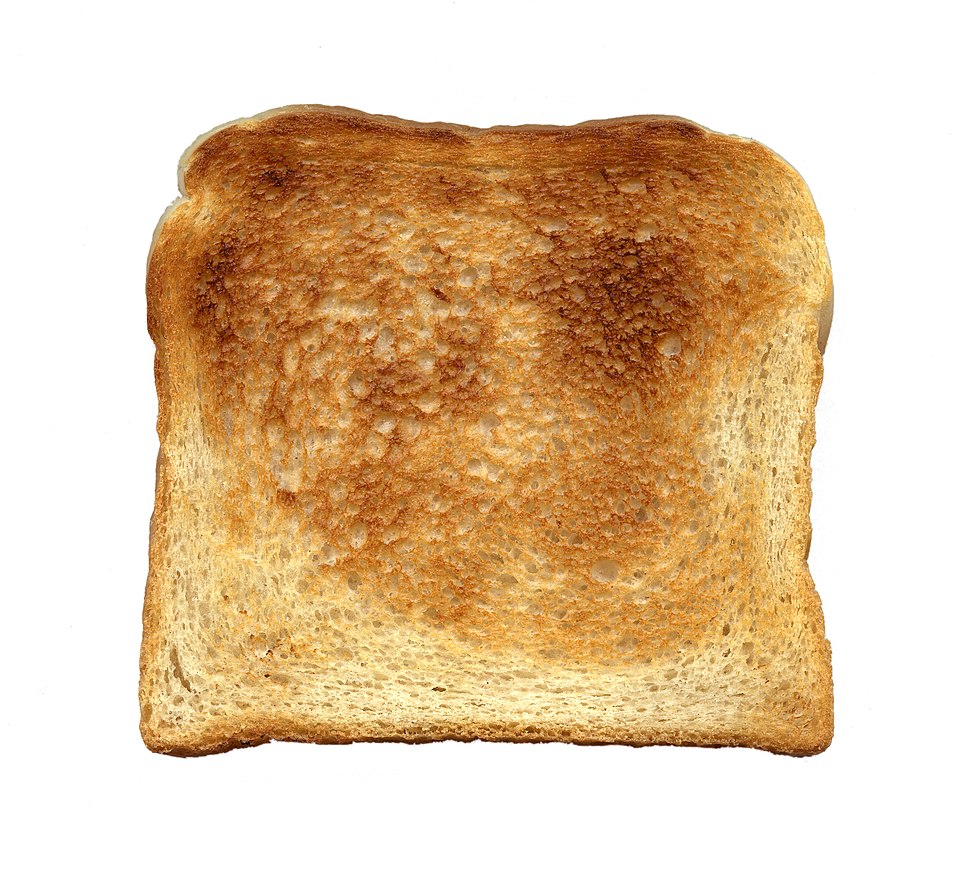
The Maillard reaction is responsible for the browning of food as it cooks. Heat reacts with the amino acids (proteins) and sugar in foods creating aromas and changing the taste and texture of food, creating complex flavours.
It occurs in high dry temperatures of above 140°C, like those generated by an oven, BBQ, in a frying pan or air-fryer etc.
The flavours of many foods people enjoy eating are reliant on the Maillard reaction.
There is a fine balance however: not enough of a reaction and your food will not be golden brown, and too much and it will taste burnt.
The Maillard reaction is responsible for the browning of food as it cooks. Heat reacts with the amino acids (proteins) and sugar in foods creating aromas and changing the taste and texture of food, creating complex flavours.
It occurs in high dry temperatures of above 140°C, like those generated by an oven, BBQ, in a frying pan or air-fryer etc.
The flavours of many foods people enjoy eating are reliant on the Maillard reaction.
There is a fine balance however: not enough of a reaction and your food will not be golden brown, and too much and it will taste burnt.