

Chemistry in the kitchen
View Sequence overviewStudents will:
- design (and potentially produce) a food experience involving irreversible change, for a specific event/purpose, such as a bake stall, food for a celebration or a snack to share with a buddy class.
Students will represent their understanding as they:
- discuss and group the changes observed during the sequence as physical or chemical changes, and reversible or irreversible.
- share and explain their design, how it involves irreversible change, and its suitability for the specific event/purpose.
In the Act phase, assessment is summative.
Students working at the achievement standard should have:
- recognised physical and chemical changes to substances.
- Refer to students’ contributions to discussions.
- Refer to the food experience design and how they describe changes that occur on Kitchen chemistry Resource sheet and when communicating their design with the class (or other audience).
- compared and classified changes as reversible and irreversible.
- Refer to students’ ideas on the changes observed during the sequence, and which were reversible or irreversible.
- Refer to students’ contributions during the ‘Sorting Changes’ (Connect) phase of this lesson.
Refer to the Australian Curriculum content links on the Our design decisions tab for further information.
Whole class
Class science journal (digital or hard-copy)
Video: Reversible and irreversible changes to matter (2:15)
Optional: Ingredients and equipment to produce a food experience
Each student
Individual science journals and resource sheets from this sequence
Kitchen chemistry Resource sheet
Lesson
The Act phase empowers students to use the Core concepts and key ideas of science they have learned during the Inquire phase. It encourages students to develop a sense of responsibility as members of society—to act rather than be acted upon. It provides students with the opportunity to positively influence their own life and that of the world around them. For this to occur, students need to build foundational skills in an interactive mutually supportive environment with their community.
When designing the Act phase, consider ways that students could use their scientific knowledge and skills. Consider their interests and lifestyles that may intersect with the core concepts and key ideas. What context or problem would provide students with a way to use science to synthesise a design? How (and to whom) will students communicate their understanding?
Read more about using the LIA FrameworkScience education consists of a series of key ideas and core concepts that can explain objects, events and phenomena and link them to the experiences encountered by students in their lives. The purpose of the Anchor routine is to identify and link students’ learning to these ideas and concepts in a way that builds and deepens their understanding.
When designing the Act phase of a teaching sequence, consider the core concepts and key ideas that are relevant. The Anchor routine provides an opportunity to collate and revise the key knowledge and skills students have learned, in a way that emphasises the importance of science as a human endeavour.
What have we learned so far?
Discuss the different changes that students have investigated, such as:
- dissolving/retrieving salt.
- how chemical reactions contribute to the production of different foods, including cheese, bread and toast.
- the chemical reactions involved in fire, and how fire impacted the cooking of food.
- creating new substances such as casein plastic and rust.
View Reversible and irreversible changes to matter (2:15) to consolidate the difference between reversible and irreversible change.
Each student comes to the classroom with experiences made up from science-related knowledge, attitudes, experiences and resources in their life. The Connect routine is designed to tap into these experiences and that of their wider community. It is also an opportunity to yarn with community leaders (where appropriate) to gain an understanding of the student’s lives, languages and interests. In the Launch phase, this routine identifies and uses the science capital of students as the foundation of the teaching sequence so students can appreciate the relevance of their learning and its potential impact on future decisions. In short, this routine moves beyond scientific literacy and increases the science capital in the classroom and science identity of the students.
When planning a teaching sequence, take an interest in the lives of your students. What are their hobbies, how do they travel to and from school? What might have happened in the lives of your students (i.e. blackouts) that might be relevant to your next teaching sequence? What context might be of interest to your students?
Read more about using the LIA FrameworkThe Act phase empowers students to use the Core concepts and key ideas of science they have learned during the Inquire phase. It encourages students to develop a sense of responsibility as members of society—to act rather than be acted upon. It provides students with the opportunity to positively influence their own life and that of the world around them. For this to occur, students need to build foundational skills in an interactive mutually supportive environment with their community.
When designing the Act phase, consider ways that students could use their scientific knowledge and skills. Consider their interests and lifestyles that may intersect with the core concepts and key ideas. What context or problem would provide students with a way to use science to synthesise a design? How (and to whom) will students communicate their understanding?
Read more about using the LIA FrameworkSorting changes
Discuss why categorisation is important in science.
- Why classify things?
- To help us make sense of the world and recognise the similarities and differences between things.
- What if we didn’t classify things?
- We would have difficulty communicating, since simple words like ‘tree’ are a classification.
Optional: Using think, pair, share, invite students to consider how the changes investigated in this sequence could be grouped. For example, changes could be grouped as ‘gas-producing’ & ‘non-gas producing’.
Encourage scientific thinking and reasoning by asking questions such as Could you tell me more about that? and Well, if that’s right, what about….
As a class, classify the changes regarding food/cooking students have observed and learned about as physical or chemical changes, and determine whether they are reversible or irreversible.
Think, pair, share
How does think, pair, share work?
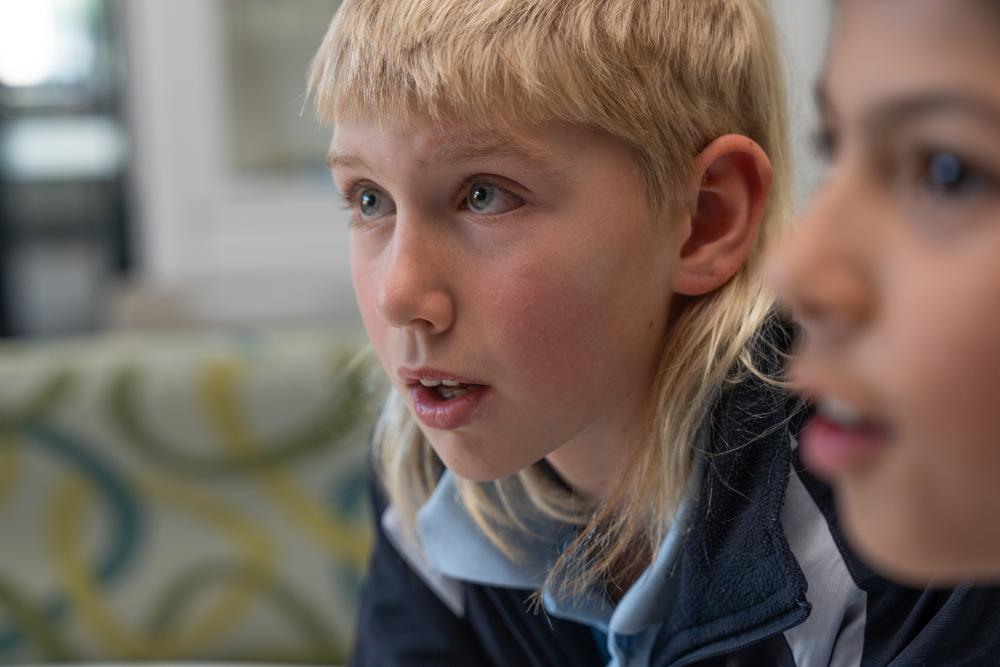
Within a classroom there are often students who raise their hands and offer ideas readily, as well as those who are less confident to share their ideas. The think, pair, share strategy can encourage more students to get involved because it allows thinking time and removes fear of being wrong, as students can offer ideas they have agreed upon with their partner.
In the strategy:
- Students are prompted with a question, topic, claim or idea.
- They are given time to think, typically between 10 and 20 seconds. The time can be extended for complex questions or topics.
- Students pair up with someone near them to discuss their answers and ideas.
- Invite students to share with the class, starting with (Student’s name) and I discussed/thought/talked about...
You can also add the step ‘square’ where pairs team up with another pair to discuss further before sharing. This can be helpful to expose students to a wider range of ideas and vocabulary.
Within a classroom there are often students who raise their hands and offer ideas readily, as well as those who are less confident to share their ideas. The think, pair, share strategy can encourage more students to get involved because it allows thinking time and removes fear of being wrong, as students can offer ideas they have agreed upon with their partner.
In the strategy:
- Students are prompted with a question, topic, claim or idea.
- They are given time to think, typically between 10 and 20 seconds. The time can be extended for complex questions or topics.
- Students pair up with someone near them to discuss their answers and ideas.
- Invite students to share with the class, starting with (Student’s name) and I discussed/thought/talked about...
You can also add the step ‘square’ where pairs team up with another pair to discuss further before sharing. This can be helpful to expose students to a wider range of ideas and vocabulary.
The Act phase empowers students to use the Core concepts and key ideas of science they have learned during the Inquire phase. It encourages students to develop a sense of responsibility as members of society—to act rather than be acted upon. It provides students with the opportunity to positively influence their own life and that of the world around them. For this to occur, students need to build foundational skills in an interactive mutually supportive environment with their community.
When designing the Act phase, consider ways that students could use their scientific knowledge and skills. Consider their interests and lifestyles that may intersect with the core concepts and key ideas. What context or problem would provide students with a way to use science to synthesise a design? How (and to whom) will students communicate their understanding?
Read more about using the LIA FrameworkWhen students use their knowledge and skills in new ways, they also have an opportunity to develop and use their creative and critical thinking skills. With scaffolded support, they can become more confident to work in a team and develop a stronger sense of autonomy. This results in stronger student outcomes, attitudes and sense of empowerment.
When designing a teaching sequence, consider what activity would allow students to showcase their knowledge and skills. Consider the current abilities of your students. What are they capable of explaining? What props could they design or build that would support their explanations? How much information would they need in their design brief to support their thinking? How does this connect with their lives and interests?
Food design
Students design, and potentially produce, a food experience involving irreversible change, for a specific event/purpose. See the Selecting a Chemistry in my kitchen experience section in the Preparing for this sequence tab for further guidance.
Define
Outline the task in a simple manner such as:
How can we use/highlight irreversible changes that occur in the kitchen through our food experience?
Discuss who the students will be creating the food chemistry experience for. Will they be producing the experience for parents, peers, or a younger class? How will they plan for food allergies? How will they explain the chemistry they have learned? What language will they use to explain it?
Ideate
Brainstorm and record relevant ideas that can be created using irreversible changes, and discuss how these changes can be highlighted.
At this stage, to support creative thinking, every idea offered by students should be recorded in the class science journal. No idea is discounted, as the practicality of each idea will be considered later.
As students offer ideas, ask probing questions (What do you already know about heat changing food? What foods have you seen prepared in the past for similar situations/events?) to draw out where students may start their thinking, in order to design the food experience.
Optional: It may be appropriate here to allow students some time to research and take a deep dive into food preparation or foods associated with particular celebrations.
Determine the criteria for how students’ designs might demonstrate the scientific concepts explored during the sequence. For example, the design could include:
- a description of reversible and/or irreversible changes occurring.
- an audience-appropriate explanation of how the changes will create a food experience suitable for the audience.
- a list of the required equipment and materials.
Discuss the criteria for assessment with students, guiding them to consider all elements of the design that are required for assessment. Collate this into a set of agreed assessment criteria.
Prototype
Allow students time to create their food experience. They may work individually or in teams.
They may use Kitchen chemistry Resource sheet to plan the food experiences and related irreversible changes.
Optional: Students/teams are provided opportunities to share their ideas and receive peer feedback (download AITSL’s guide for more on peer feedback).
The Act phase empowers students to use the Core concepts and key ideas of science they have learned during the Inquire phase. It encourages students to develop a sense of responsibility as members of society—to act rather than be acted upon. It provides students with the opportunity to positively influence their own life and that of the world around them. For this to occur, students need to build foundational skills in an interactive mutually supportive environment with their community.
When designing the Act phase, consider ways that students could use their scientific knowledge and skills. Consider their interests and lifestyles that may intersect with the core concepts and key ideas. What context or problem would provide students with a way to use science to synthesise a design? How (and to whom) will students communicate their understanding?
Read more about using the LIA FrameworkA key part of Science Inquiry, the Communicate routine provides students with an opportunity to communicate their ideas effectively to others. It allows students a chance to show their learning to members of their community and provides a sense of belonging. It also encourages students to have a sense of responsibility to share their understanding of science and to use this to provide a positive influence in the community.
When designing a teaching sequence, consider who might be connected to the students that have an interest in science. Who in their lives could share their learning? What forum could be used to build an enthusiasm for science. Are there members of the community (parents, teachers, peers or wider community) who would provide a link to future science careers?
Read more about using the LIA FrameworkSharing
Students share their designs with the class (or other audiences). They might share:
- the reversible and or irreversible changes that will occur during the food making process.
- illustrations or plans for their design.
- how it is a suitable food for the specific event/purpose.
Optional: Make the food
Select a design(s), source ingredients, and make the food for the specific event/purpose.
Consider the risks associated with heat and food preparation and adapt the food-making experience accordingly. This might include:
- ensure fire safety equipment and procedures are followed.
- have the teacher leading (and students observing) when there is a risk of burns.
- ensure a food-safe environment.
- consider food allergies of those preparing and consuming the food.
Reflect on the sequence
You might:
- refer to the list of student questions from the TWLH chart begun in Lesson 1. Determine which questions have been answered over the course of the learning sequence, what the ‘answers’ to the questions are, and the evidence that supports these claims. Address questions that have not been answered during the learning sequence, discuss why they might not have been addressed, and consider potential investigations that might support students to answer them.
- ask students to represent their learning in words, symbols, and pictures (multimodal representations). This could involve filming/commentary on videos etc.
- discuss why it’s important to have a good understanding of reversible and irreversible change.