

Chemistry in the kitchen
View Sequence overviewStudents will:
- observe and record what happens when a sodium bicarbonate solution mixes with a tartaric/citric acid solution.
Students will represent their understanding as they:
- contribute to discussions about chemical reactions that create gas.
- summarise what they have learned as a short paragraph or labelled diagram.
In this lesson, assessment is formative.
Feedback might focus on:
- students’ recognition that the balloon inflates because it fills with gas.
- students’ understanding that the carbon dioxide gas is produced as a result of combining tartaric/citric acid and sodium bicarbonate with water (product of the reaction).
- students’ understanding that the chemical change that created carbon dioxide gas is irreversible (evidence of a chemical reaction).
Whole class
Class science journal (digital or hard-copy)
Demonstration copy of the Focus on Fizz Resource sheet
Pieces/loaves of leavened (risen) and unleavened (flat) bread, or images of the same
Optional: Digital device to record students’ findings
Optional: Digital scales
A recipe for a yeast-free bread, for example Sandwich bread without yeast from RecipeTin Eats (note that this recipe will be shown to the class and be aware that the webpage contains many affiliate links and advertisements)
Optional videos:
- All about leavening (6:41)
- How to make your own bath bombs (0:59)
Each group
Focus on fizz Resource sheet
6 teaspoons of sodium bicarbonate (bicarb soda)
6 teaspoons of tartaric (or citric) acid
3 cups of water
1 cup measure
1 teaspoon
4 transparent bottles of the same size (350–400 ml approximately)
4 balloons
1 labelling pen
1 funnel
Masking/adhesive tape
4 pieces of paper towel
Each student
Individual science journal (digital or hard-copy)
Optional: Dissolving salt Resource sheet to complete observations from Lesson 2 if required.
Optional: Mixing milk and vinegar Resource sheet to complete observations from Lesson 3 if required.
My kitchen observations Resource sheet (ongoing)
Lesson
The Inquire phase allows students to cycle progressively and with increasing complexity through the key science ideas related to the core concepts. Each Inquire cycle is divided into three teaching and learning routines that allow students to systematically build their knowledge and skills in science and incorporate this into their current understanding of the world.
When designing a teaching sequence, it is important to consider the knowledge and skills that students will need in the final Act phase. Consider what the students already know and identify the steps that need to be taken to reach the level required. How could you facilitate students’ understanding at each step? What investigations could be designed to build the skills at each step?
Read more about using the LIA FrameworkRe-orient
If required, provide time for students to make observations on their salt evaporation experiments using Dissolving salt Resource sheet. If concluding the salt evaporation observations today, return to Lesson 2 and complete the final Integrate step.
If required, provide time for students to observe their drying/dried casein plastic shapes. If concluding the task this session, return to Lesson 3 and complete the final Integrate step.
Students can also share any recent observations about the use of milk and vinegar in their home kitchens.
The Inquire phase allows students to cycle progressively and with increasing complexity through the key science ideas related to the core concepts. Each Inquire cycle is divided into three teaching and learning routines that allow students to systematically build their knowledge and skills in science and incorporate this into their current understanding of the world.
When designing a teaching sequence, it is important to consider the knowledge and skills that students will need in the final Act phase. Consider what the students already know and identify the steps that need to be taken to reach the level required. How could you facilitate students’ understanding at each step? What investigations could be designed to build the skills at each step?
Read more about using the LIA FrameworkIdentifying and constructing questions is the creative driver of the inquiry process. It allows students to explore what they know and how they know it. During the Inquire phase of the LIA Framework, the Question routine allows for past activities to be reviewed and to set the scene for the investigation that students will undertake. The use of effective questioning techniques can influence students’ view and interpretation of upcoming content, open them to exploration and link to their current interests and science capital.
When designing a teaching sequence, it is important to spend some time considering the mindset of students at the start of each Inquire phase. What do you want students to be thinking about, what do they already know and what is the best way for them to approach the task? What might tap into their curiosity?
Read more about using the LIA FrameworkWhat makes it bubble?
Focus students’ attention on the leavened (risen) and unleavened (flat) bread. Discuss the differences between the two and record students’ ideas in the class science journal. Also discuss/record students’ experiences with eating/making different types of bread.
Pose the question: Why did one loaf of bread stay flat and the other rise upwards as they cooked?
Leavened bread
What is leavened and unleavened bread?
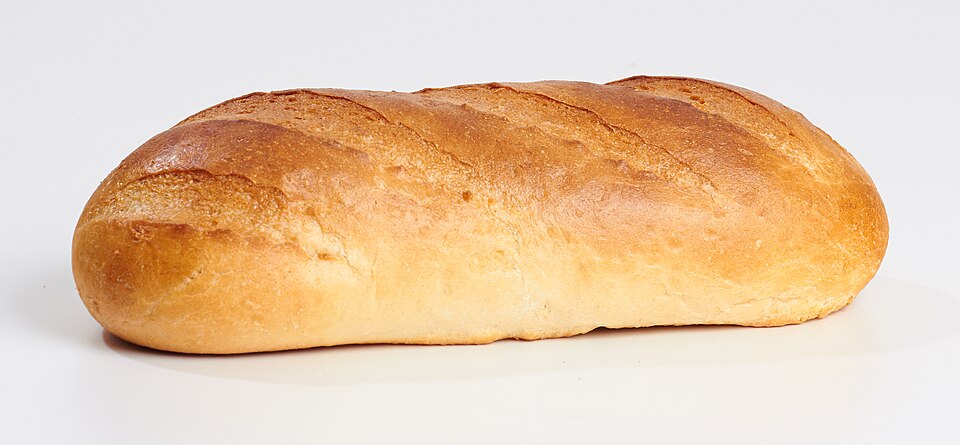
Leavened breads use rising agents such as yeast or sodium bicarbonate (bicarb soda).
Yeast consumes the sugar in the bread mix and produces carbon dioxide gas and ethanol. Bicarbonate of soda requires an acid (such as buttermilk, yogurt, lemon juice, or vinegar) to react with to produce carbon dioxide gas, water, and a salt. In both cases the carbon dioxide forms bubbles that are trapped in the dough or batter, causing it to rise. The sodium bicarbonate reaction happens quicker than the yeast reaction and does not require time for fermentation or proofing. This is why sodium bicarbonate is commonly used in quick breads such as soda bread. During baking, heat helps expand the gas and sets the structure of the bread through protein denaturation and starch gelatinisation.
While both types of leavened bread are a result of irreversible chemical reactions, this lesson focuses on the sodium bicarbonate and acid reaction.
Unleavened bread does not use yeast or bicarbonate of soda and an acid. Therefore no gas is generated and the bread does not rise.
Leavened breads use rising agents such as yeast or sodium bicarbonate (bicarb soda).
Yeast consumes the sugar in the bread mix and produces carbon dioxide gas and ethanol. Bicarbonate of soda requires an acid (such as buttermilk, yogurt, lemon juice, or vinegar) to react with to produce carbon dioxide gas, water, and a salt. In both cases the carbon dioxide forms bubbles that are trapped in the dough or batter, causing it to rise. The sodium bicarbonate reaction happens quicker than the yeast reaction and does not require time for fermentation or proofing. This is why sodium bicarbonate is commonly used in quick breads such as soda bread. During baking, heat helps expand the gas and sets the structure of the bread through protein denaturation and starch gelatinisation.
While both types of leavened bread are a result of irreversible chemical reactions, this lesson focuses on the sodium bicarbonate and acid reaction.
Unleavened bread does not use yeast or bicarbonate of soda and an acid. Therefore no gas is generated and the bread does not rise.
The Inquire phase allows students to cycle progressively and with increasing complexity through the key science ideas related to the core concepts. Each Inquire cycle is divided into three teaching and learning routines that allow students to systematically build their knowledge and skills in science and incorporate this into their current understanding of the world.
When designing a teaching sequence, it is important to consider the knowledge and skills that students will need in the final Act phase. Consider what the students already know and identify the steps that need to be taken to reach the level required. How could you facilitate students’ understanding at each step? What investigations could be designed to build the skills at each step?
Read more about using the LIA FrameworkThe Investigate routine provides students with an opportunity to explore the key ideas of science, to plan and conduct an investigation, and to gather and record data. The investigations are designed to systematically develop content knowledge and skills through increasingly complex processes of structured inquiry, guided inquiry and open inquiry approaches. Students are encouraged to process data to identify trends and patterns and link them to the real-world context of the teaching sequence.
When designing a teaching sequence, consider the diagnostic assessment (Launch phase) that identified the alternative conceptions that students held. Are there activities that challenge these ideas and provide openings for discussion? What content knowledge and skills do students need to be able to complete the final (Act phase) task? How could you systematically build these through the investigation routines? Are there opportunities to build students’ understanding and skills in the science inquiry processes through the successive investigations?
Read more about using the LIA FrameworkEvidence of a chemical reaction
Explain that students are going to investigate the reactions between three common ingredients found in simple leavened bread recipes, to see what causes the bread to rise and not remain flat:
- sodium bicarbonate, also known as baking soda or bicarb soda
- tartaric acid, found naturally in grapes, bananas, avocados and tamarinds.
- Alternatively you can use citric acid, found naturally in citrus fruits such as lemons, limes, oranges and mandarins.
- water
Discuss/explain the investigation using a demonstration copy of the Focus on fizz Resource sheet, referring to the equipment students will use.
Further discuss fair-testing principles in reference to the investigation procedure.
- Why are we testing different combinations of the three ingredients?
- What things do we need to keep the same to ensure that it is a fair test?
- For example, using the same size bottles and amounts of ingredients in each bottle.
- Why do you label the bottles?
- To keep track of each since the solutions are all clear and colourless.
- Why do you label the balloons?
- To keep track of each since the powders are both white.
- Why do you put the powder in the balloons?
- To make sure that the powders are added at the same time, after the balloon is upended.
- Why do you wipe the funnel each time?
- So you don’t accidentally add some powder into the wrong bottle.
- Why do you discard the paper towel?
- To make sure you don’t accidentally wipe powder onto the funnel.
- Why is it important to make sure the balloon is secure?
- To prevent chemical spills and possible splashes in eyes.
Review how acid was used to separate the protein in milk in the previous lesson and ask students to consider what an acid might do when mixed with the other substances used in this investigation.
Allow students time to make predictions about what they think will occur when the different combinations of ingredients are added together.
Optional: Discuss predictions as a class.
As necessary, discuss safety protocols for students to follow:
- Keep their hands on the outside of the bottle at all times.
- Be careful when handling the powders and not inhale any.
- Wear safety glasses.
Allow teams time to complete their investigation and record their observations.
While students complete the investigation, remind them to use three of their senses (touch, hearing and sight) when making observations for each bottle, using prompts such as:
- Can you hear any changes occurring?
- How does the bottle feel before you tip the balloon ingredients in? How does it feel after?
- Is there a change in temperature? How do you know?
- You can feel a change in temperature with your hands.
- What do you think the temperature change indicates?
- The temperature of the bottle should decrease when the acid and sodium bicarbonate are mixed. This is an indication of a chemical change.
Producing carbon dioxide
How is carbon dioxide produced by this chemical reaction?
Sodium bicarbonate (NaHCO3) is a common chemical used in the kitchen. It has many other common names, including sodium hydrogen carbonate, sodium bicarb, baking soda, bread soda, cooking soda, bicarbonate soda, or bicarbonate of soda.
Sodium bicarbonate is used in baking because when it comes in contact with an acid, carbon dioxide gas is formed. When the gas is produced, it is trapped in bubbles in the material. Gases expand when they are heated, so the cake mixture (with bubbles of gas trapped in it) rises.
When tartaric/citric acid and sodium bicarbonate are mixed in powder form, the solid particles are not free to move or react with each other, so there is no chemical reaction. When each is dissolved in water separately, there is no carbon dioxide gas formed since only one of the necessary particles (reactants) is present each time. It is only when the substances are combined in their dissolved form that the particles can collide and the reaction takes place. The two original particles or molecules, sodium bicarbonate and tartaric/citric acid (the reactants), react with each other and recombine into new substances (carbon dioxide, water, and sodium tartrate).
The reaction is an endothermic reaction, removing (heat) energy from the surrounding environment. This heat absorption from the air and hands holding the container causes the surroundings (including the hands) to become noticeably colder.
Students’ potential alternative conceptions
Students might think that a chemical reaction is not an interaction or a recombination of ingredients. Instead, they may think that only one ingredient plays an active role. For example, when presented with sodium bicarbonate reacting with vinegar (a weak acid in water), they might ascribe the cause of the reaction to be the sodium bicarbonate dissolving in a liquid. Using tartaric or citric acid instead of vinegar will allow students to compare dissolving and reacting.
Most students are familiar with fizzy drinks. Therefore, the appearance of bubbles is not necessarily seen as something that needs to be explained. See Science content-Dissolving for an explanation of why carbonated drinks have bubbles of carbon dioxide in them. Students might have the misconception that the bubbles formed by a chemical reaction (a chemical change) is the same process by which bubbles are released from solution when the cap is removed from a bottle of fizzy drink (a physical change).
Sodium bicarbonate (NaHCO3) is a common chemical used in the kitchen. It has many other common names, including sodium hydrogen carbonate, sodium bicarb, baking soda, bread soda, cooking soda, bicarbonate soda, or bicarbonate of soda.
Sodium bicarbonate is used in baking because when it comes in contact with an acid, carbon dioxide gas is formed. When the gas is produced, it is trapped in bubbles in the material. Gases expand when they are heated, so the cake mixture (with bubbles of gas trapped in it) rises.
When tartaric/citric acid and sodium bicarbonate are mixed in powder form, the solid particles are not free to move or react with each other, so there is no chemical reaction. When each is dissolved in water separately, there is no carbon dioxide gas formed since only one of the necessary particles (reactants) is present each time. It is only when the substances are combined in their dissolved form that the particles can collide and the reaction takes place. The two original particles or molecules, sodium bicarbonate and tartaric/citric acid (the reactants), react with each other and recombine into new substances (carbon dioxide, water, and sodium tartrate).
The reaction is an endothermic reaction, removing (heat) energy from the surrounding environment. This heat absorption from the air and hands holding the container causes the surroundings (including the hands) to become noticeably colder.
Students’ potential alternative conceptions
Students might think that a chemical reaction is not an interaction or a recombination of ingredients. Instead, they may think that only one ingredient plays an active role. For example, when presented with sodium bicarbonate reacting with vinegar (a weak acid in water), they might ascribe the cause of the reaction to be the sodium bicarbonate dissolving in a liquid. Using tartaric or citric acid instead of vinegar will allow students to compare dissolving and reacting.
Most students are familiar with fizzy drinks. Therefore, the appearance of bubbles is not necessarily seen as something that needs to be explained. See Science content-Dissolving for an explanation of why carbonated drinks have bubbles of carbon dioxide in them. Students might have the misconception that the bubbles formed by a chemical reaction (a chemical change) is the same process by which bubbles are released from solution when the cap is removed from a bottle of fizzy drink (a physical change).
The Inquire phase allows students to cycle progressively and with increasing complexity through the key science ideas related to the core concepts. Each Inquire cycle is divided into three teaching and learning routines that allow students to systematically build their knowledge and skills in science and incorporate this into their current understanding of the world.
When designing a teaching sequence, it is important to consider the knowledge and skills that students will need in the final Act phase. Consider what the students already know and identify the steps that need to be taken to reach the level required. How could you facilitate students’ understanding at each step? What investigations could be designed to build the skills at each step?
Read more about using the LIA FrameworkFollowing an investigation, the Integrate routine provides time and space for data to be evaluated and insights to be synthesized. It reveals new insights, consolidates and refines representations, generalises context and broadens students’ perspectives. It allows student thinking to become visible and opens formative feedback opportunities. It may also lead to further questions being asked, allowing the Inquire phase to start again.
When designing a teaching sequence, consider the diagnostic assessment that was undertaken during the Launch phase. Consider if alternative conceptions could be used as a jumping off point to discussions. How could students represent their learning in a way that would support formative feedback opportunities? Could small summative assessment occur at different stages in the teaching sequence?
Read more about using the LIA FrameworkWhy did the balloon inflate?
In this Integrate step, guide students to link their experiences in the investigation to the science concept being explored—in this instance, the reaction between the sodium bicarbonate, tartaric acid and water that created gas. Through questioning and discussion, students should come to a consensus that:
|
Share and discuss the teams’ results and conclusions.
- What did you observe in the different bottles? Were they all the same, or were some different?
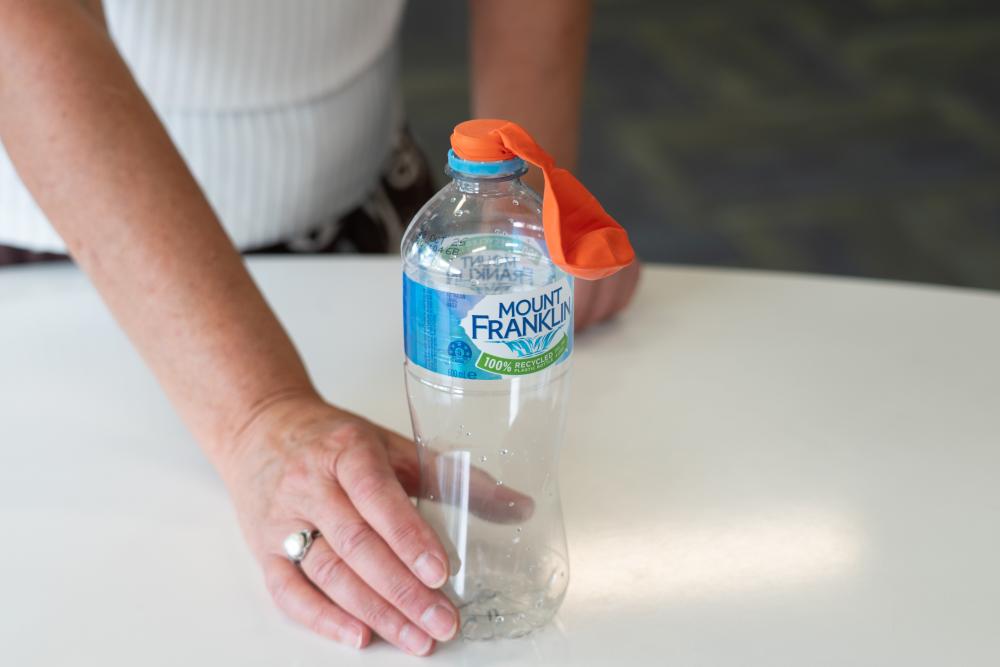
- When all three substances were mixed together in bottle 4, bubbles appeared in the water and the balloon inflated.
- Do you think the sodium bicarbonate created the bubbles by itself? Why do you think that?
- No, because the powder just appears to mix into the water. Nothing else happens, no bubbles or balloon inflation.
- Do you think the tartaric acid created the bubbles by itself? Why do you think that?
- No, because the powder just appears to mix into the water. Nothing else happens, no bubbles or balloon inflation.
- What was different about bottle 4?
- All three substances are mixed together, and that is when the bubbles are formed and the balloon is inflated.
- What do you think was created in bottle 4 when all of the ingredients were mixed together? Why do you think that?
- Gas was created. We know this because the balloon inflated, and we could see bubbles in the water that we’d seen before.
- If required, revise what students learned about the properties of gas in Year 5. Refer to the teaching sequence Communicating matters, specifically Lesson 4 and Lesson 5.
- What does this tell you about what substances you need to create the gas?
- You need all three substances to cause the chemical reaction that creates the gas.
- Did you observe/notice anything else you thought was interesting?
- Students may have noticed that bottle 4 felt cooler to the touch. This is because the chemical reaction absorbs heat from the surroundings, making hands feel cooler. This concept appears in the Year 9 curriculum. It is appropriate to acknowledge it here in simple terms if students make the observation, however, a detailed explanation is not required at this stage of conceptual development.
- Do you think that this is a reversible or irreversible change? Could we separate the substances back into their original form? Why do you think that?
- This is an irreversible chemical change. The substances have mixed together and created something new: gas. The original substances get consumed in the process.
Explain that the type of gas students have created is carbon dioxide (CO2) gas. Discuss what else students might know about CO2. For example:
- the bubbles in fizzy drinks are made of CO2.
- animals produce CO2 and breathe it out.
- plants absorb CO2 during the daylight.
Reference the properties of gas that students learned about in Year 5, discuss how gas takes up space, and that, for example, an empty cup is not really empty because it is full of air (a combination of gases). Discuss what caused the balloon to inflate.
Students draw a representation of what they think was happening in bottle 4.
Optional: Going further, repeat the balloon 4 reaction (sodium bicarbonate, acid, water):
- on digital scales to demonstrate the total mass of the substances remains constant before and after the chemical reaction, and gases have mass (ensure the balloon is well sealed to prevent gas molecules escaping).
- using different amounts of the reactants (sodium bicarbonate and tartaric/citric acid) to compare the length of the reaction and the amount of carbon dioxide produced
Refer back to the bread students looked at in the beginning of the lesson, and again pose the question: Why did one loaf of bread stay flat, and the other rose upwards as it cooked?
Look at a recipe for simple bread made using baking powder. Searching for ‘bread made with baking powder’ or ‘yeast-free bread’ using your preferred search engine will yield many results where you can select one suitable for your students. Alternatively, use Sandwich bread without yeast from RecipeTin Eats, but be aware that the webpage contains many affiliate links and advertisements.
Support students to make the connection between the presence of baking powder and the cakes or bread rising, and that these types of ingredients are excluded from unleavened bread recipes, which is why they don’t rise.
Discuss the use of baking powder in other forms of cooking, such as baking cakes, biscuits, and even pancakes.
Optional: Look at a recipe that uses yeast as a leavening agent for bread. Watch the video All about leavening (6:41) to learn about the difference between using different leavening agents, including baking powder and yeast, to make bread rise.
Reflect on the lesson
You might:
- show the video How to make your own bath bombs (0:59) to see other products that utilise this chemical reaction
- add to the class word wall or glossary.
- add to the L and H sections of the TWLH chart.