

Chemistry in the kitchen
View Sequence overviewStudents will:
- work in teams to investigate the irreversible chemical changes that occur when warm milk and vinegar are combined.
Students will represent their understanding as they:
- draw labelled diagrams to record their observations.
- discuss and compare the properties of the original substances (milk and vinegar) and the new substance (casein plastic).
In this lesson, assessment is formative.
Feedback might focus on:
- students’ explanation of the irreversible changes creating casein plastic. Do they recognise that milk and vinegar chemically changed to a new substance (casein plastic) and that the changes are irreversible?
Whole class
Class science journal (digital or hard-copy)
Demonstration copy of the What’s in milk? What’s in vinegar? Resource sheet
Optional: Demonstration copy of the Mixing milk and vinegar Resource Sheet
The video Plastic milk (0:28)
Each group
250 ml warm milk (not boiling)—can be prewarmed and stored in thermos
1 tablespoon of vinegar (alternatively, lemon juice can also be used)
Clear jar or glass
Spoon for mixing
Paper towel
Optional: strainer
Lids, paper plates or tray to dry casein plastic on (each group’s plastic is approximately the size of a fifty-cent coin)
Each student
Individual science journal (digital or hard-copy)
Mixing milk and vinegar Resource Sheet
Dissolving salt Resource sheet (ongoing)
My kitchen observations Resource sheet (ongoing)
Lesson
The Inquire phase allows students to cycle progressively and with increasing complexity through the key science ideas related to the core concepts. Each Inquire cycle is divided into three teaching and learning routines that allow students to systematically build their knowledge and skills in science and incorporate this into their current understanding of the world.
When designing a teaching sequence, it is important to consider the knowledge and skills that students will need in the final Act phase. Consider what the students already know and identify the steps that need to be taken to reach the level required. How could you facilitate students’ understanding at each step? What investigations could be designed to build the skills at each step?
Read more about using the LIA FrameworkRe-orient
Ask students to share any observations they have made since the previous lesson about how salt is used in their home kitchens, including any salt alternatives.
If required, provide time for students to make observations on their salt evaporation experiments using Dissolving salt Resource sheet. If concluding the salt evaporation observations today, return to Lesson 2 and complete the final Integrate step.
The Inquire phase allows students to cycle progressively and with increasing complexity through the key science ideas related to the core concepts. Each Inquire cycle is divided into three teaching and learning routines that allow students to systematically build their knowledge and skills in science and incorporate this into their current understanding of the world.
When designing a teaching sequence, it is important to consider the knowledge and skills that students will need in the final Act phase. Consider what the students already know and identify the steps that need to be taken to reach the level required. How could you facilitate students’ understanding at each step? What investigations could be designed to build the skills at each step?
Read more about using the LIA FrameworkIdentifying and constructing questions is the creative driver of the inquiry process. It allows students to explore what they know and how they know it. During the Inquire phase of the LIA Framework, the Question routine allows for past activities to be reviewed and to set the scene for the investigation that students will undertake. The use of effective questioning techniques can influence students’ view and interpretation of upcoming content, open them to exploration and link to their current interests and science capital.
When designing a teaching sequence, it is important to spend some time considering the mindset of students at the start of each Inquire phase. What do you want students to be thinking about, what do they already know and what is the best way for them to approach the task? What might tap into their curiosity?
Read more about using the LIA FrameworkProducing products
Discuss what students know about milk, including where it comes from, the food products it is used to create, and how it is used in those food products. Provide an opportunity for students to share any ways that milk may be used in their own homes.
Repeat this discussion for vinegar or lemons/lemon juice (depending on which you are using for the following investigation).
Pose the question: What kinds of products can we use create using milk and vinegar/lemon juice?
The Inquire phase allows students to cycle progressively and with increasing complexity through the key science ideas related to the core concepts. Each Inquire cycle is divided into three teaching and learning routines that allow students to systematically build their knowledge and skills in science and incorporate this into their current understanding of the world.
When designing a teaching sequence, it is important to consider the knowledge and skills that students will need in the final Act phase. Consider what the students already know and identify the steps that need to be taken to reach the level required. How could you facilitate students’ understanding at each step? What investigations could be designed to build the skills at each step?
Read more about using the LIA FrameworkThe Investigate routine provides students with an opportunity to explore the key ideas of science, to plan and conduct an investigation, and to gather and record data. The investigations are designed to systematically develop content knowledge and skills through increasingly complex processes of structured inquiry, guided inquiry and open inquiry approaches. Students are encouraged to process data to identify trends and patterns and link them to the real-world context of the teaching sequence.
When designing a teaching sequence, consider the diagnostic assessment (Launch phase) that identified the alternative conceptions that students held. Are there activities that challenge these ideas and provide openings for discussion? What content knowledge and skills do students need to be able to complete the final (Act phase) task? How could you systematically build these through the investigation routines? Are there opportunities to build students’ understanding and skills in the science inquiry processes through the successive investigations?
Read more about using the LIA FrameworkCasein
Students explore irreversible changes that are created when milk is mixed with vinegar or lemon juice.
Examine the composition of milk and vinegar using the What’s in milk? What’s in vinegar? Resource sheet. At this stage do not look at the final section, titled “What does vinegar do to milk?”.
Provide teams with the required quantities of warm milk (above 49 °C) and vinegar. On the Mixing milk and vinegar Resource sheet, students describe each sample (including colour, smell, texture/thickness and temperature) and predict what they think will happen when the two liquids are mixed, giving a reason for this prediction.
Allow time for teams to mix, stir, strain, and shape their liquids, with students making observations during each stage of the process on their Mixing milk and vinegar Resource sheet.
Teams place their shaped ‘milk’ in a suitable spot to dry. Drying time will vary depending on atmospheric conditions, and may take anywhere from a few days to two weeks. The shapes are considered dry when they are firm and no longer pliable.
Discuss and compare what students observed during and after mixing the milk and vinegar and what think will happen to the shapes over the next few days/weeks.
- What did you observe as you mixed the vinegar into the milk? What did it look like? What did it create?
- When you strained the mixture, what were you left with?
- How would you describe the two substances? Were they solid or liquid?
- Was there more solid, or more liquid? Why do you think that was?
- What do you think the solids and the liquids were?
- There should have been more liquid left behind than solids formed, due to the much higher percentage of water in milk as compared to anything else.
- Refer back to the composition of milk infographic on the What’s in Milk, What’s in Vinegar? Resource sheet.
Encourage students to make informal observations of the shapes as they dry.
Complete the following Integrate step when the shapes are dry.
Casein
What is casein?
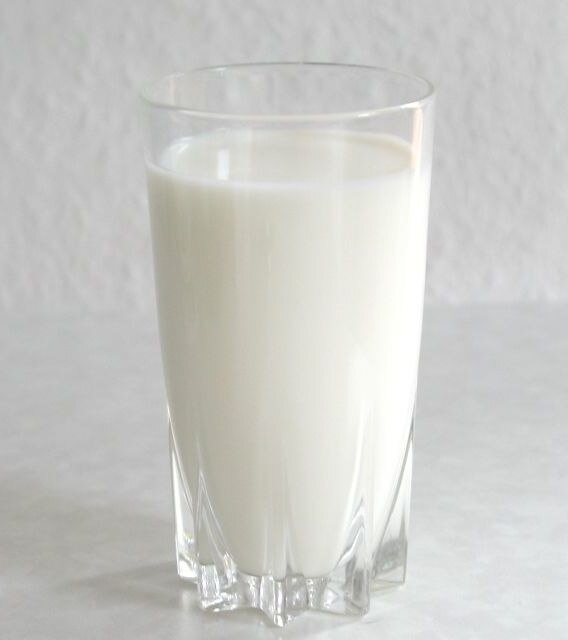
Casein is the main protein in mammalian milk, making up about 80% of the protein component (which, in turn, is approximately 5% of milk as a whole).
Casein is the main component of cheese but also has many other uses, including as an emulsifier and a food additive. Casein can even be used to make paint, glue and plastic.
Due to the potential food safety issues that might result from making and eating cheese in a classroom environment, in this lesson students dry the casein extracted from milk to create a plastic. However, the role of casein in cheesemaking is still explored as a way of linking the process to the context of the sequence, which is about the chemistry of food production.
Casein plastic
Casein plastic is a bioplastic made with two simple ingredients, warm (>49°C) milk and vinegar. As you mix them together, the solution quickly begins to curdle as the casein molecules join together in long strings. This chemical reaction forms clumps of solids floating in a thin watery liquid. The solid clumps are the new material (casein plastic). These can be strained, moulded into shapes, and left to dry.
Many bioplastics are relatively new technology, providing alternatives to non-biodegradable, petroleum-based plastics. However, this is not the case with casein plastic. Casein plastic was quite common from 1900 to 1945 and could be dyed and polished to make buttons, buckles, beads, jewellery, combs, brushes, and knitting needles. ‘Swallow’ brand knitting needles were made in Australia and can be purchased from vintage sellers today. At the end of World War II, petroleum-based plastics became widely used, replacing casein plastic.
The future of casein
The long chains of casein form a tighter network than the polymers produced from petroleum-based plastic. This makes casein significantly more effective at keeping oxygen away from food, prolonging storage. As a bioplastic, casein is also:
- made with renewable resources.
- biodegradable.
- compostable.
- potentially popular with consumers as a sustainable product.
Casein is the main protein in mammalian milk, making up about 80% of the protein component (which, in turn, is approximately 5% of milk as a whole).
Casein is the main component of cheese but also has many other uses, including as an emulsifier and a food additive. Casein can even be used to make paint, glue and plastic.
Due to the potential food safety issues that might result from making and eating cheese in a classroom environment, in this lesson students dry the casein extracted from milk to create a plastic. However, the role of casein in cheesemaking is still explored as a way of linking the process to the context of the sequence, which is about the chemistry of food production.
Casein plastic
Casein plastic is a bioplastic made with two simple ingredients, warm (>49°C) milk and vinegar. As you mix them together, the solution quickly begins to curdle as the casein molecules join together in long strings. This chemical reaction forms clumps of solids floating in a thin watery liquid. The solid clumps are the new material (casein plastic). These can be strained, moulded into shapes, and left to dry.
Many bioplastics are relatively new technology, providing alternatives to non-biodegradable, petroleum-based plastics. However, this is not the case with casein plastic. Casein plastic was quite common from 1900 to 1945 and could be dyed and polished to make buttons, buckles, beads, jewellery, combs, brushes, and knitting needles. ‘Swallow’ brand knitting needles were made in Australia and can be purchased from vintage sellers today. At the end of World War II, petroleum-based plastics became widely used, replacing casein plastic.
The future of casein
The long chains of casein form a tighter network than the polymers produced from petroleum-based plastic. This makes casein significantly more effective at keeping oxygen away from food, prolonging storage. As a bioplastic, casein is also:
- made with renewable resources.
- biodegradable.
- compostable.
- potentially popular with consumers as a sustainable product.
The Inquire phase allows students to cycle progressively and with increasing complexity through the key science ideas related to the core concepts. Each Inquire cycle is divided into three teaching and learning routines that allow students to systematically build their knowledge and skills in science and incorporate this into their current understanding of the world.
When designing a teaching sequence, it is important to consider the knowledge and skills that students will need in the final Act phase. Consider what the students already know and identify the steps that need to be taken to reach the level required. How could you facilitate students’ understanding at each step? What investigations could be designed to build the skills at each step?
Read more about using the LIA FrameworkFollowing an investigation, the Integrate routine provides time and space for data to be evaluated and insights to be synthesized. It reveals new insights, consolidates and refines representations, generalises context and broadens students’ perspectives. It allows student thinking to become visible and opens formative feedback opportunities. It may also lead to further questions being asked, allowing the Inquire phase to start again.
When designing a teaching sequence, consider the diagnostic assessment that was undertaken during the Launch phase. Consider if alternative conceptions could be used as a jumping off point to discussions. How could students represent their learning in a way that would support formative feedback opportunities? Could small summative assessment occur at different stages in the teaching sequence?
Read more about using the LIA FrameworkComparing properties
In this Integrate step, guide students to link their experiences in the investigation to the science concept being explored—in this instance, that vinegar and milk combine to make new substances, and that these changes cannot be reversed. Through questioning and discussion, students should come to a consensus that:
|
After the shapes have dried discuss what students what they observed during the drying process, and what the shapes look and feel like now.
Explain to students that what they have just made is called casein plastic, a type of bioplastic that was very common from around 1900-1945. It could be dyed and polished and was used for small things such as buttons, buckles, combs, jewellery, toothbrush handles, hairbrushes and knitting needles.
View the video Plastic milk (0:28) for a brief explanation of how this works.
Next, read the final section of the What’s in Milk, What’s in Vinegar? Resource sheet, "What does vinegar do to milk?".
Discuss why it wouldn’t be possible to make cheese in a school environment:
- There is not adequate supervision to allow students to work with milk that has been heated to the required temperatures.
- Making foods such as cheese carries potential risks if ingredients are not stored correctly and utensils are not sanitised adequately and handled properly.
- Students may have allergies or intolerances to milk and its products.
- Specific dietary restrictions/preferences can mean milk and vinegar are unable to be consumed.
Discuss the different types of cheeses that can be made using milk and vinegar, and whether students have eaten any of these products before.
Optional: Watch some short videos or read recipes about making different types of cheeses that use vinegar as a means of separating the casein proteins.
Optional: Read about and discuss the pH scale. Students may have already learned about the pH scale when learning about weathering, specifically chemical weathering, in Year 5. See Lesson 4 Chemical weathering in the Year 5 sequence Wear on Earth for embedded professional learning about the pH scale and a resource sheet that can be used with students displaying a pH scale.
Ask students to ensure they are making observations about how milk, its products, and vinegar are used in their kitchens at home for their My kitchen observations activity.
Discuss whether students think that the changes that occurred to make casein plastic (or that occur to make cheese) are reversible or irreversible, and why.
- Can the changes that changed milk and vinegar to casein plastic be reversed? Why do you think that?
- Can we get the milk and vinegar back again?
- How could we test this assumption?
- We might try mixing it back together, re-heating it, etc.
- If time permits, you might try some of the students’ suggestions.
Introduce the term ‘chemical change’ and its definition: during a chemical change, a new substance is produced as the original substances are ‘consumed’.
Explain that when milk is mixed with vinegar, the bonds between the proteins are changed, meaning they no longer disperse evenly among the liquid, but form new bonds and clump together, forming the whey. This is called curdling or coagulation. The curds and whey are now chemically different from what they were originally and the change cannot be reversed.
Reflect on the lesson
You might:
- add to the L and H columns of the TWLH chart.
- add to the class word wall/glossary of vocabulary related to milk and vinegar or chemical changes, such as protein, casein, lactose, acid, acidic, curds, whey, chemical change etc.