

What‘s great for growth?
View Sequence overviewStudents will:
- identify ideal physical conditions for a specific species.
- consider how changes to these conditions affect the survival of that species.
- share their findings with a chosen audience.
Students will represent their understanding as they:
- communicate their understanding of factors that can influence physical conditions in habitats.
In the Act phase, assessment is summative.
Students working at the achievement standard should have:
- demonstrated an understanding of how the physical conditions of a habitat effect the survival of plants and animals. Evidence might include:
- students identifying the ideal physical conditions for a chosen species.
- students’ claims about changes to habitat conditions. Are they referring to conditions such as light, temperature, nutrient and moisture levels? Have they recognised that conditions could change quickly with the weather or slowly with seasonal and human impacts?
- written descriptions, labelled diagrams or models.
- discussed the effect of changing conditions on the endangered species.
- discussed/described how communities use scientific knowledge.
Refer to the Australian Curriculum content links on the Our design decisions tab for further information.
Whole class
Class science journal (digital or hard-copy)
Video: Fascinating termite architecture (4:09)
Each group
Optional: Materials to build a model as a prototype, which could include: sand, twigs, trays, leaves, small containers etc.
Each student
Individual science journals (digital or hard-copy)
Ideal habitat Resource sheet
Lesson
The Act phase empowers students to use the Core concepts and key ideas of science they have learned during the Inquire phase. It encourages students to develop a sense of responsibility as members of society—to act rather than be acted upon. It provides students with the opportunity to positively influence their own life and that of the world around them. For this to occur, students need to build foundational skills in an interactive mutually supportive environment with their community.
When designing the Act phase, consider ways that students could use their scientific knowledge and skills. Consider their interests and lifestyles that may intersect with the core concepts and key ideas. What context or problem would provide students with a way to use science to synthesise a design? How (and to whom) will students communicate their understanding?
Read more about using the LIA FrameworkScience education consists of a series of key ideas and core concepts that can explain objects, events and phenomena and link them to the experiences encountered by students in their lives. The purpose of the Anchor routine is to identify and link students’ learning to these ideas and concepts in a way that builds and deepens their understanding.
When designing the Act phase of a teaching sequence, consider the core concepts and key ideas that are relevant. The Anchor routine provides an opportunity to collate and revise the key knowledge and skills students have learned, in a way that emphasises the importance of science as a human endeavour.
Each student comes to the classroom with experiences made up from science-related knowledge, attitudes, experiences and resources in their life. The Connect routine is designed to tap into these experiences, and that of their wider community. It is also an opportunity to yarn with community leaders (where appropriate) to gain an understanding of the student’s lives, languages and interests. In the Act phase, this routine reconnects with the science capital of students so students can appreciate the relevance of their learning and the agency to make decisions and take action.
When designing a teaching sequence, consider the everyday occurrences, phenomena and experiences that might relate to the science that they have learned. How could students show agency in these areas?
Read more about using the LIA FrameworkWhat have we learned so far?
Review and discuss the micro- and macro- learnings that have occurred over the course of the sequence using the class science journal, including concepts relating to:
- the physical conditions (temperature, light and soil moisture) of the local habitat surveyed and any changes observed through data collection and historical maps/imagery.
- how growth and survival of living things, such as radishes, duckweed, yeast and mould/fungi, are affected by changing conditions.
- how generalisations can be made and applied across all habitats and species.
The Act phase empowers students to use the Core concepts and key ideas of science they have learned during the Inquire phase. It encourages students to develop a sense of responsibility as members of society—to act rather than be acted upon. It provides students with the opportunity to positively influence their own life and that of the world around them. For this to occur, students need to build foundational skills in an interactive mutually supportive environment with their community.
When designing the Act phase, consider ways that students could use their scientific knowledge and skills. Consider their interests and lifestyles that may intersect with the core concepts and key ideas. What context or problem would provide students with a way to use science to synthesise a design? How (and to whom) will students communicate their understanding?
Read more about using the LIA FrameworkEach student comes to the classroom with experiences made up from science-related knowledge, attitudes, experiences and resources in their life. The Connect routine is designed to tap into these experiences, and that of their wider community. It is also an opportunity to yarn with community leaders (where appropriate) to gain an understanding of the student’s lives, languages and interests. In the Act phase, this routine reconnects with the science capital of students so students can appreciate the relevance of their learning and the agency to make decisions and take action.
When designing a teaching sequence, consider the everyday occurrences, phenomena and experiences that might relate to the science that they have learned. How could students show agency in these areas?
Read more about using the LIA FrameworkTermite territory
Show the video Fascinating termite architecture (4:09). Discuss the physical conditions mentioned and how the termites nest achieves them.
- How many termites are in the colony at any one time?
- What does this massive amount of termites and their activity generate?
- What is the ideal temperature of the termite mound?
- How have the termites built the structure to ensure it stays at the correct temperature?
- How do the termites get their moisture?
- How do the termites get their fresh air?
- What do you think would happen to the colony if any of the structures they've built to maintain ideal conditions was damaged or changed?
The Act phase empowers students to use the Core concepts and key ideas of science they have learned during the Inquire phase. It encourages students to develop a sense of responsibility as members of society—to act rather than be acted upon. It provides students with the opportunity to positively influence their own life and that of the world around them. For this to occur, students need to build foundational skills in an interactive mutually supportive environment with their community.
When designing the Act phase, consider ways that students could use their scientific knowledge and skills. Consider their interests and lifestyles that may intersect with the core concepts and key ideas. What context or problem would provide students with a way to use science to synthesise a design? How (and to whom) will students communicate their understanding?
Read more about using the LIA FrameworkWhen students use their knowledge and skills in new ways, they also have an opportunity to develop and use their creative and critical thinking skills. With scaffolded support, they can become more confident to work in a team and develop a stronger sense of autonomy. This results in stronger student outcomes, attitudes and sense of empowerment.
When designing a teaching sequence, consider what activity would allow students to showcase their knowledge and skills. Consider the current abilities of your students. What are they capable of explaining? What props could they design or build that would support their explanations? How much information would they need in their design brief to support their thinking? How does this connect with their lives and interests?
Action plan
In this lesson, students will design an ideal habitat for a chosen local plant/animal species, catering to the physical conditions that the species requires, or identify an existing local habitat and suggest improvements to better suit the needs of local plant/animal species. Students should:
- identify the ideal physical conditions for the chosen species.
- ensure the habitat includes a source of nutrients and shelter as required by the species.
- identify what makes the habitat well-suited to the species.
- suggest ways to ensure the habitat remains suitable over time.
- build a prototype or model to represent the habitat, if time and resources allow.
This can also be done as a class/grade project, with a habitat then being constructed within school grounds if appropriate (for species that can be contained within an area, e.g. a habitat for frogs or nesting boxes for animals).
Students may use the species explored during Lesson 1 or one of their own choosing.
Consider if students will undertake the task in teams, and if so, how the teams will be determined. Alternatively, students can work independently, however, this can require more time and classroom resources.
Define
Students research about their chosen species, identifying the ideal physical conditions of their habitat, including temperature, light, moisture and nutrient requirements. This should include (either from research or students’ own thinking) all the factors that may change the conditions in the habitat.
If required, model a simple example using a species that is different to students’ selections. For example, lions need access to shade in summer, water to drink all year, and starlight to hunt at night. Possible threats to these physical conditions include a lack of shade or water due to human-caused changes in the environment. Their nighttime hunting may be affected by artificial lights or noise.
- What physical conditions does this species need to survive?
- What temperature range is ideal for this species?
- How much light does the species require, and why?
- What level of moisture is necessary in its habitat?
- Does the species thrive in high or low nutrient environments?
- Which of these conditions is most critical for its survival?
- What factors could negatively change these habitat conditions?
- How might human activities affect temperature, light, or moisture levels?
- What natural events could disrupt the habitat?
- Which threat is the most immediate or damaging? Why?
- How do these threats impact the species directly?
- What food source will need to be available in its ideal habitat?
- What food source will support this food source (and so on)?
- What other factors will need to be considered to make sure the species is able to survive and thrive in this habitat?
Students can use the Ideal habitat Resource sheet to record their research and ideas or they can record them in their individual science journals.
Ideate
Students undertake a solo brainstorm where they list solutions to make the existing habitat more suitable for a species, or all of the key features they need to include in their ideal habitat.
Challenge students to consider each aspect of the environment, including how to create the ideal temperature, moisture and light conditions, the physical structure of the land, how seasonal changes might affect their environment, where the species will get its nutrients and if it requires shelter.
At this stage, to support creative thinking, remind them that every idea they think of should be recorded, as the practicality of each idea will be considered in the next step.
Once students have recorded their ideas they work in teams to share and discuss them. Prompt teams to ask each other probing questions when discussing each students' ideas in order to help each team member select an appropriate solution. Some examples you might give are:
- What do you already know about the physical conditions that are needed by your plant/animal?
- How are their preferred physical conditions achieved in this habitat?
- What ways do other animals/plants in that environment find the right physical conditions to survive?
- What solutions have you come up with?
- Would that solution negatively impact on another animal/plant?
- What resources would it require?
- Where would those resources come from?
- Is the solution something that will work long-term?
Select/Critical thinking
Revisit each of the ideas offered and ask probing questions (How will this idea improve the condition? or Will this idea accidentally change another condition?) to draw out how students are applying their understanding of the impact of changing conditions in habitats.
For example:
- encouraging landowners to install leaky weirs can increase soil moisture levels.
- planting trees can decrease light levels, which benefits some species but also reduces soil moisture levels by absorbing water through their roots.
- reducing nutrient run-off from farmland benefits many Australian plants that have evolved in low nutrient soils.
- How will your idea impact the chosen habitat?
- Could your solution accidentally harm another condition? How?
- Is your idea practical and achievable? Why or why not?
- What evidence supports that your solution will work?
- How could you test or evaluate your idea?
- How could your model or prototype demonstrate your idea?
Prototype
Determine if students are going to develop a written/diagrammatic plan of a habitat, build models as prototypes, or do both.
If students build model prototypes, they will need access to materials. Building the prototype provides an opportunity to consolidate and refine their understanding.
Designing a habitat without building models requires fewer materials but can be more challenging, as students are required to express their understanding in an abstract manner. Teacher judgement should be used to determine which approach is best for your students.
Discuss the criteria for assessment with students, guiding them to consider all elements of the design that are required. Collate this into a set of agreed assessment criteria.
Allow teams/students time to design their habitat and build their prototype if applicable.
Optional: Students/teams are provided opportunities to share their ideas and receive peer feedback prior to the formal communication audience (download AITSL’s guide for more on peer feedback).
Using and adapting scientific models
Why are models helpful in science?
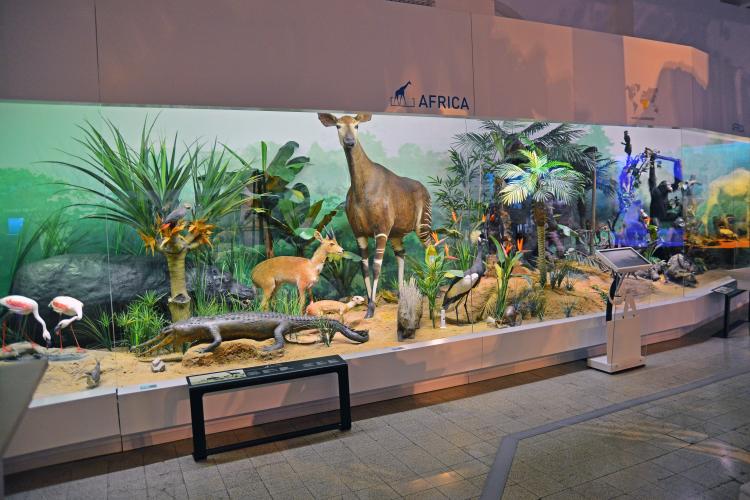
Scientists use models to represent and visualise complex ideas. Models can help bring these ideas into focus, leading to more questions and better explanations. Models are also used to communicate ideas to others. They can be evaluated and refined over time.
In this sequence, there is an option for students to build a model as a prototype of their action plan or to test its effectiveness. The model can be adapted to suit your students, context and available materials. Some examples include:
- 3D model using recycled and craft materials or collected natural items such as sand, twigs, leaves.
- 2D model drawn by hand.
- digitally created, still or animated representation.
It is important to understand that models also have limitations, and we must think critically about these. Models are approximations and are often simplified to make them easier to understand. They can be missing important details. The adequacy of a model (i.e. what it shows, what it doesn’t show, what affordances it provides) should be examined and discussed to determine whether it is ‘good enough’ for its current purpose.
Scientists use models to represent and visualise complex ideas. Models can help bring these ideas into focus, leading to more questions and better explanations. Models are also used to communicate ideas to others. They can be evaluated and refined over time.
In this sequence, there is an option for students to build a model as a prototype of their action plan or to test its effectiveness. The model can be adapted to suit your students, context and available materials. Some examples include:
- 3D model using recycled and craft materials or collected natural items such as sand, twigs, leaves.
- 2D model drawn by hand.
- digitally created, still or animated representation.
It is important to understand that models also have limitations, and we must think critically about these. Models are approximations and are often simplified to make them easier to understand. They can be missing important details. The adequacy of a model (i.e. what it shows, what it doesn’t show, what affordances it provides) should be examined and discussed to determine whether it is ‘good enough’ for its current purpose.
The Act phase empowers students to use the Core concepts and key ideas of science they have learned during the Inquire phase. It encourages students to develop a sense of responsibility as members of society—to act rather than be acted upon. It provides students with the opportunity to positively influence their own life and that of the world around them. For this to occur, students need to build foundational skills in an interactive mutually supportive environment with their community.
When designing the Act phase, consider ways that students could use their scientific knowledge and skills. Consider their interests and lifestyles that may intersect with the core concepts and key ideas. What context or problem would provide students with a way to use science to synthesise a design? How (and to whom) will students communicate their understanding?
Read more about using the LIA FrameworkA key part of Science Inquiry, the Communicate routine provides students with an opportunity to communicate their ideas effectively to others. It allows students a chance to show their learning to members of their community and provides a sense of belonging. It also encourages students to have a sense of responsibility to share their understanding of science and to use this to provide a positive influence in the community.
When designing a teaching sequence, consider who might be connected to the students that have an interest in science. Who in their lives could share their learning? What forum could be used to build an enthusiasm for science. Are there members of the community (parents, teachers, peers or wider community) who would provide a link to future science careers?
Read more about using the LIA FrameworkHow can we improve/protect habitat conditions?
Students share their research/designs with a chosen audience. The audience may include other students, parents at an evening science fair, school council member(s), local paper/newsletter, local council or Landcare member.
The communication method will depend on the audience, context and cross-curricula opportunities. Some examples include:
- a written report.
- a verbal presentation (live or recorded) such as a habitat walk, news report, interview, science quiz, podcast etc.
- a letter of recommendation, accompanied with diagrams, to the local council or school board. It could be presented to the Mayor in person or presented at a local Council forum.
Reflect on the sequence
You might:
- discuss future plans that impact habitat conditions.
- discuss citizen science projects for students to get involved in.
- link their understanding of habitat conditions to plant and animal adaptations, food chains or the water cycle.