

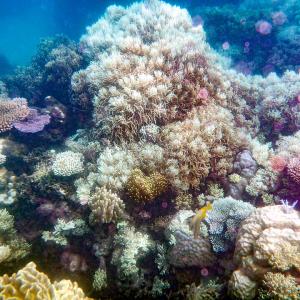
'What's great for growth?' is one of our new teaching sequences for AC V9
- On the 'Sequence overview' tab you'll find all the lessons in this sequence and curriculum alignment.
- The 'Our design decisions' tab shows how key scientific ideas develop over the sequence, and shows how the sequence addresses curriculum achievement standards.
- The 'Preparing for this sequence' tab guides you through important information and considerations for this sequence.
- Have you taught this sequence? Use the Feedback button to let us know how it went!
Launch
Lesson 1 • What’s happening locally?
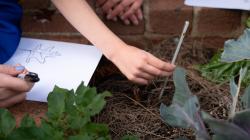
This lesson introduces the content and context of this sequence: how the growth and survival of living things is affected by changing physical conditions, and how local habitat conditions can be studied and improved to help a species.

Inquire
Lesson 2 • Habitat survey
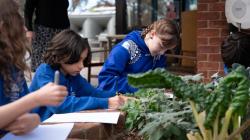
Students explore the conditions in a local habitat, measuring temperature, light and moisture, and consider how conditions vary from one location to another.
Lesson 3 • Floating growth
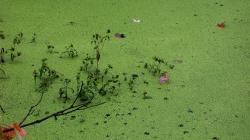
Students grow duckweed in a range of physical conditions and compare how these conditions affect growth and survival.
Lesson 4 • Feeding yeast
Students investigate how changing the food available to yeast affects its growth.

Lesson 5 • Temperature sensitive
Students investigate how temperature affects the growth of yeast.

Lesson 6 • Fuzzy sandwich
Students investigate conditions that affect mould fungi growth on bread, and explore the role of fungi in forest habitats.

Lesson 7 • Noticing change
Students re-survey the conditions in their local habitat, consider short and long-term changes and the effects on local species.
Act
Lesson 8 • An ideal habitat
In this lesson students consolidate their learning by identifying or designing an ideal habitat for a local plant or animal species, explaining how it provides the species’ preferred physical conditions as well as its source of nutrients.
The Australian Academy of Science supports and encourages broad use of its material. Unless indicated below, copyright material available on this website is licensed under a Creative Commons Attribution-NonCommercial-ShareAlike 4.0 International (CC BY-NC-SA 4.0) licence.
Curriculum and syllabus alignment
Year 6
By the end of Year 6 students explain how changes in physical conditions affect living things. They explain why science is often collaborative and describe different individuals’ contributions to scientific knowledge. They describe how individuals and communities use scientific knowledge.
Students plan safe, repeatable investigations to identify patterns and test relationships and make reasoned predictions. They describe risks associated with investigations and key intercultural considerations when planning field work. They identify variables to be changed, measured and controlled. They use equipment to generate and record data with appropriate precision. They construct representations to organise and process data and information and describe patterns, trends and relationships. They identify possible sources of error in their own and others’ methods and findings, pose questions for further investigation and select evidence to support reasoned conclusions. They select and use language features effectively for their purpose and audience when communicating their ideas and findings.
Science understanding
Investigate the physical conditions of a habitat and analyse how the growth and survival of living things is affected by changing physical conditions
Science as a human endeavour
Science inquiry
Pose investigable questions to identify patterns and test relationships and make reasoned predictions
Plan and conduct repeatable investigations to answer questions including, as appropriate, deciding the variables to be changed, measured and controlled in fair tests; describing potential risks; planning for the safe use of equipment and materials; and identifying required permissions to conduct investigations on Country/Place
Use equipment to observe, measure and record data with reasonable precision, using digital tools as appropriate
Construct and use appropriate representations, including tables, graphs and visual or physical models, to organise and process data and information and describe patterns, trends and relationships
Compare methods and findings with those of others, recognise possible sources of error, pose questions for further investigation and select evidence to draw reasoned conclusions
Write and create texts to communicate ideas and findings for specific purposes and audiences, including selection of language features, using digital tools as appropriate
Australian curriculum content links
| Science understanding core concept: Biological systems are interdependent and interact with each other and their environment. |
| Sub-strand | Content descriptor | AC code | Achievement standard | Elaboration/application |
| SHE: Use and influence of science | Investigate how scientific knowledge is used by individuals and communities to identify problems, consider responses and make decisions. | AC9S6H02 | Describe how individuals and communities use scientific knowledge. | Explore how species are effected by changing conditions. (Lessons 1-8) Identify ideal habitat conditions for a chosen species and determine a location where these exist, or design an ideal habitat. (Lesson 8) |
| SHE: Nature and development of science | Examine why advances in science are often the result of collaboration or build on the work of others. | AC9S6H01 | Explain why science is often collaborative and describe different individuals’ contributions to scientific knowledge. | Examine how biological science knowledge has been built over time and impacts our actions today. (Lessons 1-8) |
| SU: Biological sciences | Investigate the physical conditions of a habitat and analyse how the growth and survival of living things is affected by changing physical conditions. | AC9S6U01 | Explain how changes in physical conditions affect living things, | Investigate and describe how the physical conditions in habitats differ and change over varying time scales. (Lessons 2, 7 and 8) Use scientific explanations, supported by data and observations, to describe how the growth and survival of living things is affected by changing conditions (Lessons 1-8) |
| SI: Questioning and predicting | Pose investigable questions to identify patterns and test relationships and make reasoned predictions. | AC9S6I01 | Plan safe, repeatable investigations to identify patterns and test relationships and make reasoned predictions. | Pose investigable questions to identify patterns, such as Does changing the physical conditions in an aquatic habitat affect the growth of duckweed? By how much? and Which “food” will help the yeast grow best? (Lessons 2-7) |
| SI: Planning and conducting | Plan and conduct repeatable investigations to answer questions including, as appropriate, deciding the variables to be changed, measured and controlled in fair tests; describing potential risks; planning for the safe use of equipment and materials; and identifying required permissions to conduct investigations on Country/Place. | AC9S6I02 | Identify variables to be changed, measured and controlled. Describe risks associated with investigations and key intercultural considerations when planning field work. | Determine which is the variable being tested and which variable is being measured, and which other variables might affect their investigations and need to be kept the same. (Lessons 3-6) Discuss risks (including mould and fungi inhalation, allergens and invasive species) then implement safety measures for equipment and materials. (Lessons 1-8) |
| SI: Planning and conducting | Use equipment to observe, measure and record data with reasonable precision, using digital tools as appropriate. | AC9S6I03 | Use equipment to generate and record data with appropriate precision. | Select and use instruments with the correct scale for measuring data with appropriate accuracy, such as thermometers, timers, rulers, light meter apps (optional) and soil moisture meters (optional). (Lessons 2-7) |
| SI: Processing, modelling and analysing | Construct and use appropriate representations, including tables, graphs and visual or physical models, to organise and process data and information and describe patterns, trends and relationships. | AC9S6I04 | Construct representations to organise and process data and information and describe patterns, trends and relationships. | Organise information in graphic organisers to describe patterns and trends. (Lessons 1-7) Contribute to a class display to analyse conditions in a habitat. (Lesson 2) Create labelled diagrams to explain the layers that form when yeast grows (Lesson 4) and how bread should be stored to prevent it going mouldy (Lesson 6). Construct and use line/column graphs to describe duckweed growth (Lesson 3) and yeast growth (Lesson 4). |
| SI: Evaluating | Compare methods and findings with those of others, recognise possible sources of error, pose questions for further investigation and select evidence to draw reasoned conclusions. | AC9S6I05 | Identify possible sources of error in their own and others’ methods and findings, pose questions for further investigation and select evidence to support reasoned conclusions. | Work collaboratively to identify the strengths and weaknesses of their own and others’ investigations including where testing was not fair, and practices could be improved. (Lessons 2-5 and 7) |
| SI: Communicating | Write and create texts to communicate ideas and findings for specific purposes and audiences, including selection of language features, using digital tools as appropriate. | AC9S6I06 | Select and use language features effectively for their purpose and audience when communicating their ideas and findings | Communicate learnings about physical conditions and how changes to these can affect the growth and survival of a species. (Lesson 8) |
Science journals
Create a class science journal, either in hard-copy or digitally. You might:
- use/create a large scrap book or flip chart.
- use poster/butchers paper so learning can be displayed in sequence on the wall.
- create a digital journal using your platform/technology of choice.
- any combination of the above.
Plan for students’ creation of an individual science journal, either in hard-copy or digitally. They might:
- use an exercise book, scrap book or flip chart to record their thinking and gather resource sheets together.
- use a folder to store and collate resource sheets, diagrams, photographs etc.
- use a digital folder to store work samples, images and videos.
- any combination of the above.
See Using a science journal throughout inquiry for more detailed information on the importance of science journals.
General preparation
- Read through the teaching sequence.
- Note any adaptations you would like to make to suit your school and students’ context.
- Prepare demonstration copies of Resource sheets as required.
- Collect the resources required for the sequence.
Making links to Aboriginal and Torres Strait Islander perspectives
This sequence provides a strong opportunity to introduce and highlight First Nations perspectives.
To First Nations Australians, Country is not just land, but a living, interconnected system that includes people, plants, animals, water and sky. Embedding this understanding supports students in recognising both First Nations Australians relationship with Country and their role in caring for it, and also encourages students’ own relationship with, and responsibility for, Country.
Throughout this learning sequence, students will explore the conditions within habitats that enable plants and animals to survive, including water, temperature, light and food availability. By examining how changes to these conditions affect growth and survival, students develop an understanding of the balance within ecosystems. This learning can be enriched by acknowledging First Nations knowledge systems, which have long understood and sustained these relationships through careful observation and custodianship of Country.
Grounding learning in local environments helps students see themselves as part of Country rather than separate from it. This perspective encourages respect for biodiversity and highlights the importance of caring for habitats, particularly their local habitat. Connecting students to Country fosters respect, responsibility, and a deeper ecological understanding.
A discussion with your school’s First Nations liaison (who may be known as an Aboriginal and/or Torres Strait Islander Education Officer, a Community Connector, or a Student Support Officer, among other titles) can help you connect with local First Nations groups and Elders who may be able to support you to meaningfully provide a First Nations perspective over the course of the sequence. Alternatively, contact local First Nations Land Councils and/or Elders to see if they are available and if it is appropriate for them to help.
Growing seeds/seedlings in Lesson 1
In this sequence students grow radish plants to see under which conditions the plants grow the best.
Students can either grow radishes from seeds or from seedlings. Growing plants from seeds takes a longer amount of time than growing from seedlings, because growing from seedlings skips the germination stage. Radish seeds typically germinate in 3-7 days depending on the conditions (warmer conditions will lead to faster germination). However, if it is difficult to source radish seeds, a fast growing alternative such as beans, snow peas, sunflowers, marigolds or cosmos can be used.
If time is a factor, consider germinating the seeds before beginning to teach the sequence so that teams can plant seedlings instead of seeds. Document the process so that students can see/discuss what happened during germination.
Also, when seeds germinate the nutrients required come entirely from the seed itself. The seed does not need soil in order to germinate. However, to continue growth a seed will need to draw further nutrients from a different source, most typically the soil it is planted in. Students may have germinated seeds without soil in the past and may mistakenly believe that plants can grow without soil. However, once the nutrients from the seed have been absorbed, the plants will die without another source of nutrients.
If students grow radishes from seedlings, it can reinforce that most plants need soil in order to grow and survive.
This investigation could take 3-8 weeks. For this sequence, it is enough that the plant is established. However, it could continue to be monitored to see how many leaves it produces or if it shows any signs of distress/unhealthiness, such as yellowing leaves, root rot, or succumbing to pests/diseases (which are often an indicator of a weakened plant immune system).
Safety considerations for potting mix/soil/mulch/compost in Lesson 1
Bagged potting mix (and soil, mulch and compost) are living products and can contain microbes, both helpful and potentially harmful. Of particular concern is Legionella bacteria.
It is important that any bagged product is opened and poured out in well-ventilated spaces, away from students. Open bags slowly with a pair of scissors, away from the direction of your face.
Teachers and students should wear a mask and gloves when handling soil, mulch, compost and potting mixes. You should always wash your hands carefully after touching soil, particularly before eating and drinking.
Selecting a local plant or animal species for focus
A local plant or animal species should be selected to serve as the focus of Lesson 1 and across the sequence. This could be an endangered/vulnerable species, or one common in your school ground/area.
You can use the Threatened Australians website to find a vulnerable or threatened species that is local to your community by inputting your postcode into the search bar. A list of local threatened and vulnerable plant and animal species will be shown. You can also search by electorate using the Browse tab. If your postcode returns zero results, use a postcode for a nearby capital city or regional centre instead.
Once you have selected a species, introduce it to your class using available resources such as school walks, documentary footage, photographs, local experts and trail cam footage.
Selecting a habitat to survey for Lessons 2 and 7
In Lesson 2, students survey the conditions of temperature, light and moisture in a local habitat. This is repeated in Lesson 7 to consider how conditions change over varying time scales and potentially impact local endangered species.
The survey can be conducted at a site that best suits your context, a species the class is focusing on, and student needs. Potential survey options include:
- field trip(s) to a local habitat and home of a known local species, such as a dry sclerophyll forest, rainforest, coast or desert.
- field trip(s) to a local area that was once home to a known local species but is now a modified landscape, such as a park, farm or plantation.
- within the school grounds, make use of gardens, food forests, courtyards or ovals. The conditions in these environments can then be compared and contrasted with the ideal conditions required by the endangered species.
Sourcing & disposing of duckweed for Lesson 3
In this lesson, students investigate the growth of duckweed.
Whilst all referred to as duckweed, there are actually various types. Lemna disperma is native to Australia. Lemna minor and Wolffia arrhiza are not native, but have become naturalised to the environment. As a native species, it is preferred that Lemna disperma is used in this investigation. However Lemna minor and Wolffia arrhiza can also be used if they are disposed of correctly.
When sourcing duckweed, take care not to inadvertently use more invasive species' such as Salvinia minima (sometimes referred to as water spangles), Salvinia molesta (giant salvinia), or Limnobium laevigatum (Amazon frogbit). These are considered highly invasive weeds in Australia, and whilst their sale is illegal, they can sometimes be mislabelled as duckweed or sold on less regulated websites and marketplaces.
Duckweed is an aquatic plant that grows rapidly, doubling its mass in 16-48 hours when conditions are favourable. It thrives in slow-moving or still water and can be a helpful part of an ecosystem, filtering water of excess nitrogen and phosphorous and providing a food source for fish, birds and aquatic insects. However, because of its rapid growth, duckweed can become a nuisance or an invasive species. Duckweed can cover the surface of a pond or dam extremely quickly, blocking out sunlight.
While common in Australian habitats, duckweed reproduces very quickly and even tiny pieces can regrow, upsetting the delicate balance in natural ecosystems.
The duckweed growth investigation may take a number of weeks. At the end of the investigation, the duckweed should be disposed of safely, following the below directions. Do not pour duckweed down sinks or drains as it could potentially enter local waterways.
- Collect all duckweed with a net or sieve and place in a container or bag.
- Kill the plant material by leaving it in a sealed bag in the sun for a few days, freezing it overnight, or letting it completely dry out.
- Dispose the duckweed in general waste once it is completely dead.
- Clean equipment thoroughly to remove any remaining fragments of duckweed.
For information on how to source and grow duckweed, see the embedded professional learning All about duckweed in Lesson 3.
Safety considerations for mould fungi in Lesson 6
In Lesson 6, students conduct an investigation using bread to determine the ideal growing conditions for mould fungi.
Mould fungi can cause allergic reactions and respiratory problems. It is important the bread is placed in snap-lock style bags, then taped shut to ensure the bags are not accidentally opened.
Explain the potential dangers to students and remind them to never open the bag. At the end of the investigation dispose of the sealed bags.
Incursions & excursions
Options for incursions and excursions include:
- inviting a guest to discuss locally endangered/vulnerable plant or animal species.
- conducting a field trip for Lessons 2 and 7 to measure conditions in a habitat.
- visiting a local plant nursery, botanical gardens, wildlife centre, museum or national park to learn more about the endangered/vulnerable species.

'What's great for growth?' is one of our new teaching sequences for AC V9
- On the 'Sequence overview' tab you'll find all the lessons in this sequence and curriculum alignment.
- The 'Our design decisions' tab shows how key scientific ideas develop over the sequence, and shows how the sequence addresses curriculum achievement standards.
- The 'Preparing for this sequence' tab guides you through important information and considerations for this sequence.
- Have you taught this sequence? Use the Feedback button to let us know how it went!